
Dispensing high-viscosity elastomeric sealants is an engineering operation where applicator mechanics directly dictate bond quality. When contractors extrude heavy-bodied polyurethane or modified silane adhesives using an undersized dispenser, operator fatigue causes erratic travel speeds. Consequently, the resulting bead suffers from surging, necking, and air entrapment along joint sidewalls.
Selecting professional caulking gun tools tailored to sealant viscosity eliminates hand strain as a result. Whether dispensing standard 310ml cartridges or 600ml foil sausages, matching mechanical advantage to polymer rheology ensures uniform joint wetting as well. This mechanical synergy prevents costly adhesive callbacks across commercial glazing, vehicle assembly, and concrete paving.
Understanding drive mechanisms, thrust ratios, and packaging configurations therefore separates commercial production from jobsite failures. SHCHEMPU manufactures industrial sealants and precision dispensing equipment for global contractors and OEM assembly plants. Specifically, this comprehensive guide analyzes manual, pneumatic, and cordless caulking systems, thrust ratio physics, and professional nozzle geometries.
Executive Summary: Key Takeaways for Contractors & Fleet Managers
- Thrust Ratio Dictates Operator Ergonomics: Standard 10:1 or 12:1 mechanical advantage guns work well for light silicones and acrylic caulks. In contrast, thick polyurethane construction sealants and auto glass urethanes require heavy-duty 18:1 or 26:1 thrust ratios to prevent hand cramping.
- Drive Mechanism Aligns with Production Environment: Manual smooth-rod dripless guns offer maximum portable versatility on scaffolding. Meanwhile, pneumatic guns deliver continuous non-fatiguing extrusion on factory assembly lines, whereas 18V/20V cordless electric guns dominate high-volume jobsite installations.
- Sausage Foil Packs Reduce Material Waste: Transitioning from 310ml rigid plastic cartridges to 600ml flexible sausage foil packs reduces discarded packaging volume significantly. In addition, enclosed aluminum barrel guns protect bulk adhesives from jobsite punctures.
- Engineered Nozzle Geometry Ensures Uniform Adhesion: Proper triangular V-notch cutting creates the tall, peaked beads required for automotive glass decking. Pairing the right applicator with certified automotive adhesives guarantees structural safety compliance.
Why the Applicator Tool Is Half the Battle in Sealant Performance
Even the highest-grade ASTM C920 elastomeric polymer will fail prematurely if applied with uneven cross-sectional volume or poor interface wetting. Professional caulking gun tools transform manual hand force into controlled, surge-free hydraulic fluid pressure.
Bead Uniformity, Internal Voids, and Joint Cavity Wetting
Extruding elastomeric sealants requires steady forward progression. When an operator struggles against stiff material resistance, hand tremors cause the nozzle to hesitate or lurch forward as a consequence. As a result, the adhesive bead thins out in narrow sections and bunches into thick mounds elsewhere.
Furthermore, irregular flow traps microscopic air pockets along concrete or aluminum sidewalls. Under dynamic thermal expansion cycles, these unbonded voids expand into cohesive tears. A precision dispensing tool delivers consistent linear flow, thereby ensuring full surface contact across joint shoulders.
Operator Fatigue and Repetitive Strain Injury (RSI) Prevention
Commercial applicators frequently dispense dozens of cartridges per shift as well. Using a low-ratio hardware-store gun with thick polyurethane requires up to 35 kilograms of grip force per squeeze. Over time, this repetitive muscular strain degrades bead precision and causes chronic wrist fatigue. Upgrading to high-thrust manual or powered applicators preserves craftsmanship throughout long shifts as a result.
Breakdown of Caulking Gun Drive Mechanisms: Manual, Pneumatic & Cordless
Every commercial construction and manufacturing environment presents unique operational constraints. Understanding the mechanical differences between drive mechanisms therefore allows procurement managers to outfit crews efficiently.
Manual Ratchet vs. Smooth-Rod Friction Drive Applicators
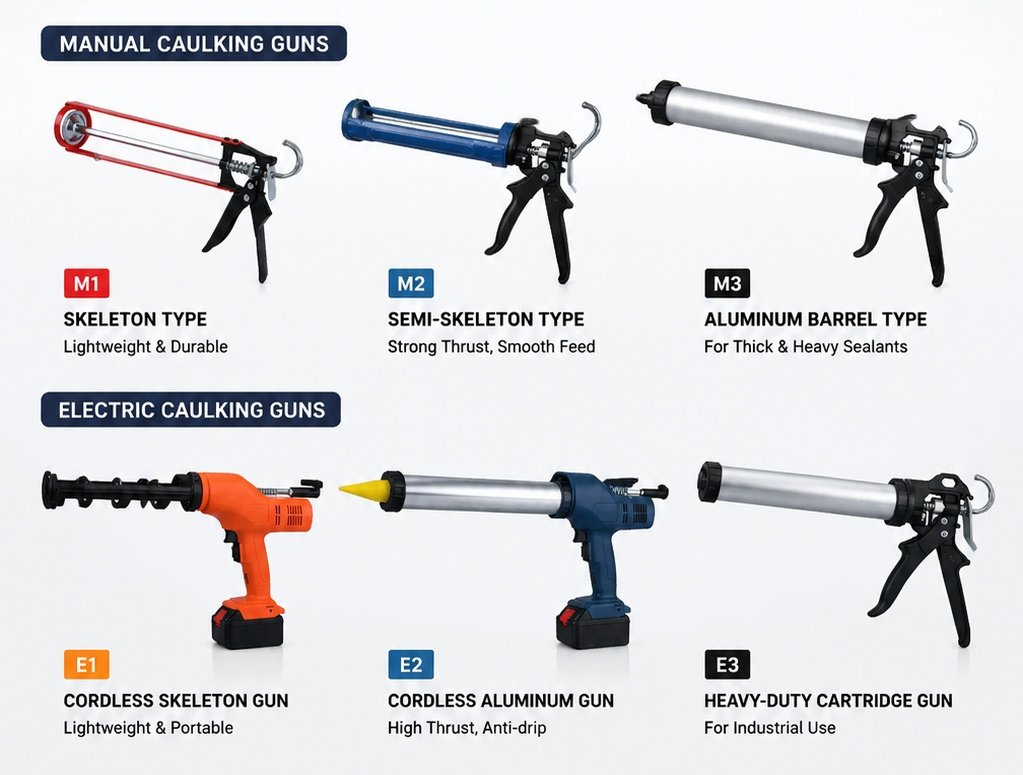
Older manual caulking guns rely on toothed ratchet rods. Specifically, when the trigger is squeezed, a pawl engages cut teeth on the pushrod. However, ratchet teeth produce stepped increments of material flow rather than continuous extrusion. In addition, ratchet guns cannot relieve residual barrel pressure instantly, leading to messy post-trigger oozing.
Modern professional hand guns utilize smooth steel rods controlled by hardened friction drive plates. When the user squeezes the trigger, friction plates grip the rod anywhere along its length, allowing infinite micro-adjustments of bead volume. In addition, most smooth-rod models feature automatic dripless clutch release, retracting the push plate slightly to stop adhesive run-on.
Pneumatic (Air-Powered) Guns for Continuous Factory & Shop Assembly
Pneumatic sealant guns connect to factory compressed air lines through regulated pneumatic hoses. A built-in air regulator directs calibrated air pressure directly against the cartridge piston or rear internal plunger as well.
Because pneumatic guns eliminate manual pumping entirely, they excel in repetitive industrial fabrication. In automotive body shops, operators apply long seams with zero hand strain using dedicated automotive seam sealers. Fast quick-exhaust valves dump air instantly upon trigger release, thereby preventing adhesive drool.
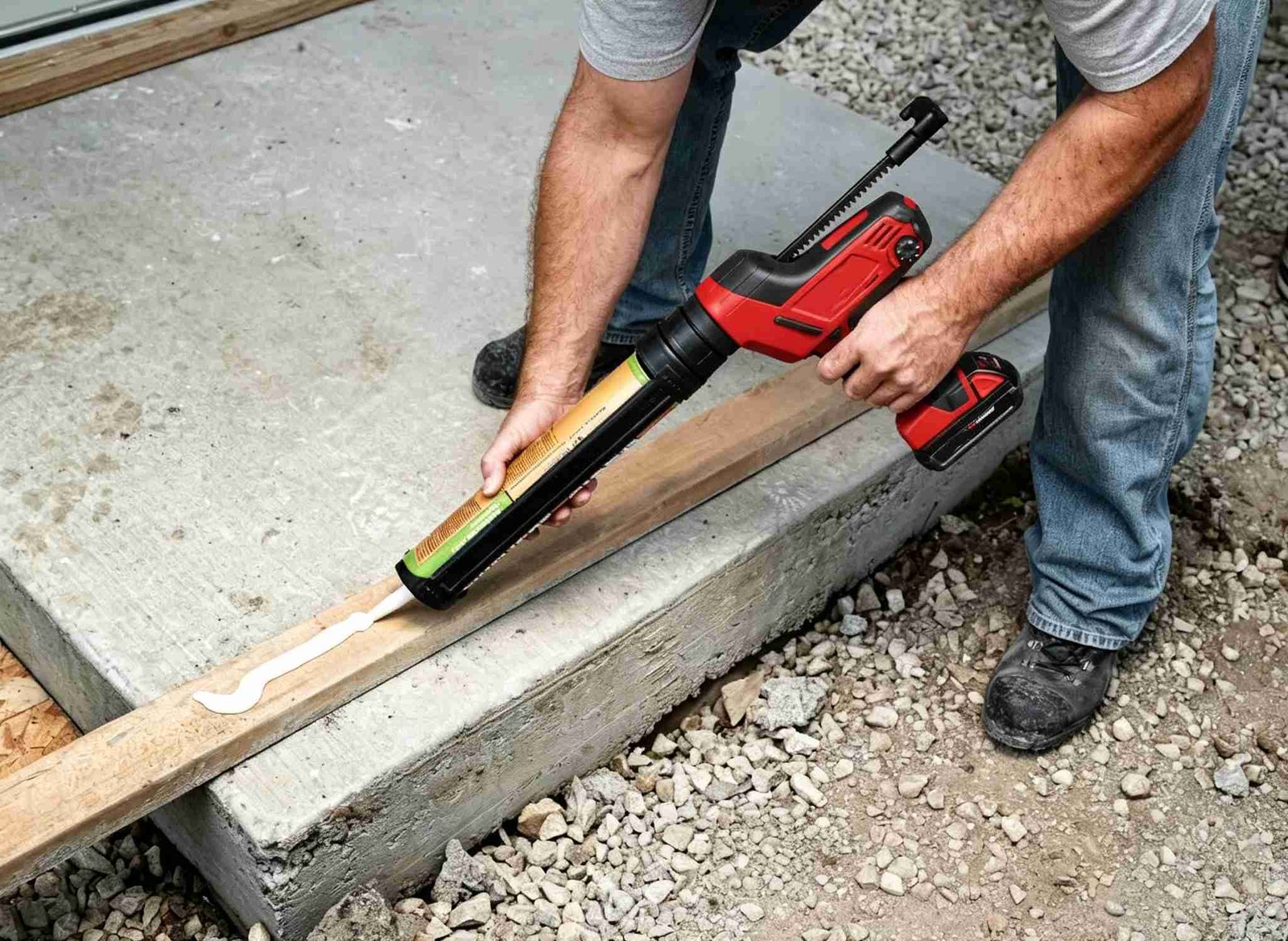
Cordless (Battery-Powered) Guns for High-Speed Jobsite Production
Cordless electric guns operate on 18V or 20V rechargeable lithium-ion battery platforms. An electric motor drives a steel rack-and-pinion pushrod via a variable-speed gearbox, generating pushing forces exceeding 4,000 Newtons. Variable speed dials allow operators to adjust flow rates for different joint widths, thereby combining pneumatic power with jobsite mobility.
| Feature / Metric | Manual Friction Gun | Pneumatic Air Gun | Cordless Battery Gun |
|---|---|---|---|
| Power Source | Manual Grip Force | Compressed Air (6–8 Bar) | 18V / 20V Li-Ion Battery |
| Max Pushing Force | 1,500 – 3,500 N | 3,000 – 6,000 N | 2,500 – 4,500 N |
| Portability & Setup | 100% Portable (Zero setup) | Tethered to air compressor | Cordless (Requires battery charging) |
| Operator Fatigue Level | Moderate to High | Very Low (Trigger touch only) | Very Low (Tool weight slightly higher) |
| Primary Application | Scaffolding, maintenance, touchups | Bus, coach & automotive OEM plants | Curtain walls, civil paving, roof decks |
Matching Thrust Ratio to Sealant Viscosity: The Physics of Extrusion
Thrust ratio defines the mechanical advantage built into manual caulking guns. Specifically, it represents the ratio between the forward distance traveled by the push rod and trigger stroke distance.
Understanding Mechanical Advantage: 10:1 vs. 18:1 vs. 26:1
In a 10:1 ratio gun, applying 10 kilograms of squeeze force delivers 100 kilograms of thrust against the cartridge plunger. While this mechanical advantage suffices for low-viscosity latex or neutral silicone caulks, it fails when encountering thick pasty polyurethanes.
Upgrading to an 18:1 ratio gun multiplies the operator’s grip force by eighteen times, providing the necessary mechanical leverage for commercial elastomeric joint sealants. For cold-weather dispensing or high-strength direct glazing adhesives, professional 26:1 heavy-duty applicators are mandatory. The high mechanical advantage allows effortless, single-handed extrusion through narrow nozzle orifices as a result.
Cold Temperature Viscosity Shifts and High-Modulus Polyurethanes
Sealant viscosity is heavily temperature-dependent. When ambient temperatures drop from 25°C to 5°C, polyurethane paste thickens significantly. Attempting to force cold adhesive through an undersized 10:1 gun often bends the push rod or splits cartridge side seams as a consequence. Contractors working in cold conditions should store cartridges in conditioned spaces or utilize high-thrust 26:1 manual or cordless applicators.
Packaging Compatibility: Cartridges vs. Sausage Foil Packs vs. Dual-Component
Sealants arrive in diverse packaging configurations engineered for specific jobsite volumes. Selecting the proper gun barrel and plunger assembly ensures seamless packaging transitions.
310ml Rigid Plastic and Aluminum Cartridges
Rigid 310ml cartridges are the most widely available packaging format globally. They feature an open skeleton or cradle carriage that holds the cartridge body securely. Rigid tubes provide physical stability and are therefore ideal for small commercial repairs, residential windows, and sanitary caulking.
400ml & 600ml Flexible Sausage Foil Packs
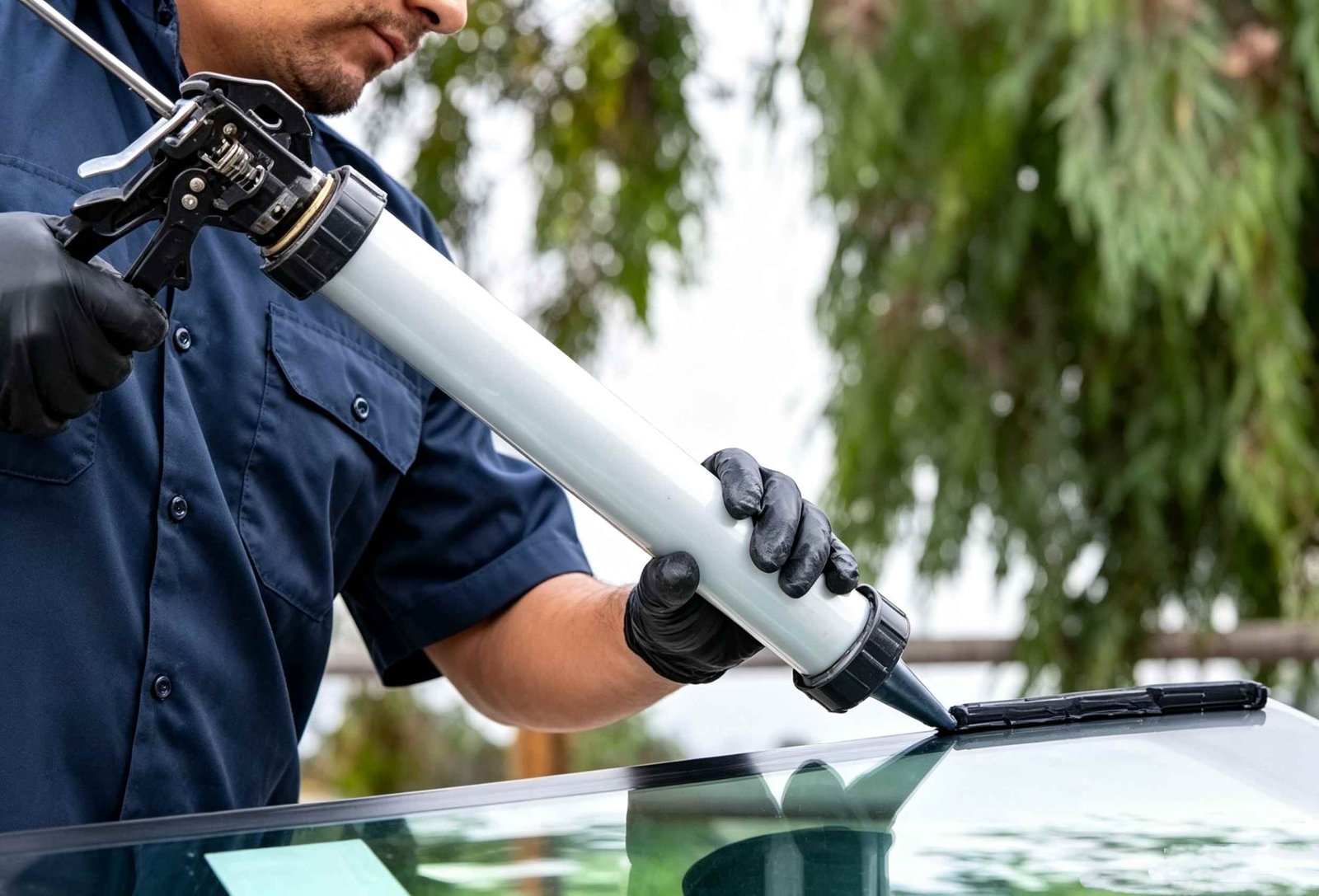
Commercial waterproofing, curtain wall glazing, and concrete floor contractors overwhelmingly prefer 600ml flexible sausage packs instead. Sausage foils require an enclosed cylindrical aluminum barrel applicator equipped with a floating plunger disc.
Sausage packs hold nearly double the volume of standard cartridges, thereby cutting downtime spent reloading guns in half. After dispensing, the thin foil wrapper compresses into a compact disc, reducing jobsite disposal volume significantly as a result. In horizontal floor joints, contractors pair 600ml sausages with self-leveling joint sealants for continuous, tooling-free joint filling.
Dual-Component (1:1, 2:1, 4:1) Dispensing Systems
Fast-curing structural epoxies and two-part polyurethanes require dual-barrel applicators. These specialized guns feature twin parallel push rods that advance side-by-side pistons at fixed volumetric ratios (such as 1:1 or 2:1). The dual rods push components simultaneously through a static helical mixing nozzle, initiating chemical crosslinking without manual blending as well.
Professional Dispensing Protocols: Nozzle Geometry & Maintenance
Specifically, the nozzle tip controls bead shape, height, and contact width. Cutting nozzles haphazardly compromises joint design and wastes valuable polymer.
Straight Cut vs. 45-Degree Angle vs. Triangular V-Notch Cutting
For standard corner fillets along window frames, cut the plastic nozzle at a 45-degree angle to match the joint opening width. This angled aperture forces sealant into the corner, thereby promoting sidewall adhesion while smoothing the outer face.
In automotive windshield bonding and structural facade glazing, applicators strictly require a triangular V-notch cut. The V-notch guides the gun to extrude a tall, peaked triangular bead. When glass is pressed into the pinchweld, the peak compresses outward smoothly, eliminating trapped air pockets that cause cabin wind whistling as a result.
Gun Maintenance, Barrel Cleaning, and Plunger Lubrication
Keep dispensing tools clean to ensure smooth mechanical operation as well. On sausage barrel guns, residual sealant cured on threaded front cap threads prevents proper nozzle sealing as a consequence. Clean front caps regularly with compatible solvent wipes. Additionally, applying a few drops of lubricating oil to the friction drive plates and pushrod monthly prevents premature mechanical wear.
Engineering Field Scenario: High-Volume Commercial Facade Sealing Remediation
A commercial glazing contractor experienced severe joint quality inconsistency during curtain wall weathersealing. Crews using low-ratio manual guns suffered hand fatigue, resulting in irregular bead dimensions and sidewall disbondment.
OPERATING CHALLENGE
- Working Environment: Exterior suspended scaffolding exposed to windy high-altitude conditions and direct sunlight.
- Failure Mechanism: Applicators operating standard 12:1 cradle guns struggled against high-modulus weatherproofing sealants. Frequent trigger pauses caused uneven bead profiles and air bubbles at joint interfaces.
TECHNICAL SOLUTION
- Equipment Upgrade: Deployed SHCHEMPU 26:1 high-thrust enclosed aluminum barrel sausage guns for scaffolding crews, alongside 18V cordless electric applicators for staging decks.
- Packaging Shift: Converted procurement from 310ml plastic cartridges to 600ml foil sausages, reducing container reload frequency.
- Nozzle Standardization: Provided precision pre-cut nozzles matched to 15 mm expansion joint widths, ensuring continuous depth control.
ENGINEERING PERFORMANCE
- Bead Consistency: Surge-free dispensing established continuous joint sidewall adhesion without voids or air entrapment.
- Waste Reduction: Sausage foil packaging reduced empty container scrap volume on scaffolding platforms, simplifying jobsite cleanup.
Technical reference: SHCHEMPU engineering field report, commercial facade dispensing audit. Product series: Professional Sausage Gun 600ml & Cordless System.
Frequently Asked Questions: Caulking Gun Tools & Applicators
Selection, Thrust Ratios & Packaging
What thrust ratio do I need for polyurethane and hybrid sealants?
For polyurethane and MS polymer construction sealants, select a gun with at least an 18:1 thrust ratio. For thick auto glass urethanes or cold-weather dispensing, choose a 26:1 high-thrust applicator to ensure effortless extrusion without operator fatigue.
Can a sausage foil pack gun also dispense standard 310ml cartridges?
Yes. In fact, most professional 600ml enclosed barrel guns are convertible. By removing the front sausage plunger disc or swapping the push plate, you can insert standard 300ml or 310ml rigid cartridges directly into the barrel.
How does a dripless caulking gun mechanism actually work?
A dripless gun features a spring-loaded clutch mechanism. The moment you release the trigger, the clutch disengages and allows the push rod to retract slightly (1 to 2 mm). This immediate decompression relieves residual barrel pressure, thereby stopping adhesive oozing instantly.
Why are sausage foil packs preferred over rigid plastic cartridges?
Sausage packs hold 600ml of sealant—nearly double a 310ml cartridge—cutting reload downtime in half. In addition, the empty foil compresses into a tiny disc, reducing construction waste volume by up to 90% and lowering overall packaging costs.
Pneumatic, Cordless & Maintenance Inquiries
When should contractors invest in cordless battery-powered caulking guns?
Cordless electric guns are especially ideal for extensive linear sealing projects, such as warehouse floor joints, precast facades, and highway paving. They deliver continuous, surge-free extrusion without hand pumping or dragging air compressor hoses across large jobsites.
What air pressure is required for pneumatic caulking guns?
Most industrial pneumatic guns operate safely between 4 to 8 Bar (60 to 115 PSI). Always use a dedicated inline air regulator to prevent over-pressurizing cartridges, which can blow out rear plastic plunger seals as a result.
Why is a V-notch cut mandatory for automotive glass replacement?
A triangular V-notch extrudes a tall, pointed bead rather than a round cylinder. When the windshield is placed, the peak compresses outward smoothly, thereby preventing air pockets that compromise vehicle rollover crash strength.
Does SHCHEMPU supply OEM custom branding for caulking tools?
Yes, SHCHEMPU provides full OEM private labeling for professional tool distributors and sealant brands. We offer custom barrel colors, laser logo engraving, custom thrust ratio configurations, and complete nozzle accessories in bulk export packaging.
Direct Factory Supply & Custom Tool Branding
Source Factory-Direct Caulking Guns & Precision Dispensing Accessories
Partner directly with SHCHEMPU for heavy-duty manual, pneumatic, and cordless caulking tools. Specifically, we supply custom thrust ratios, sausage barrel conversion kits, private-label brand packaging, and wholesale container logistics for distributors and contractors worldwide.

