
Selecting the wrong automotive seam sealer triggers severe warranty claims in body shop production. Incompatible joint sealers crack under chassis torsion, peel after paint bake cycles, and allow road salt brine into pinch welds.
Automotive OEMs and collision repair centers constantly balance two primary polymer systems: single-component polyurethane and silane-modified polymer. Polyurethane provides high tear resistance, whereas modified polymers offer primerless adhesion and rapid over-paintability.
Applying an improper car body seam sealer causes paint blistering and edge corrosion. This technical benchmark compares lap-shear strength, elongation, UV resistance, and paint compatibility to guide workshop selection.
Key Takeaways: Polyurethane vs MS Polymer Benchmarks
- Curing Kinetics: Polyurethane cures at 2-3 mm per 24 hours via ambient moisture, while MS polymer crosslinks evenly without carbon dioxide off-gassing.
- Elastic Recovery: Both chemistries achieve over 300% elongation at break, damping dynamic vehicle frame vibration.
- Paint Window: MS polymer permits wet-on-wet waterborne painting within 30 minutes, preventing paint shop oven bottlenecks.
- UV Resistance: Silane-modified polymers resist solar degradation without topcoats, whereas aromatic urethanes require protective paint.
- Environmental Safety: Modified silane polymers contain zero free isocyanates and minimal VOC emissions, meeting global assembly plant worker safety standards.
Polymer Chemistry: Polyurethane (PU) vs Silane-Modified Polymer (MS)
Single-component polyurethane sealers rely on prepolymers with reactive isocyanate (-NCO) end groups. Exposure to atmospheric moisture initiates a crosslinking chain reaction, forming durable polyurea linkages while releasing carbon dioxide micro-bubbles.
Thick polyurethane beads applied in low humidity cure slowly. Deep joint sections risk uncured pockets if technicians apply forced heat prematurely, causing foaming inside the joint core.
Silane Crosslinking Without Gas Formation
Silane-modified polymers, also termed silyl-terminated polyethers, combine a flexible polyether backbone with dimethoxysilyl terminal groups. Hydrolysis produces silanol groups that condense into stable siloxane (Si-O-Si) bridges without releasing carbon dioxide.
This chemistry makes MS polymer sealants completely bubble-free during accelerated heat curing. The absence of isocyanates eliminates health risks for manual tooling technicians in enclosed body shop booths.
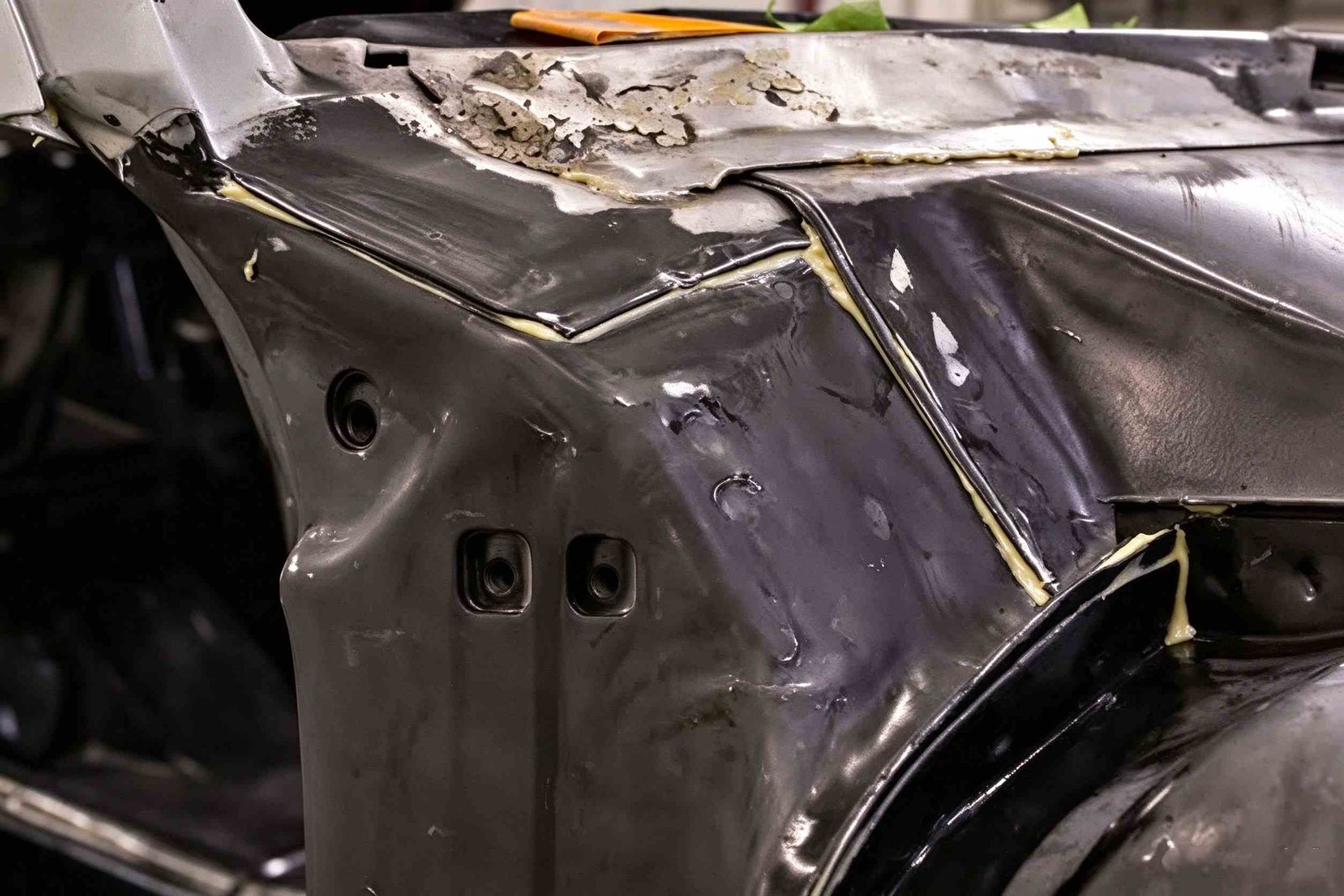
Figure 1: Smooth extrusion bead of 1K automotive seam sealer applied over primed electro-coat car body sheet metal.
Mechanical and Environmental Performance Benchmarks
Vehicle joints experience constant vibration, thermal expansion, and road debris impact. Seam sealers must maintain high flexibility without tearing along overlapping sheet metal edges.
Laboratory testing under ASTM D1002 measures lap-shear strength across electro-coated steel substrates. Polyurethane sealers deliver slightly higher shear strength, whereas MS polymers provide superior long-term elasticity.
| Technical Parameter | Polyurethane (PU) Sealer | MS Polymer (SMP) Sealer | Testing Standard |
|---|---|---|---|
| Tensile Shear Strength | 2.2 – 3.0 MPa | 1.8 – 2.5 MPa | ASTM D1002 |
| Elongation at Break | 350% – 450% | 300% – 400% | DIN 53504 |
| Shore A Hardness | 40 – 50 | 35 – 45 | ASTM D2240 |
| Skin Formation Time | 30 – 60 minutes | 15 – 30 minutes | 23°C / 50% RH |
| UV Weathering Resistance | Moderate (Needs Topcoat) | Excellent (Non-Yellowing) | SAE J2527 |
| Paintability Window | After Skin Formation | Wet-on-Wet Instant | OEM Paint Trial |
UV Exposure and Heat Aging Stability
Aromatic pu seam sealer products contain benzene rings vulnerable to ultraviolet light. Unpainted polyurethane chalks, yellows, and micro-cracks under outdoor sun exposure within six months.
MS polymers possess an aliphatic ether structure completely immune to solar photo-oxidation. Exterior joints on commercial truck cabs and RV roofs maintain full elasticity without protective paint layers.
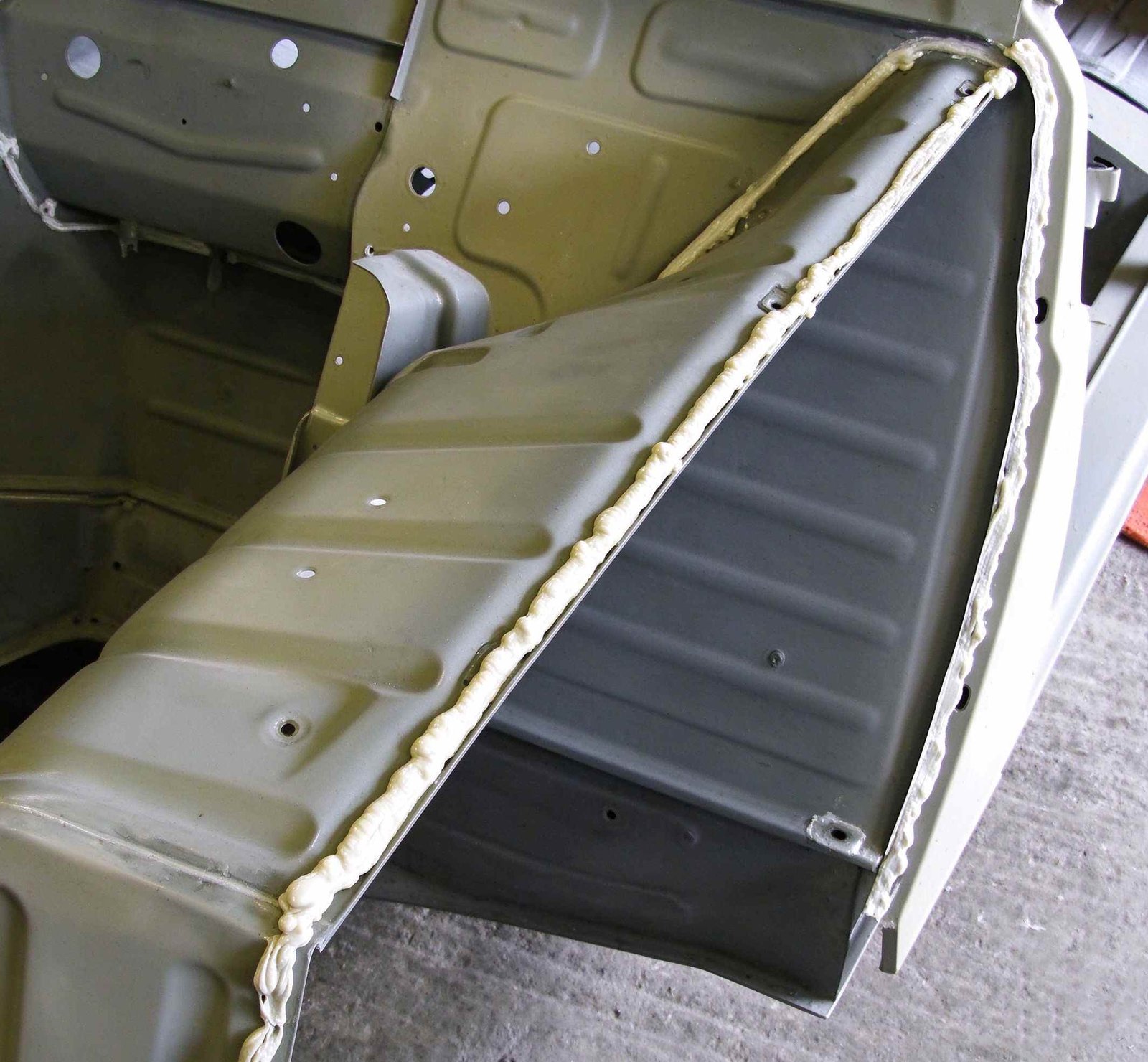
Figure 2: Automotive seam sealer bead applied over welded overlapping body seams to block moisture ingress and galvanic corrosion.
Paintability, Bake Cycles, and Solvent Resistance
Body shops operate under strict cycle time targets. Seam sealers must accept waterborne basecoats and 2K clearcoats without retarding paint drying or creating fish eyes.
Standard polyurethane requires a developed surface skin before spraying paint. Spraying basecoats too early traps aromatic solvents inside the sealant, creating pinholes during 60°C oven baking.
Wet-on-Wet Paint Application Windows
Modified silane polymers exhibit high surface energy, allowing immediate wet-on-wet paint application. Waterborne and solventborne basecoats wet out evenly without crawling or edge pulling.
Baking at 80°C causes zero shrinkage or wrinkling along the paint-sealant interface. This capability allows assembly plants to apply sprayable seam sealer and paint in continuous automated lines.
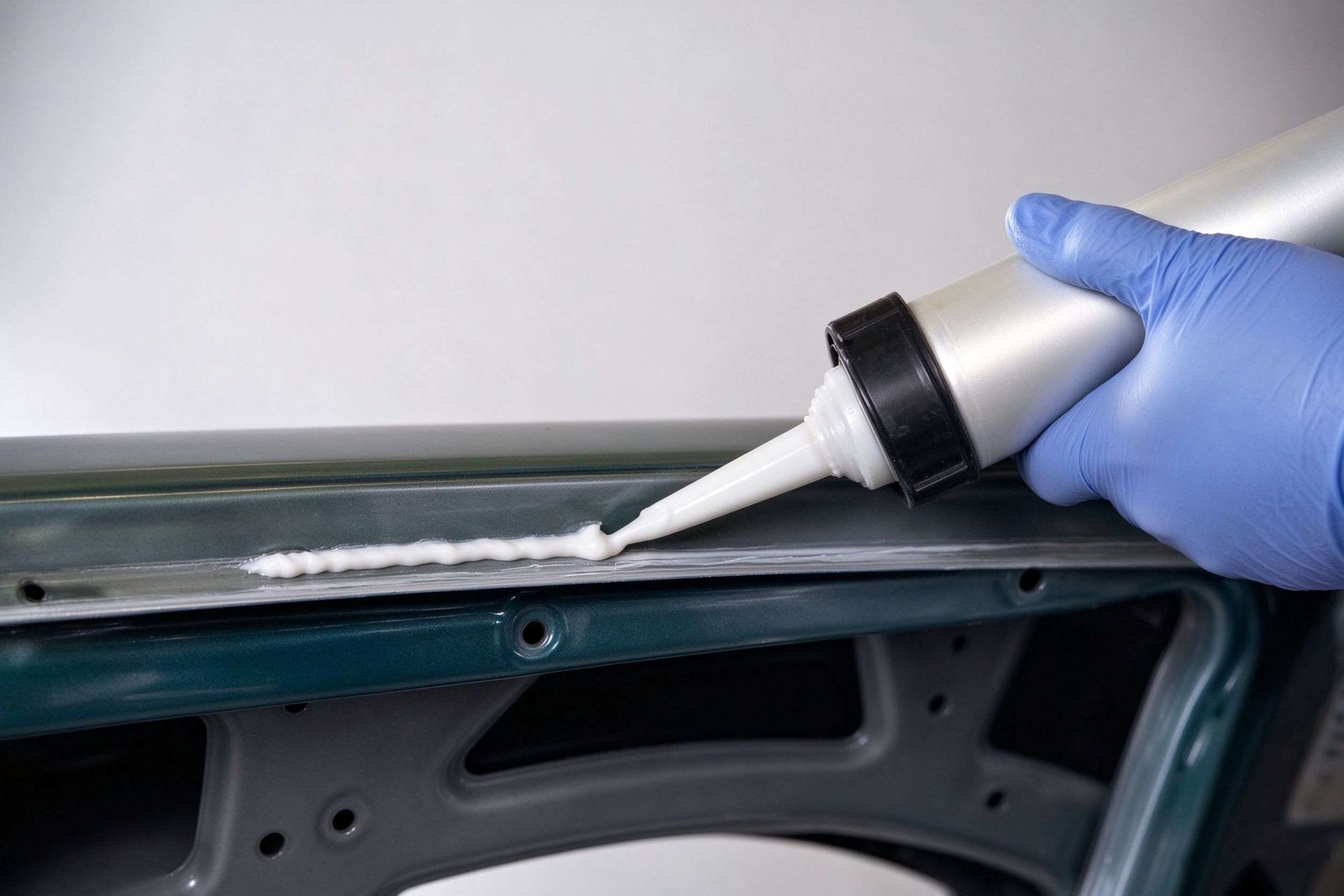
Figure 3: Professional application of polyurethane seam sealer onto vehicle frame assembly ensuring continuous hermetic joint seal.
Substrate Adhesion and Corrosion Defense Protocols
Automotive bodies integrate multiple sheet materials, including hot-dip galvanized steel, aluminum alloys, and fiber composites. Dissimilar metals create galvanic potential differences that accelerate crevice rust if moisture penetrates.
Quality body seam sealant must block corrosive electrolytes. Certified sealants undergo ASTM B117 salt spray exposure for 1000 hours without edge creepage.
Adhesion on Bare Metal vs 2K Epoxy Primers
Polyurethane requires thorough solvent wiping and specialized chemical primers on bare aluminum. Direct application onto untreated steel risks adhesive delamination under thermal cycling.
MS polymers bond securely to cleaned e-coat, bare steel, and aluminum without primer. The silane coupling agents bond chemically to metallic oxide surfaces, providing robust moisture barriers.
Vehicle Zone Application Selection Guide
Vehicle body zones endure different physical stresses. Selecting between polyurethane and MS polymer depends on joint movement, cosmetic requirements, and production tooling.
Vehicle Zone Engineering Recommendations
- Underbody and Wheel Arches: Use high-build urethane seam sealer to absorb coarse gravel impacts and high abrasion.
- Roof Ditch Channels: Apply self-leveling seam sealer based on MS polymer for flat cosmetic finishes without sanding.
- Door Hem Flanges: Utilize extruded MS polymer beads for immediate paint shop transit without oven pre-curing.
- Engine Bay Firewalls: Deploy high-temperature modified silane formulations rated up to 120°C continuous thermal load.
Typical Application Scenario: Commercial Bus Body Assembly Line
Fleet Manufacturing Shift from Polyurethane to MS Polymer
Manufacturing Profile: A commercial vehicle builder manufacturing 1,200 electric city buses annually, utilizing galvanized steel side frames bonded to aluminum exterior roof sheets.
Production Challenge: The plant previously used standard 1K polyurethane seam sealer along exterior roof overlaps. Technicians had to wait four hours for skin formation before moving bus shells into the paint booth. In summer months, high humidity caused microscopic bubbling along thick brushed joints.
Process Modification: The engineering team switched to ChemPU high-viscosity MS polymer seam sealer applied with pneumatic caulking guns and accessory tools. Technicians extruded calibrated 10 mm flat beads directly over primed lap seams without separate chemical etch primers.
Operational Outcome: Bus shells moved into the waterborne basecoat booth within 25 minutes of sealant application. Cured joints demonstrated zero paint popping across 80°C drying cycles, eliminating joint rework and saving three production hours per vehicle shell.
Frequently Asked Questions: Automotive Seam Sealers
Can MS polymer completely replace polyurethane seam sealer in collision repair?
Yes. MS polymer matches or exceeds polyurethane in joint elasticity, weatherability, and paint compatibility. It provides superior UV stability on unpainted joints and allows wet-on-wet painting. Polyurethane remains widely utilized primarily due to historical OEM technical approvals and lower initial material cost.
Can you apply automotive seam sealer directly over bare metal?
OEM specifications recommend applying seam sealer over 2K epoxy primer or cured electro-coat. While MS polymer adheres to clean bare metal, applying sealer over epoxy primer provides vital sacrificial corrosion protection, preventing rust creep beneath the sealant bead.
Why does paint crack or blister over polyurethane seam sealer?
Paint cracks when rigid topcoats flex over soft, uncured sealant. Blistering occurs when trapped moisture or carbon dioxide gas from polyurethane curing attempts to escape through semi-cured paint during thermal bake cycles. Allowing full skin formation prevents this failure.
Technical Review by ChemPU Automotive Adhesive & Sealant Engineering Team
Authored by Senior Polymer Chemists specializing in 1K polyurethane prepolymers, silane-modified polymers, and automotive OEM corrosion protection systems. Certified under ISO 9001 and IATF 16949 standards.
Source High-Performance OEM Automotive Seam Sealers
Partner with ChemPU, an ISO 9001 and IATF 16949 certified Chinese manufacturer. We provide high-performance polyurethane and silane-modified seam sealers engineered for automotive body assembly, weld seam corrosion protection, and rapid paint shop throughput.
Direct WhatsApp Technical Inquiry: +86 15216655520

