
Collision repair facilities face constant pressure to reduce cycle times while preserving factory-level corrosion resistance. Applying an improper car body seam sealer creates severe bottlenecks in spray booth scheduling.
Technicians frequently choose between single-component moisture-curing sealers and two-component chemical-cure formulations. Single-component products offer easy single-cartridge application, whereas two-component urethanes provide rapid through-cure independent of environmental humidity.
Prematurely baking vehicles with uncured sealant causes solvent popping, bead shrinkage, and topcoat cracking. This engineering analysis compares 1K and 2K automotive sealer kinetics, paint bake stability, and body shop throughput.
Key Takeaways: 1K vs 2K Seam Sealer Performance
- Cure Mechanism: 1K sealers require atmospheric humidity and cure at 2-3 mm per 24 hours, while 2K systems cure chemically within 30-45 minutes.
- Oven Bake Resistance: 2K chemical urethanes withstand 80°C paint bake cycles immediately without bubbling, whereas thick 1K beads require extended skin formation.
- Depth of Cure: 2K formulations cure uniformly across arbitrary bead depths, eliminating uncured liquid cores inside deep overlapping joints.
- Shop Throughput: Utilizing a fast curing automotive adhesive or 2K sealer reduces booth idle time by up to four hours per heavy repair.
- Equipment Requirements: 1K products dispense from standard manual guns; 2K materials require dual-cartridge pneumatic applicators and static mix nozzles.
Curing Kinetics: Moisture Diffusion vs Chemical Addition
Single-component (1K) polyurethane and silane-modified sealers cure through outside-in moisture diffusion. Airborne water molecules react with polymer chains at the bead surface, creating an elastomeric skin that thickens inward over time.
In arid climates or unheated winter workshops, low relative humidity retards 1K crosslinking. A thick car body seam sealer bead exceeding 5 mm often requires 48 hours to achieve complete vulcanization, creating production delays.
Two-Component Homogeneous Crosslinking
Two-component (2K) sealers package prepolymer resin in Part A and polyol or amine curative in Part B. Passing through a static mixing nozzle initiates bulk polyaddition, curing the entire cross-section simultaneously.
Ambient humidity exerts zero influence on 2K reaction speed. Technicians achieve consistent handling strength regardless of seasonal weather shifts, making 2K systems ideal for high-volume commercial production lines.
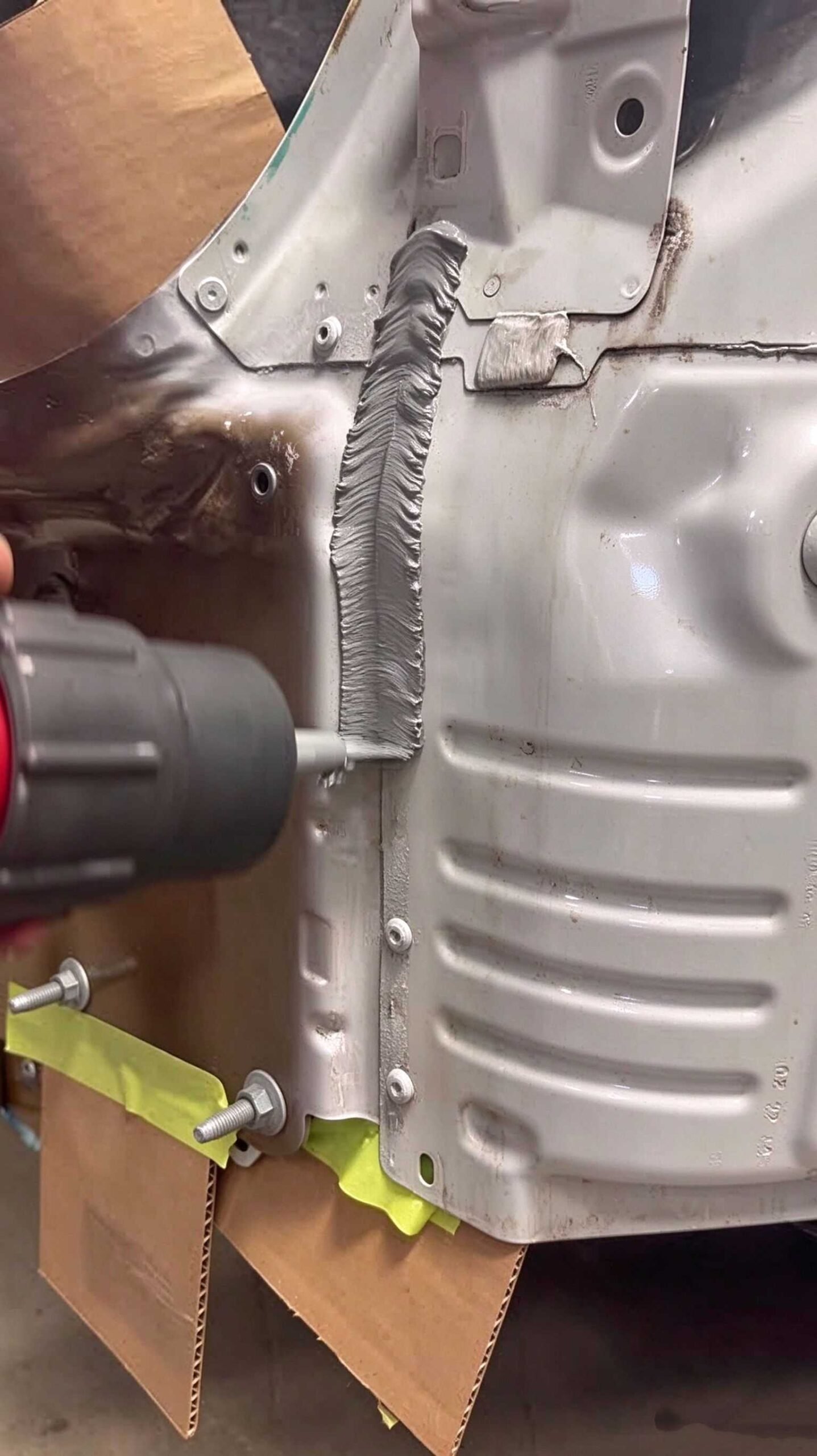
Figure 1: Extruding uniform car body seam sealer beads along overlapping stamped sheet metal seams before primer application.
1K vs 2K Seam Sealer Technical Specification Matrix
Repair technicians must balance application simplicity against paint booth cycle speed. The following benchmark highlights key chemical, mechanical, and curing differences under standard workshop conditions (23°C, 50% RH).
| Parameter | 1K Moisture-Cure Sealer | 2K Chemical-Cure Sealer | Test Standard |
|---|---|---|---|
| Skin Formation Time | 30 – 60 minutes | 10 – 20 minutes | ASTM C679 |
| Through-Cure Speed | 2.5 mm / 24 hours | Complete in 45 minutes | Internal Depth Test |
| Paint Bake Window (60°C) | After 2 – 4 hours | After 30 minutes | OEM Paint Protocol |
| Tensile Strength | 1.8 – 2.5 MPa | 2.5 – 3.5 MPa | ASTM D412 |
| Shore A Hardness | 40 – 50 | 50 – 65 | ASTM D2240 |
| Tooling Complexity | Low (Standard Gun) | Moderate (Dual Dispenser) | Workshop Standard |
Paint Bake Cycle and Thermal Sagging
Placing a vehicle into an 80°C paint bake oven expands trapped air inside uncured 1K sealant joints. Heating before skin formation causes solvent vapor blisters that rupture the freshly sprayed clearcoat.
Two-component urethanes build rigid polymer networks within minutes. They withstand infrared radiant lamps and convection ovens without bead deformation, blistering, or gloss die-back along seam margins.
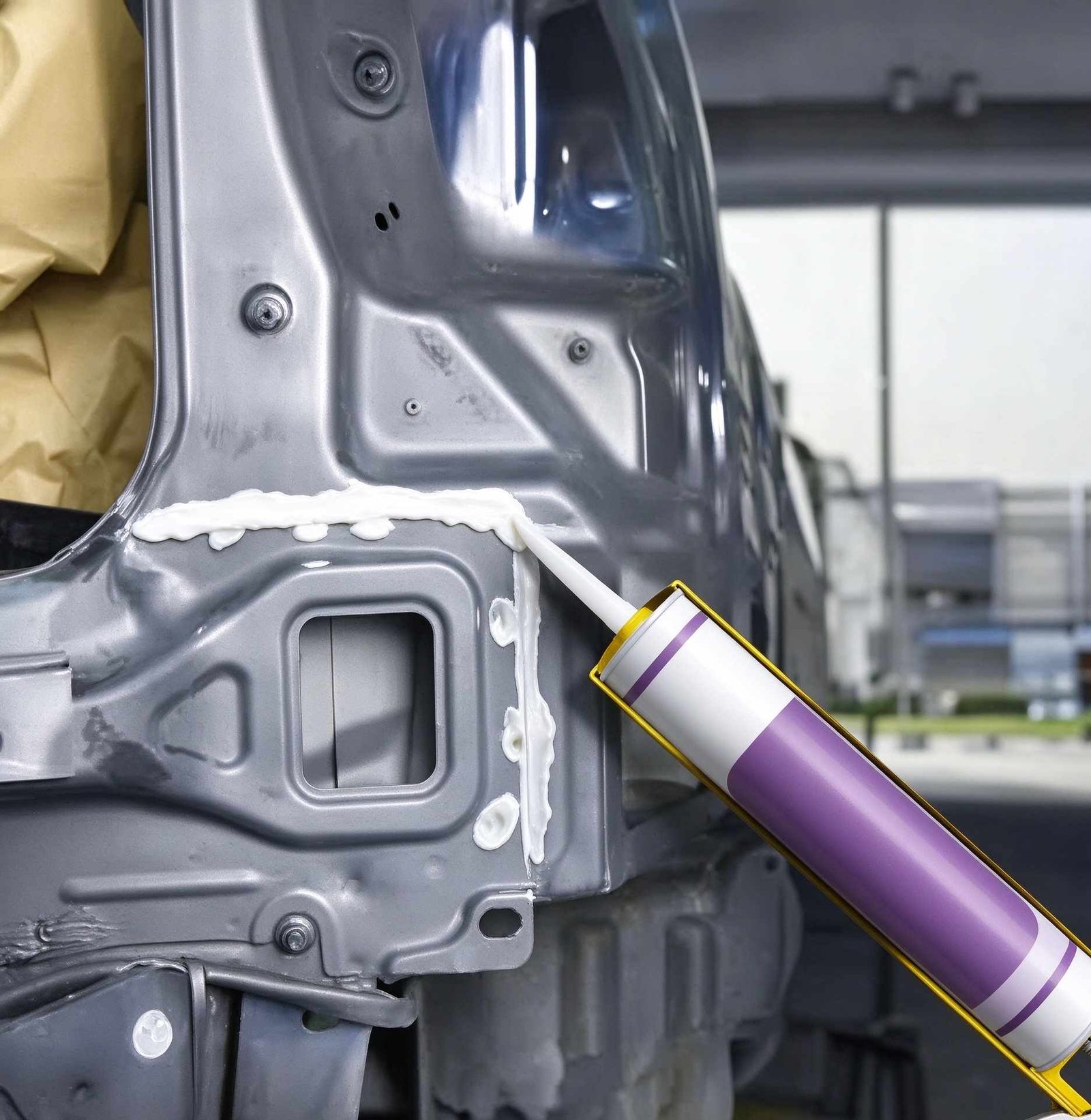
Figure 2: Professional cartridge packaging of high-performance car body seam sealer engineered for precise dual-mix extrusion.
Workshop Productivity: Turnaround Times and Labor Savings
Paint booths represent the most expensive capital investment in any collision center. Holding vehicles in prep stalls to await 1K sealant skinning limits daily workshop revenue.
Using a cure time 24 hours car body adhesive or traditional 1K sealer forces technicians to stage heavy repairs overnight. This downtime consumes floor space and delays customer delivery targets.
Rapid Cycle Time Economics
Two-component car sealant products allow technicians to apply seam sealer, tool the profile, and transfer the vehicle directly into paint prep. Booth throughput increases by two complete vehicle cycles per shift.
Deploying a fast-curing 2K car body seam sealer saves valuable technician hours. While 2K cartridges carry a higher unit cost, labor savings and accelerated repair velocity deliver substantial net profit gains for collision centers processing over 40 repairs monthly.
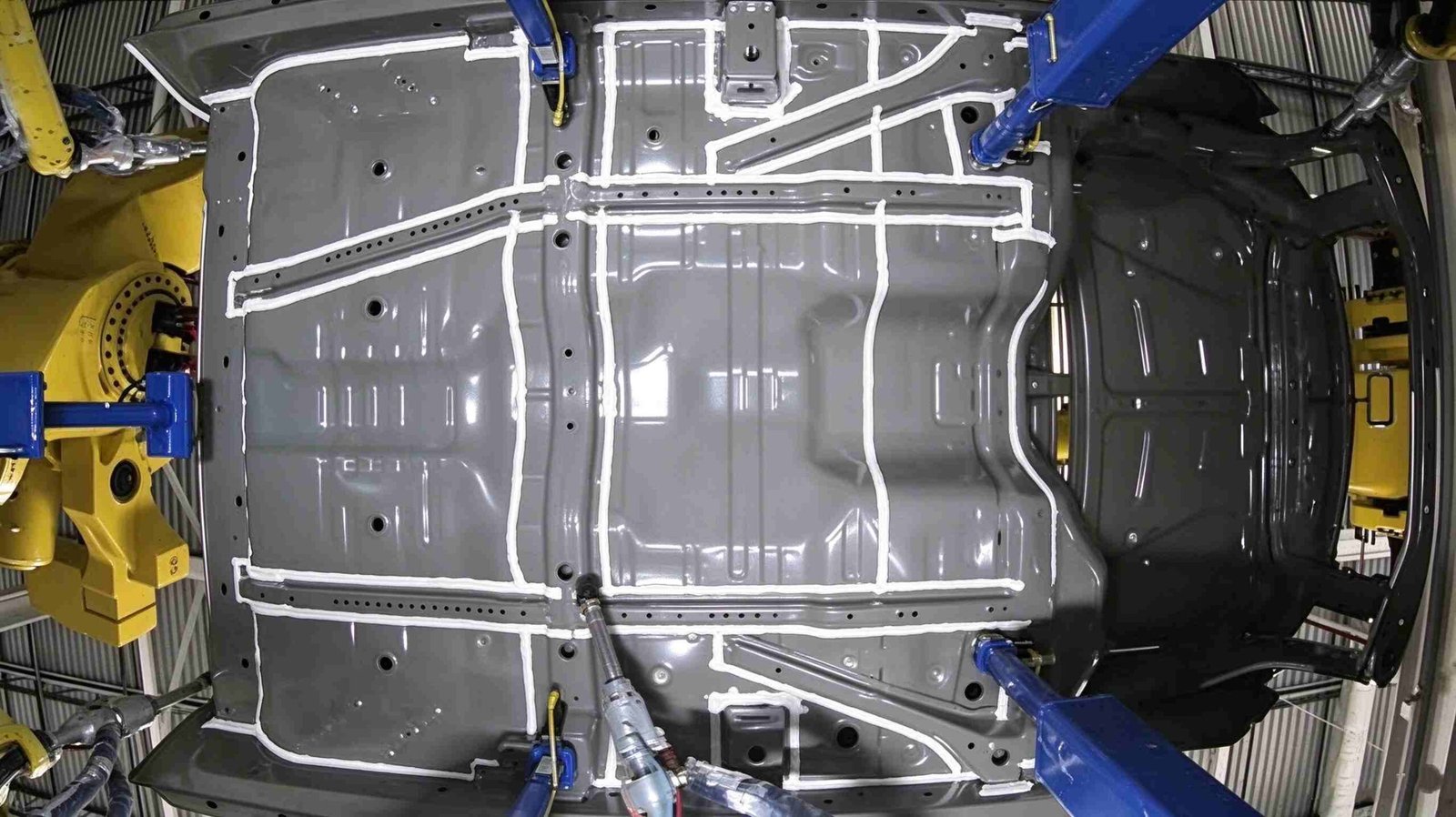
Figure 3: Applying elastomeric seam sealer along underbody chassis floor pan overlaps to seal out water, salt spray, and exhaust fumes.
Dispensing Tools, Static Mixers, and Purge SOP
Proper tool calibration prevents off-ratio dispensing failures in two-component systems. Unequal component delivery leaves unreacted resin pockets that remain tacky indefinitely.
Technicians must pair 2K cartridges with calibrated 1:1 or 2:1 dual-piston dispensers from our sealant accessory tools collection. Pneumatic dispensers ensure steady material flow along lengthy hem flanges.
Purge and Leveling Protocol
Prior to attaching the static mix nozzle, dispense a small amount of material until both Part A and Part B flow simultaneously from the cartridge ports. Discard this leveling bead to verify balanced piston travel.
Attach the static mixing tip and extrude a 30 mm test bead onto scrap cardboard. Uniform color confirms complete homogeneous mixing before extruding material onto the vehicle body.
Application Selection: When to Choose 1K vs 2K
Both 1K and 2K chemistries serve distinct roles in automotive manufacturing and repair. Choosing the correct car body seam sealer system depends on joint geometry, production tempo, and accessibility.
Recommended Application Protocols
- Choose 1K Seam Sealer: For large-area underbody brushing, cosmetic trunk floor seams, and minor cosmetic joints where extended cure time does not delay vehicle delivery. Compare options in our brushable seam sealer review.
- Choose 2K Seam Sealer: For structural door hem flanges, quarter panel replacements, strut towers, and fast-track collision repairs requiring immediate oven baking.
- High-Vibration Mounts: Deploy high-flexibility 2K urethanes to absorb structural torsion, as detailed in our urethane seam sealer damping analysis.
- Deep Cavity Sealing: Use 2K materials exclusively whenever sealant bead depth exceeds 6 mm to ensure complete core vulcanization.
Typical Application Scenario: High-Volume Collision Repair Facility
Switching from 1K to 2K Seam Sealer in Fleet Repair Workflow
Workshop Profile: An insurance-certified collision repair center processing 75 structural repairs monthly, equipped with two downdraft bake booths operating at capacity.
Production Dilemma: Vehicles receiving quarter panel and rear body panel replacements experienced three-hour holding delays while awaiting 1K polyurethane surface skinning. During humid summer periods, several vehicles developed solvent pinholes along C-pillar joints during 70°C baking, requiring labor-intensive sanding and refinishing.
Process Modification: The facility converted quarter panel replacement protocols to ChemPU 2K rapid-cure polyurethane seam sealer. Technicians utilized pneumatic dual-cartridge dispensers with static mix nozzles, extruding continuous 6 mm beads across pinch welds and hem flanges.
Operational Outcome: Sealed vehicle bodies moved into spray booths within 35 minutes of application. Cured seams showed zero shrinkage, pinholing, or bead deformation under standard 40-minute bake cycles. Booth utilization improved by 18%, eliminating weekend overtime shifts.
Frequently Asked Questions: 1K and 2K Seam Sealers
Can you force-dry 1K seam sealer with an infrared heat lamp?
No. Applying intense infrared heat to uncured 1K moisture-cure sealers drives off internal moisture and accelerates surface skinning prematurely. Trapped solvents and curing byproducts cannot escape, causing large blisters beneath the surface. Infrared heat lamps should only be utilized after complete through-cure.
Can unmixed 2K seam sealer cartridges be reused after opening?
Yes. Because the chemical reaction occurs exclusively inside the disposable static mixing nozzle, the cartridge itself remains unmixed. Remove the used static nozzle, wipe the port faces clean, and replace the storage cap tightly. Store the cartridge in a cool, dry location for subsequent repair jobs.
Does 2K seam sealer replace structural panel bonding adhesive?
No. Two-component seam sealers are elastomeric materials formulated to seal joints against water, air, and corrosion. They offer lap-shear strength around 3 MPa. In contrast, structural panel bonding adhesives achieve lap-shear strength above 20 MPa to replace welding on load-bearing components. Never substitute seam sealers for structural adhesives.
Technical Review by ChemPU Automotive Application Engineering Team
Authored by Senior Technical Engineers specializing in two-component reactive polyurethane chemistry, body shop cycle-time optimization, and OEM corrosion prevention standards. Certified under ISO 9001 and IATF 16949 standards.
Source OEM 1K & 2K Automotive Seam Sealers
Partner with ChemPU, an ISO 9001 and IATF 16949 certified Chinese manufacturer. We supply high-performance 1K moisture-cure and 2K chemical-cure seam sealers engineered to maximize collision repair productivity and prevent corrosion under OEM bake cycles.
Direct WhatsApp Technical Inquiry: +86 15216655520

