
Commercial bus builders, heavy-duty truck manufacturers, and RV coachbuilders face unique structural challenges when bonding oversized automotive glass. Unlike passenger vehicles with rigid monocoque bodies, commercial chassis undergo massive continuous torsional twisting during highway transit and off-road maneuvering.
Windshields exceeding 3.5 square meters act as stressed structural shear walls. Selecting an industrial-grade bus windshield adhesive with extended open time and high dynamic elasticity prevents catastrophic glass cracking, wind noise, and structural joint delamination.
Key Takeaways: Commercial Direct Glazing Standards
- Torsional Deflection Absorption: Commercial bus windshield adhesive bonding requires high-modulus polyurethane possessing elongation at break above 400% to absorb heavy chassis flex.
- Extended Open Time (30–45 Minutes): Large apertures measuring 8 to 12 meters in perimeter demand extended tack-free formulas to avoid dry-skinning during slow manual placement.
- Controlled Deck Height (6–8 mm): Never compress commercial urethane beads below 5 mm; adequate bondline thickness provides necessary shear elasticity.
- Mechanical Vacuum Rigging: Oversized glass units weighing 50 to 90 kg mandate overhead vacuum cranes or dual-technician mechanical manipulators.
Torsional Stresses & Dynamic Loads on Multi-Meter Commercial Windshields
Passenger car windshields rarely exceed 1.5 square meters or 15 kg. In sharp contrast, intercity motorcoaches, city transit buses, and Class A motorhomes feature panoramic windshields spanning 3.0 to 4.5 square meters, with individual glass weights reaching 85 kg.
Commercial bus bodies flex continuously across longitudinal and diagonal axes. When a tri-axle coach negotiates uneven road surfaces or cornering ramps, the vehicle frame experiences angular twist up to 3 degrees. The bonded glass assembly must absorb these immense torsional shear forces without transferring localized stress peaks into brittle glass edges.
Dynamic Aerodynamic Headwind and Suction Pressures
At highway speeds of 100 km/h, the massive vertical frontal profile of a commercial bus encounters severe stagnation wind pressure. Simultaneously, aerodynamic airflow creates negative pressure suction zones along the upper windshield brow and flush-bonded side windows.
Applying an inadequate passenger-grade sealant invites bondline fatigue failure. Engineers specify heavy-duty bus windshield adhesive engineered with high lap shear strength (exceeding 2.5 MPa under ISO 4587) to maintain structural integrity across decades of long-haul fleet vibration.
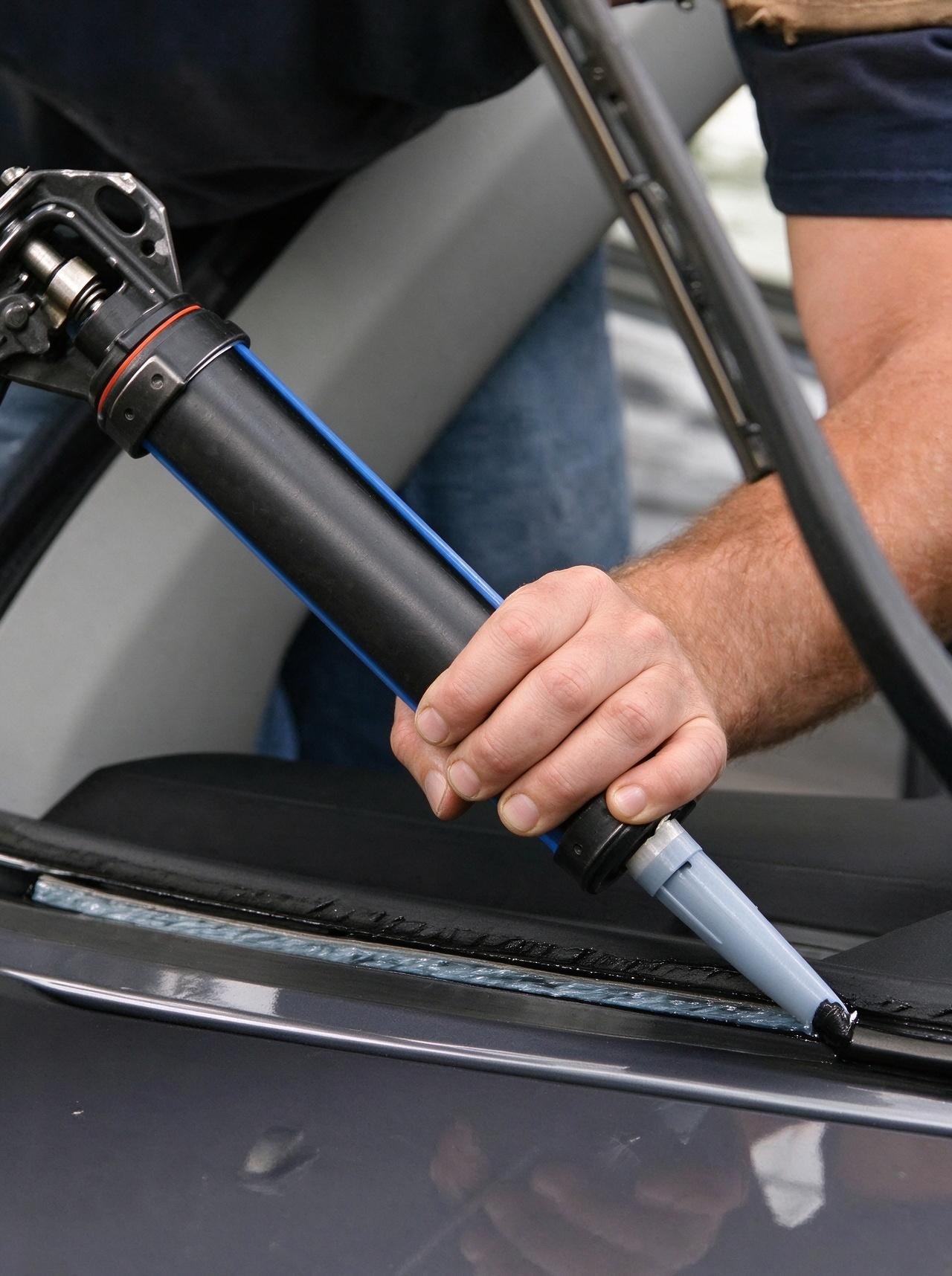
Figure 1: Extruding a continuous triangular adhesive bead with controlled height for large commercial bus apertures.
Long Open-Time Polyurethanes: Managing 30-Minute Large Aperture Extrusions
Extruding a continuous triangular adhesive bead around a bus windshield aperture requires traversing 8 to 12 linear meters. In large assembly facilities or field maintenance hangars, dispensing this massive bead volume takes 15 to 25 minutes.
Standard automotive polyurethanes possess tack-free skinning times of 10 to 15 minutes. If skinning initiates before technicians set the glass into position, the cured polymer skin prevents molecular wetting against the glass frit.
The Danger of Dry Skinning and Pseudo-Adhesion
This phenomenon, known as pseudo-adhesion or cold joint formation, appears visually bonded but possesses virtually zero adhesive peel strength. Under highway pressure, the windshield separates cleanly along the unbonded skin, causing dangerous water ingress or glass dislodgement.
Specifying an extended open-time bus windshield adhesive provides 30 to 45 minutes of working time at 23°C and 50% relative humidity. Technicians can complete large perimeter extrusions, position suction lifters, and align heavy glass units without premature skinning risks.
Bead Dimensioning, Deck Height & Vacuum Rigging Protocol
Direct glazing massive commercial vehicle glass demands precise bead geometry. Standard 8 mm passenger beads cannot bridge the wide manufacturing tolerances of welded bus frame apertures.
Triangular Nozzle Sizing and Deck Height Control
Extruding high-viscosity bus windshield adhesive requires heavy-duty pneumatic dispensers. Technicians cut V-notch nozzles to a base width of 12 to 14 mm and a vertical peak height of 15 to 18 mm. When compressed, this triangular bead collapses uniformly into a rectangular cross-section without trapping internal air bubbles.
Crucially, final compressed deck height must measure strictly between 6 mm and 8 mm. Compressing the bead below 5 mm concentrates torsional shear stress into a dangerously narrow plane, inducing glass fracture. Use high-density EPDM spacer blocks along bottom pinchwelds to prevent heavy glass from sagging under its own weight.
Overhead Vacuum Lifter and Suction Rigging SOP
Manual two-person installation of 70 kg curved panoramic glass creates severe ergonomic and alignment hazards. Professional bus assembly plants deploy pneumatic vacuum manipulators equipped with 4 to 6 articulated suction cups.
Operators dock the glass squarely into the aperture in one fluid motion, eliminating sliding adjustments that smear the wet polyurethane bead. Heavy-duty ratchet straps secure top corners until initial fixture curing occurs.
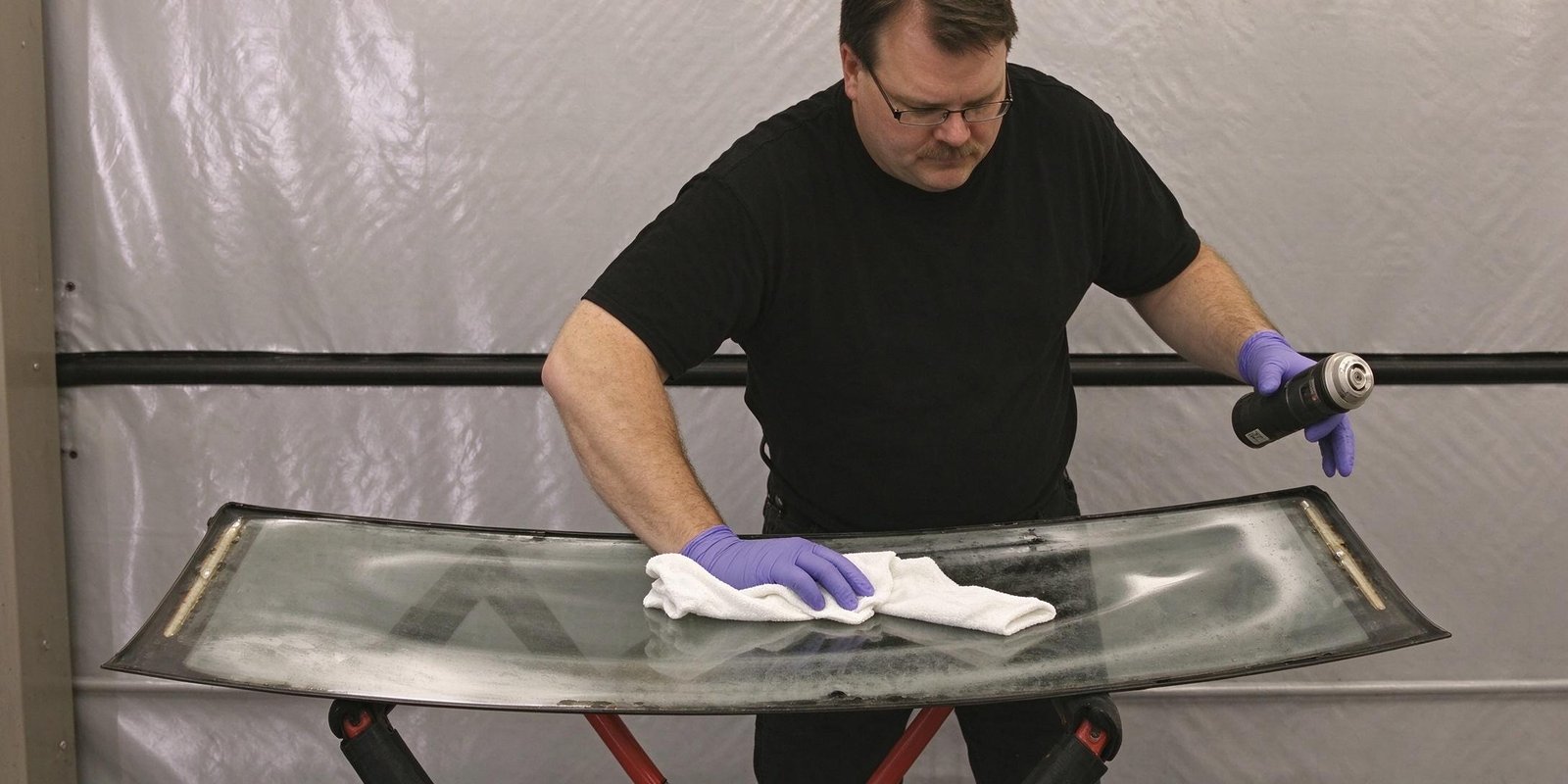
Figure 2: Surface cleaning, degreasing, and UV primer application along the ceramic frit perimeter of heavy-duty truck glass.
Side Window Flush Glazing & Composite Thermal Expansion Compensation
Modern intercity luxury coaches and premium RVs utilize full flush-glazed side window arrays. These continuous glass facades eliminate protruding metal frames, delivering sleek aerodynamic aesthetics and reduced wind drag.
However, RV body panels frequently incorporate fiberglass-reinforced plastic (FRP/GRP) or extruded aluminum sidewalls. These composite materials exhibit thermal expansion coefficients dramatically higher than mineral glass.
Accommodating Multi-Millimeter Thermal Expansion Joints
Along a 3-meter side window section, seasonal temperature swings from -20°C to +70°C generate 4 to 6 mm of differential thermal expansion between aluminum framing and glass. A brittle adhesive shears immediately under this displacement.
A specialized bus windshield adhesive acts as a permanent flexible expansion gasket. High-elongation polyurethane accommodates continuous thermal movement while sealing against driving rain and high-pressure automated bus wash systems.
Glazing Engineering Comparison: Passenger Cars vs. Heavy Commercial Vehicles
Direct glazing engineering specifications shift fundamentally when stepping up from passenger sedans to commercial heavy vehicles. The table below highlights key performance differences.
| Engineering Parameter | Passenger Vehicle (Sedan/SUV) | Intercity Coach / Transit Bus | Heavy-Duty Class 8 Truck |
|---|---|---|---|
| Glass Surface Area | 1.2 – 1.5 m² | 3.0 – 4.5 m² (Massive Panoramic) | 1.8 – 2.5 m² (Split/Single Curved) |
| Glass Weight | 12 – 18 kg | 50 – 85 kg | 25 – 40 kg |
| Triangular Bead Height | 10 – 12 mm | 15 – 18 mm | 14 – 16 mm |
| Target Deck Height | 3.5 – 4.5 mm | 6.0 – 8.0 mm | 5.0 – 7.0 mm |
| Adhesive Open Time | 10 – 15 minutes | 30 – 45 minutes (Extended) | 20 – 30 minutes |
| Installation Method | Dual-Technician Suction Cups | Overhead Crane Vacuum Manipulator | Multi-Technician Rigging Rig |
| Commercial Safe Drive-Away | 30 – 60 minutes | 8 – 24 hours (Structural Cure) | 4 – 8 hours |
Typical Application Scenario: Transit Bus OEM Glazing Assembly Line
12-Meter Electric City Bus Windshield Production Line
Plant Profile: An electric commercial bus manufacturing facility producing 800 city transit buses annually with two-piece panoramic front windshields and flush bonded side glass.
Production Challenge: During hot summer assembly shifts (temperatures exceeding 32°C and 70% RH), standard polyurethane skinned within 12 minutes. Technicians struggled to dispense the 11-meter perimeter bead and align 65 kg glass panels before skinning occurred, resulting in intermittent water leak test failures.
Engineering Solution: The facility converted to ChemPU high-modulus, extended open-time bus windshield adhesive delivered in 600 ml aluminum sausages. The 40-minute open-time window allowed stress-free pneumatic bead extrusion, followed by overhead vacuum crane positioning and laser deck-height verification at 7 mm.
Quality Audit Result: Rain booth pressure testing at 150 kPa showed zero leakage across 500 consecutive production units. Torsional chassis dynamometer tests confirmed complete structural shear retention with zero bondline separation.
Frequently Asked Questions: Commercial Vehicle Direct Glazing
Why can passenger car windshield urethane fail when applied to commercial buses?
Passenger car polyurethanes possess short open times (10 to 15 minutes) and lower elastic elongation. On massive bus windshields, short open times cause dry skinning before installation completes. Additionally, passenger urethanes cannot absorb the large multi-degree torsional chassis flex of heavy bus frames, causing glass stress fractures.
What happens if the cured commercial windshield bead thickness is under 5 mm?
A thin adhesive bead lacks sufficient volume to act as a flexible shear spring. When the bus frame twists, the lateral displacement concentrates across the ultra-thin bondline. This excessive shear strain shatters the glass edge or peels the ceramic frit from the glass surface. Maintain deck height between 6 mm and 8 mm.
How does ambient humidity affect safe drive-away times for commercial glass?
One-component polyurethanes cure through chemical reaction with atmospheric moisture. In dry winter climates below 30% relative humidity, curing slows significantly. Commercial buses carrying heavy windshields require minimum 12 to 24 hours before highway release, ensuring full structural through-cure.
Technical Review by ChemPU Commercial Glazing Systems Team
Authored by Senior Application Engineers specializing in commercial direct glazing polyurethanes, high-modulus bus bonding, and heavy-duty fleet sealants. Certified under ISO 9001 and IATF 16949 quality standards.
Source Certified OEM Direct Glazing Polyurethane Adhesives
Partner with ChemPU, an ISO 9001 and IATF 16949 certified Chinese manufacturer. We supply high-modulus polyurethane direct glazing adhesives, extended open-time formulas, and bulk sausages for commercial bus, heavy truck, and RV assembly plants worldwide.
Direct WhatsApp Technical Inquiry: +86 15216655520

