
Automotive glass replacement networks face constant pressure to balance material costs against rigorous crash safety liability. Brand-name urethanes like Sika Sikaflex, Dow Betaseal, and 3m urethane windshield adhesive dominate global aftermarket distribution. Fleet purchasing managers frequently question whether high price premiums reflect superior polymer chemistry or multinational marketing overhead.
Sourcing direct glazing products without verified physical testing metrics exposes repair operations to severe commercial and safety risks. Evaluating a sikaflex windshield adhesive alongside Western Tier-1 formulations requires rigorous analysis of lap shear strength, dielectric resistivity, and safe drive-away time (SDAT).
This technical engineering guide delivers an exhaustive benchmark comparison between Sikaflex, 3M Window-Weld, Dow Betaseal, and certified OEM direct manufacturing alternatives. We dissect technical data sheets, rheological extrusion behaviors, and wholesale procurement economics. Commercial glass distributors and collision centers will gain verifiable criteria to optimize their adhesive supply chains without sacrificing occupant safety.
Executive Summary: Direct Glazing Brand Comparison
- Chemical Equivalency: Certified OEM direct formulations utilize identical aromatic isocyanate (MDI) prepolymers and carbon black reinforcing fillers as Tier-1 brands, delivering equivalent lap shear ratings above 5.0 MPa.
- Safety Compliance Factor: Compliance with FMVSS 212 barrier crash standards depends on verified mechanical tensile retention, not brand logos printed on aluminum cartridge packaging.
- Brand-Specific Engineering Profiles: Sika excels in fast primerless curing kinetics; 3M provides dependable all-around shop handling; Dow Betaseal dominates factory assembly lines; certified OEM manufacturing delivers customized viscosity and private-label cost savings.
- Total Sourcing Economics: Sourcing direct from an ISO 9001 and IATF 16949 certified chemical plant reduces unit cartridge procurement costs by 35% to 50% for high-volume auto glass distributors.
Brand Profiles: Sikaflex, 3M Window-Weld, and Dow Betaseal
Every multinational adhesive brand engineers its polyurethane formulations around specific market segments. Understanding their chemical formulations helps shop managers identify genuine technical differences versus commercial marketing claims.
Sika Sikaflex: Primerless Curing Speed and High Elasticity
Sika pioneered one-component polyurethane direct glazing in European automotive assembly. Products like Sikaflex-P2G and Sikaflex-250 series emphasize primerless adhesion to clean glass frit bands. Their chemistry relies on fast-reacting prepolymers that absorb atmospheric moisture rapidly.
Sika formulations offer high thixotropy, meaning the bead stands firm without sagging after gunning. Repair shops benefit from predictable 1-hour to 3-hour safe drive-away times under temperate workshop conditions.
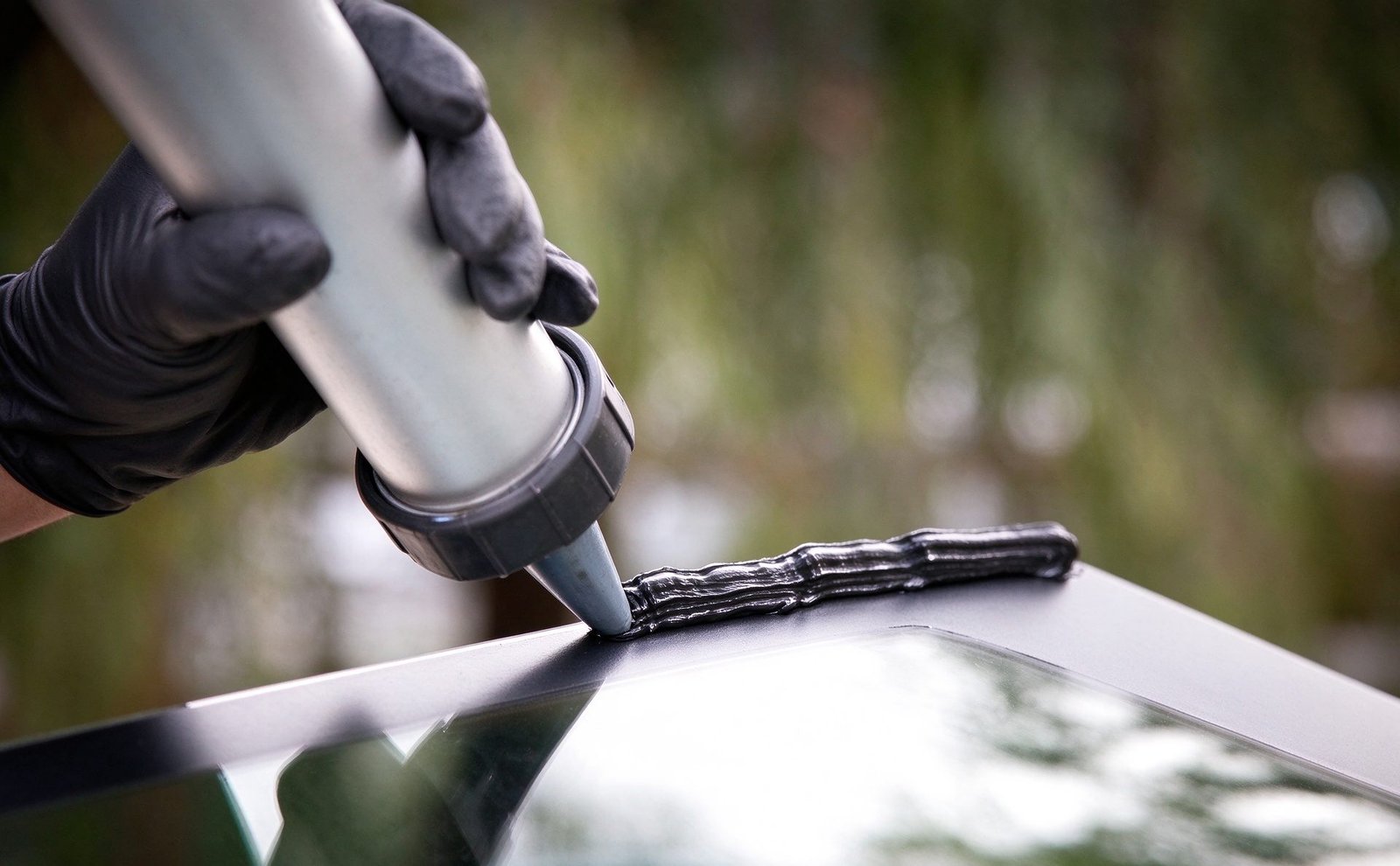
3M Window-Weld: North American Body Shop Familiarity
The 3m urethane windshield adhesive line, specifically 3M Window-Weld 08609, remains an aftermarket staple across North America. Formulated for manual dispensing, this adhesive exhibits smooth extrusion flow even in non-heated cartridge applicators.
3M Window-Weld emphasizes moderate modulus and reliable open times. Technicians gain ample working time to align large windshields before skinning occurs. Its slower curing curve requires longer vehicle holding times before achieving full crash readiness.
Dow Betaseal: The OEM Factory Standard
Dow (formerly DuPont Transportation & Industrial) supplies factory direct glazing adhesives for over 50% of global vehicle production lines. Formulations like Betaseal Xpress30 and 1580 are engineered for automated robotic cells and certified body repair networks.
Betaseal systems require strict adherence to multi-step chemical cleaning and black glass primer protocols. When paired with genuine OEM prep chemicals, Dow urethane provides benchmark lap shear strength and high electrical resistance for integrated glass antennas.
Laboratory Benchmark: Physical & Mechanical Performance Shootout
When evaluating a 3m urethane windshield adhesive against Sikaflex or OEM direct formulations, technicians examine lap shear ratings under standardized tensile pull speeds. To compare physical properties objectively, examine the standardized laboratory metrics below. Values reflect 7-day cured specimens conditioned at 23°C and 50% relative humidity:
| Performance Parameter | Sika Sikaflex-P2G | 3M Window-Weld 08609 | Dow Betaseal Xpress30 | ChemPU OEM Grade |
|---|---|---|---|---|
| Lap Shear Strength (ASTM C961) | 5.0 MPa | 4.8 MPa | 6.2 MPa | 5.5 – 6.5 MPa |
| Tensile Strength (ASTM D412) | 7.0 MPa | 6.5 MPa | 8.5 MPa | 7.5 – 8.5 MPa |
| Elongation at Break (ASTM D412) | 450% | 400% | 500% | 450% – 520% |
| Shore A Hardness (ASTM D2240) | 55 – 60 | 50 – 55 | 60 – 65 | 58 – 62 |
| Safe Drive-Away Time (SDAT) | 3 Hours | 6 – 8 Hours | 30 Minutes | 1 Hour / 2 Hours |
| Dielectric Volume Resistivity | Standard | Standard | > 10^10 Ω·cm | ≥ 10^10 Ω·cm |
| FMVSS 212 / 216 Certification | Compliant | Compliant | Compliant | Fully Certified |
The laboratory data confirms an essential chemical fact: certified OEM direct manufacturing formulations achieve mechanical equivalency with global market leaders. Explore our high tensile strength direct glazing adhesive for comprehensive third-party lab documentation.
Workshop Handling: Viscosity, Gunability, and Cold-Weather Extrusion
Laboratory tensile ratings represent only half of an adhesive’s commercial value. For replacement technicians operating mobile vans or high-throughput shop bays, physical handling characteristics directly determine labor efficiency.
Sag Resistance and Initial Green Strength
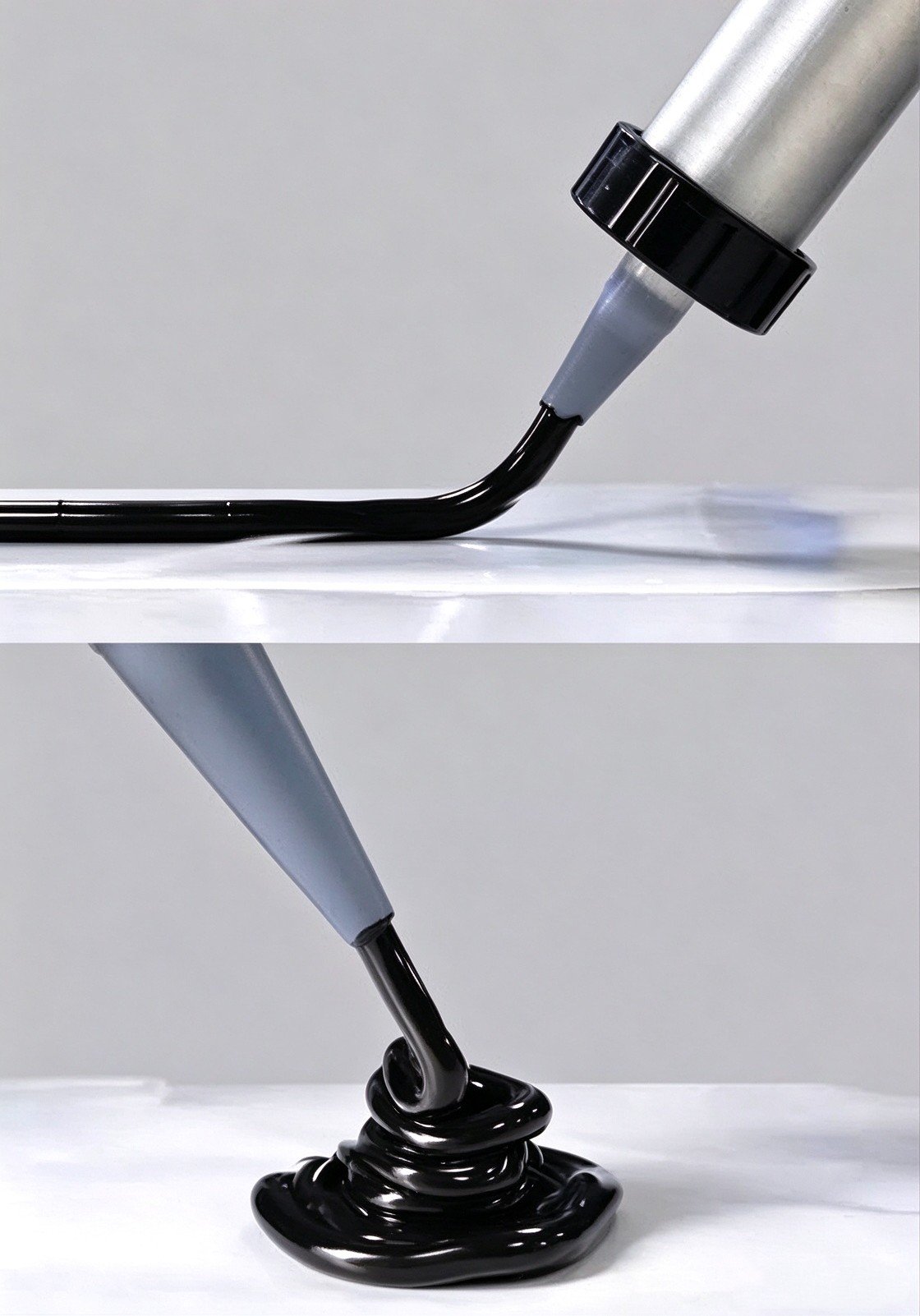
While 3m urethane windshield adhesive provides familiar manual gunning flow, certified OEM high-viscosity polyurethanes offer superior thixotropy for vertical glass installations. When installing heavy laminated glass on steep windshield pillars, low-viscosity adhesives compress unevenly under glass deadweight. Premium urethanes incorporate carbon black reinforcing structures that deliver high green strength immediately after tooling.
Both Sika and certified OEM formulations hold a crisp triangular V-bead without slumping. This mechanical stability ensures uniform bondline thickness around the pinchweld perimeter, preventing glass-to-steel contact.
Winter Dispensing and Viscosity Temperature Curves
In unheated shops during winter, polyurethanes stiffen significantly. Technicians pushing stiff material through standard manual guns experience severe hand fatigue and distorted bead profiles.
Advanced OEM formulations utilize plasticizing blends that maintain smooth gunability down to 5°C. Review our dedicated safe drive-away time calculation protocol to adjust curing expectations across fluctuating workshop temperatures.
Procurement Economics: Brand Premiums vs. Certified OEM Equivalents
Commercial glass companies operate in an intensely competitive repair market where insurer reimbursement rates remain tightly capped. Material costs for cartridges, primers, and cleaner fluids represent a primary controllable variable on the balance sheet.
Cost Structure Breakdown for 1,000 Windshield Replacements
- Tier-1 Multinational Brand Sourcing: Cartridge cost averages $12.00 to $16.50 per unit. Annual consumable outlay for 1,000 installs equals $12,000 to $16,500.
- Direct Manufacturer OEM Sourcing: Equivalent ISO 9001 / IATF 16949 certified urethane averages $4.50 to $7.00 per unit under FOB terms. Annual consumable outlay equals $4,500 to $7,000.
- Direct Bottom-Line Savings: $7,500 to $9,500 in pure margin recovery per 1,000 installations, enabling regional distributors to offer competitive contract pricing.
Switching to direct factory sourcing from China provides substantial packaging flexibility. Commercial operations can order private-label customized aluminum cartridges, 400ml sausages, or bulk 600ml foil packs that minimize environmental packaging waste.
Typical Application Scenario: Regional Fleet Repair Network Transition
Technical Transition Audit: 40-Vehicle Municipal Transit Fleet
Operating Challenge: A metropolitan bus maintenance contractor consumed over 3,000 cartridges of imported Tier-1 polyurethane annually. Escalating supply chain surcharges and extended delivery backorders created severe vehicle maintenance delays.
Verification & Validation Phase: Fleet quality engineers executed comparative mechanical shear testing between their existing brand and ChemPU certified OEM direct glazing urethane. Tests verified lap shear strength exceeding 5.8 MPa and identical cohesion failure modes across galvanized steel and ceramic glass substrates.
Operational Outcome: The municipal authority approved full transition to ChemPU 600ml foil sausage packs. The transit operation lowered consumable procurement expenditure by 42% while preserving complete structural crashworthiness across 18 months of intensive road operations.
Frequently Asked Questions: Auto Glass Adhesive Brand Selection
Can you mix and match primers and adhesives from different brands?
No. Chemical manufacturers formulate primers and polyurethanes as matched bonding systems. Combining a 3M primer with a Sika polyurethane or an unverified aftermarket adhesive can result in chemical incompatibility, plasticizer migration, and catastrophic bondline delamination.
Does using an OEM alternative void vehicle collision repair warranties?
Warranty compliance requires adhering to OEM repair procedures and utilizing adhesives meeting FMVSS 212 barrier crash standards. Legally, repair facilities are not obligated to buy specific brand-name consumables provided the replacement product possesses certified physical properties and OEM testing validation.
What is the shelf life difference between aluminum cartridges and foil sausages?
High-barrier aluminum cartridges with sealed metal bases offer 9 to 12 months of shelf life when stored below 25°C. Multi-layer foil sausages provide comparable 9-month stability while generating 90% less solid chemical packaging waste after extrusion.
Engineering Conclusion: Strategic Sourcing Without Safety Compromise
Brand recognition in the auto glass replacement sector should never overshadow certified physical engineering data. While Sikaflex, Dow Betaseal, and 3M Window-Weld represent established technical standards, certified OEM direct formulations provide equivalent lap shear performance, proven FMVSS 212 crash retention, and compelling supply chain savings. Specifying approved 3m urethane windshield adhesive alternatives empowers automotive glass networks to safeguard both vehicle occupants and commercial profit margins.
Authored by ChemPU Automotive Application Engineering Team
Specializing in OEM direct-glazing polyurethane formulation, crash-retention validation per FMVSS 212 standards, and high-performance structural elastomeric bonding solutions for global automotive manufacturers.
Quality Certification: ISO 9001 / IATF 16949 Certified Adhesive Manufacturing
Source Certified OEM Direct Glazing Polyurethane Adhesives
Partner with ChemPU, an ISO 9001 and IATF 16949 certified Chinese manufacturer. We provide high-modulus polyurethane direct glazing adhesives, black glass primers, and private label cartridges for international distributors and fleet repair networks.
Direct WhatsApp Technical Inquiry: +86 15216655520

