
Automotive glass replacement networks face constant pressure to balance material costs against rigorous crash safety liability. Brand-name urethanes like 3M Windo-Weld and Sika Sikaflex dominate aftermarket recognition, carrying steep brand premiums. Fleet purchasing managers frequently question whether high prices reflect superior polymer chemistry or multinational marketing overhead. Sourcing without verifying physical testing metrics risks either inflated operating costs or compromised crash retention.
Executing a technical automotive windshield adhesive comparison requires evaluating lap shear strength, safe drive-away time (SDAT), and dielectric resistivity. Commercial glass distributors must determine if certified OEM-grade direct glazing formulations match Western Tier-1 benchmarks under real workshop conditions.
This engineering guide delivers an objective comparison between 3M, Sika, and direct OEM manufacturing formulations. We dissect technical data sheets, chemical cross-linking kinetics, and total procurement economics. Auto glass shop owners and international distributors will gain verifiable criteria to optimize their adhesive supply chains.
Executive Summary: Key Takeaways for Auto Glass Procurement & Fleet Operations
- Chemical Parity: Certified OEM-grade polyurethanes utilize identical aromatic isocyanate (MDI) and polyol prepolymer chains as Tier-1 brands, delivering equivalent lap shear ratings above 5.5 MPa.
- FMVSS 212 Safety Compliance: Compliance depends strictly on verified mechanical tensile retention during crash deceleration, not brand logos printed on aluminum cartridge packaging.
- Brand-Specific Positioning: 3M urethane windshield adhesive systems emphasize broad availability; Sika Sikaflex focuses on rapid primerless SDAT; OEM direct manufacturing delivers maximum formulation flexibility and margin control.
- Packaging Waste Economics: Switching from standard 310ml aluminum cartridges to 400ml or 600ml foil sausages reduces chemical residue waste by over 80% across high-volume repair shops.
Technical Benchmark Comparison: 3M Windo-Weld vs. Sikaflex vs. Direct OEM Formulations
Auto glass urethane specifications must be evaluated through standardized laboratory metrics. Comparing tensile strength, elongation, and curing kinetics reveals the exact performance capabilities of Tier-1 and OEM direct adhesives.
Automotive glass replacement technicians encounter diverse formulations daily. The table below compares benchmark products: 3M Fast Cure Auto Glass Urethane (08693), Sika Sikaflex P2G, and ChemPU Advanced Direct Glazing Polyurethane.
| Technical Specification | 3M Fast Cure (08693) | Sika Sikaflex P2G | ChemPU OEM Direct |
|---|---|---|---|
| Polymer Chemistry | 1K Moisture-Cure PU | 1K Moisture-Cure PU | 1K Moisture-Cure PU |
| Tensile Lap Shear Strength | 5.5 to 6.2 MPa | 5.8 to 6.5 MPa | 6.0 to 6.8 MPa |
| Safe Drive-Away Time (SDAT) | 2 Hours (at 23°C, 50% RH) | 3 Hours (Dual Airbag) | 30 Min to 2 Hours (Graded) |
| Shore A Hardness | 55 to 60 | 55 to 62 | 58 to 65 |
| Volume Resistivity | Standard Semi-Conductive | Non-Conductive Available | > 1010 Ω·cm (Non-Conductive) |
| Crash Standard Certification | FMVSS 212 / 216 | FMVSS 212 / 216 | FMVSS 212 / 216 / IATF 16949 |
Analysis of 3M Automotive Glazing Products
3M built widespread brand loyalty through historical products like windo weld ribbon sealer and 3M Auto Glass Urethane 08693. Their polyurethanes offer consistent rheology and predictable cure speeds. High retail packaging distribution makes them readily accessible across small repair shops, though unit prices remain elevated due to distribution markups.
Analysis of Sika Automotive Polyurethanes
The sikaflex windshield adhesive series, including Sikaflex P2G and Sikaflex 256, holds strong positions within European OEM production lines. Sika formulations demonstrate exceptional thixotropy, eliminating bead sag on vertical glass. Installers value their accelerated chemical catalysts, maintaining fast drive-away times even during moderate winter weather.
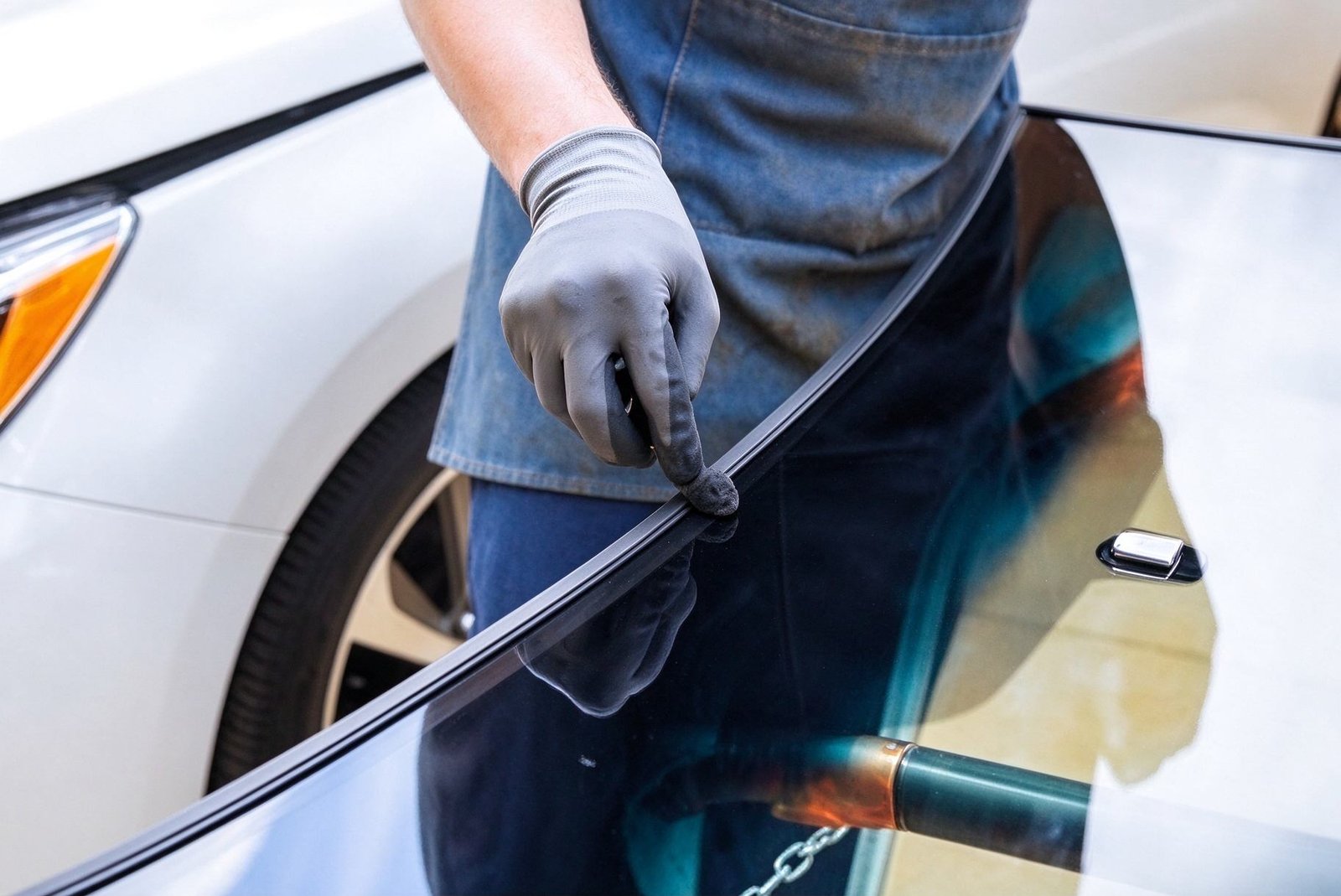
Why Commercial Distributors Partner Directly with OEM-Grade Manufacturers
For independent auto glass replacement networks and regional chemical distributors, purchasing Tier-1 branded cartridges often caps gross profit margins below 25%. Direct partnership with certified Chinese OEM manufacturers transforms operational economics.
Supply Chain Cost Arbitrage Without Quality Compromise
Multinational adhesive corporations operate extensive intermediate warehousing and multi-tier distributor networks. Sourcing directly from an established automotive glass adhesive factory eliminates brand licensing premiums. Distributors reduce landed procurement costs while securing identical raw material chemical purity.
Custom Packaging and Private Labeling Options
Tier-1 brands do not permit custom private labeling for mid-sized distributors. Direct OEM manufacturing partners offer flexible 310ml litho-printed aluminum cartridges, 400ml/600ml foil sausages, and integrated replacement kits containing primers, wool daubers, and pre-cut triangular nozzles under your proprietary brand identity.
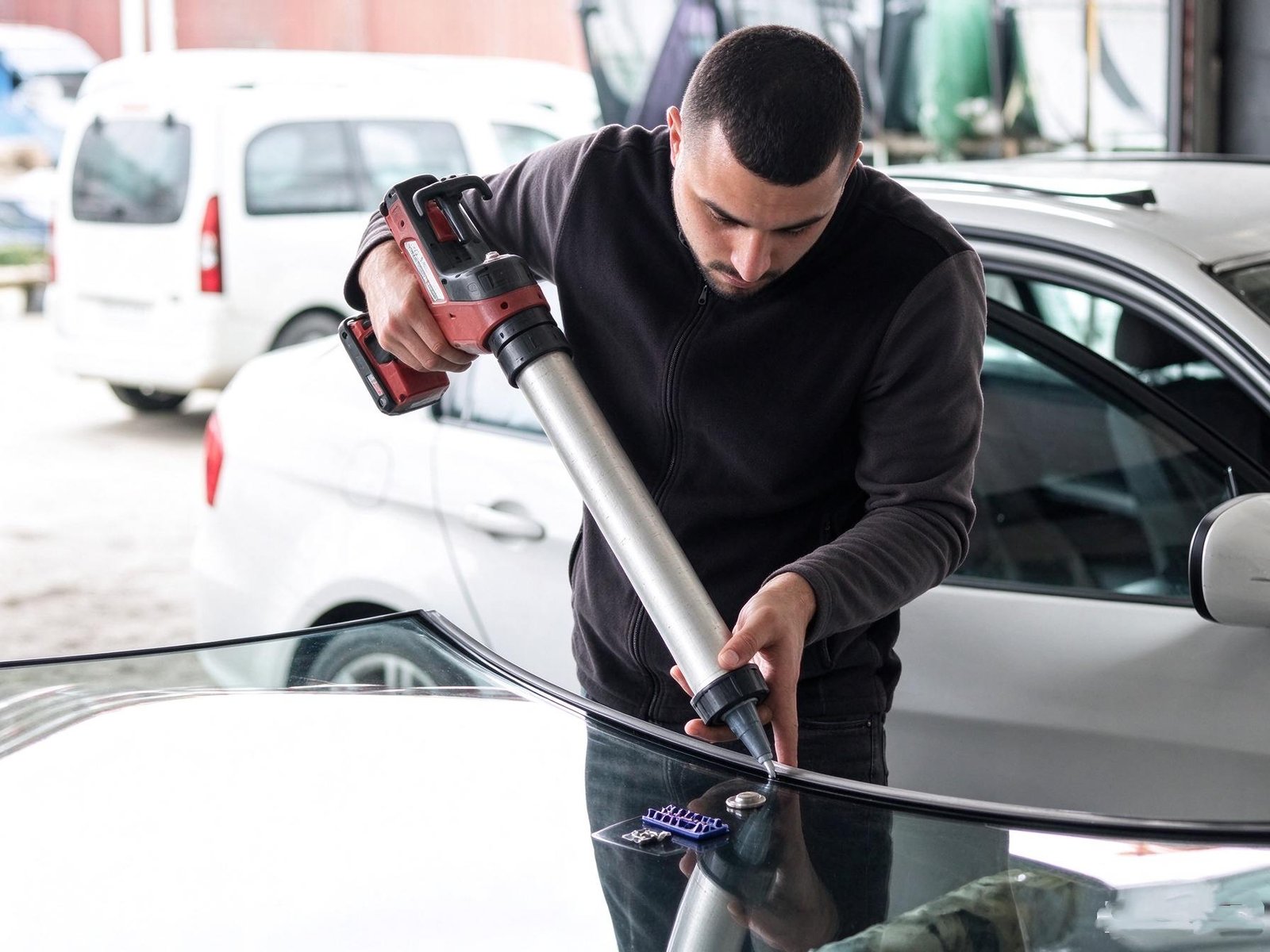
Typical Application Scenarios: Workshop Realities Across Diverse Climates
Real-world glass replacement operations reveal distinct operational requirements across high-volume collision centers and remote mobile service units.
Scenario A: High-Turnaround Express Mobile Glass Replacement Fleet
Mobile glass repair operators require rapid vehicle turnaround times to complete multi-stop urban schedules. Releasing customer vehicles within 60 minutes mandates adhesives with certified fast-curing catalysts.
While sikaflex auto products provide reliable SDAT ratings, high cartridge unit costs diminish mobile operator profitability. Implementing an OEM-formulated 30-minute fast cure polyurethane matches required drive-away safety while expanding profit margins.
Scenario B: Commercial Bus and Transport Coach Manufacturing
Commercial bus assembly lines install massive windshields and side windows exceeding 2.5 meters in height. Technicians require extended open working times of 25 to 35 minutes to position glass panels without premature bead skinning.
Engineers specify a tailored auto glass urethane windshield adhesive with high initial wet-grab (green strength). This property supports heavy glass plates on vertical frames, preventing slippage during mechanical curing.
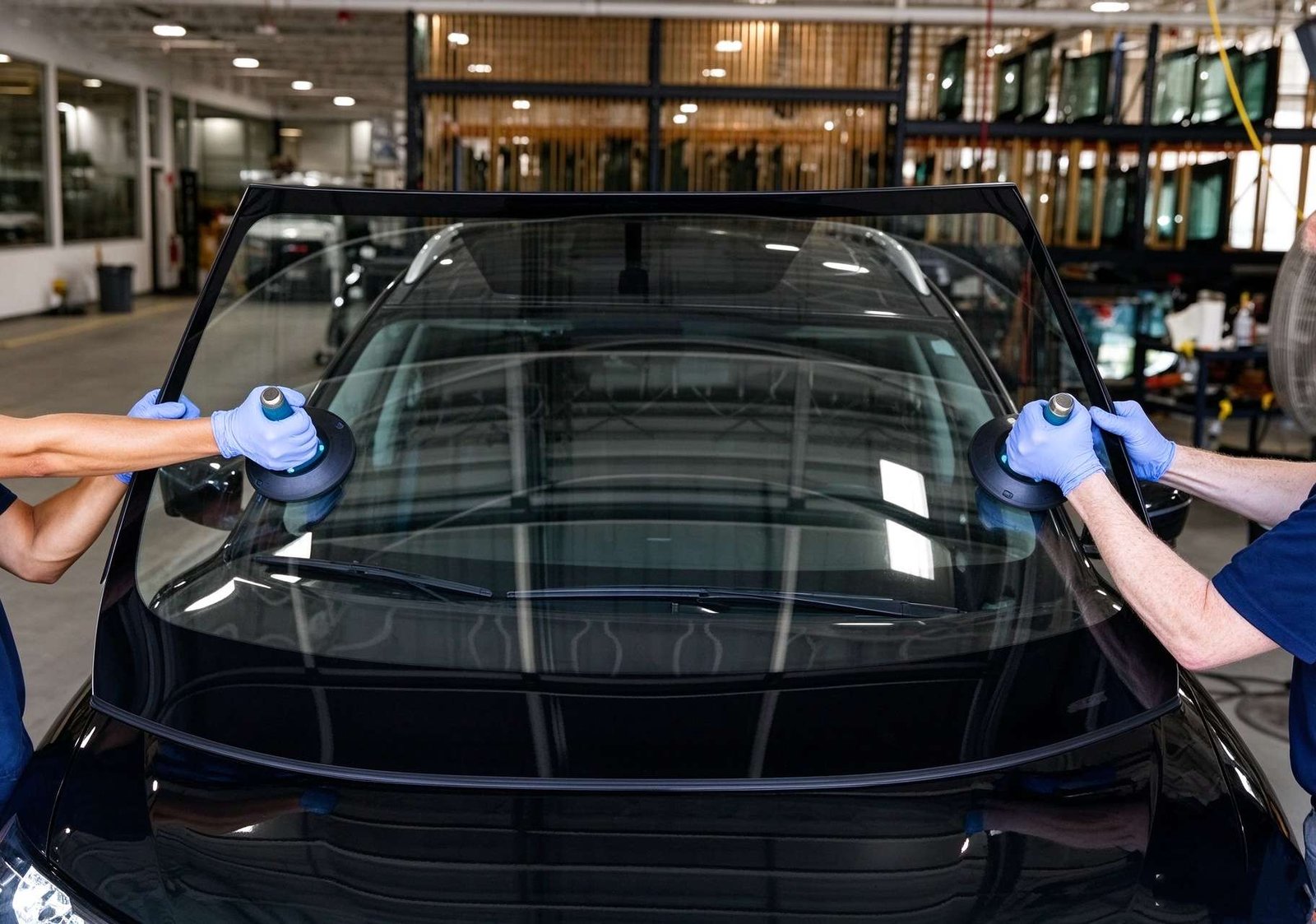
Standard Operating Procedure: Quality Control for Direct Glazing Installation
Adhering to strict Auto Glass Replacement Safety Standards (AGRSS) prevents adhesive delamination and water leakage regardless of the adhesive brand selected.
Step 1: Pinchweld Preparation and Rust Inspection
Trim existing polyurethane down to a uniform 1 to 2 mm residual base layer. Never scrape down to bare metal unless corrosion is present. If bare steel pinchweld is exposed, apply an approved anti-corrosion primer immediately.
Step 2: Glass Surface Cleaning and Priming
Clean the ceramic frit perimeter using an alcohol-based degreaser and lint-free towels. Apply a continuous layer of black glass primer. Allow 5 to 10 minutes of flash-off time until the primer achieves a matte finish.
Step 3: Triangular V-Notch Bead Dispensing and Setting
Cut the dispensing tip into a triangular V-notch matching pinchweld profile depth. Dispense a seamless bead perpendicular to the glass. Set the windshield within open time, applying gentle, uniform perimeter pressure.
Engineer’s Technical Trade-Offs: Practical Boundaries of Windshield Adhesives
Every adhesive formulation involves specific engineering trade-offs. Workshop managers must balance operational parameters against environmental constraints.
- Cure Speed vs. Open Working Time: Formulations engineered for 30-minute SDAT exhibit short open times (8 to 10 minutes). Technicians working on large panoramic glass risk skinning if placement is delayed.
- High Modulus vs. Extrusion Force: High-modulus polyurethanes deliver superior torsional chassis rigidity, but feature high paste viscosity requiring commercial battery-powered dispensing guns.
- Moisture Dependency: Single-component polyurethanes require ambient relative humidity above 20%. Cold winter installations below 5°C require pre-warmed cartridges to maintain extrusion flow.
- Primerless Claims: So-called “primerless-to-glass” urethanes require pristine, factory-clean frit bands. Professional shops maintain safety margins by applying primer across all replacements.
Frequently Asked Questions: Automotive Windshield Adhesive Sourcing
Are OEM-grade polyurethanes from China as safe as 3M or Sika products?
OEM-grade polyurethanes produced by IATF 16949 certified factories meet the identical FMVSS 212 barrier crash and FMVSS 216 roof crush standards as Tier-1 brands. Safety performance is governed by verified lap shear tensile strength and chemical cross-linking density, which independent testing laboratories validate per international automotive standards.
Can technicians use old butyl tape ribbons on modern direct-glazed vehicles?
Technicians must never use butyl ribbons on modern vehicles designed with direct-glazed windshields. Butyl tape ribbons lack structural tensile strength and will fail to retain the windshield during passenger airbag deployment, violating federal motor vehicle safety regulations.
What is the typical shelf life of polyurethane windshield adhesive cartridges?
Unopened aluminum cartridges and foil sausages maintain a shelf life of 9 to 12 months when stored in climate-controlled environments between 10°C and 25°C. Excessive ambient humidity and heat accelerate isocyanate prepolymer degradation inside sealed packaging.
Engineering Summary: Optimizing Your Automotive Adhesive Supply Chain
Selecting automotive direct glazing adhesives should be guided by mechanical data, certified crash compliance, and supply chain efficiency. While 3M and Sika represent established industry benchmarks, partnering directly with an ISO 9001 and IATF 16949 certified manufacturer delivers equivalent engineering performance, tailored curing kinetics, and substantial margin advantages.
Authored by ChemPU Automotive Application Engineering Team
Specializing in OEM direct-glazing polyurethane formulation, crash-retention validation per FMVSS 212 standards, and high-performance structural elastomeric bonding solutions for global automotive manufacturers.
Quality Certification: ISO 9001 / IATF 16949 Certified Adhesive Manufacturing
Source Certified OEM-Grade Windshield Adhesives from ChemPU
Partner with ChemPU, an ISO 9001 and IATF 16949 certified Chinese adhesive manufacturer. We provide private label 310ml aluminum cartridges, 400ml/600ml foil sausages, and fast-curing direct glazing solutions tailored for international distributors and fleet repair networks.
Direct WhatsApp Technical Inquiry: +86 137 7441 4434

