
Automotive glass replacement facilities constantly balance bay productivity against long-term structural liability. In fast-paced mobile service vans and high-volume collision centers, technician labor minutes represent the primary operational bottleneck. The chemical choice between a primerless windshield adhesive and a traditional primer-required system shapes both installation speed and adhesive bondline integrity.
Advocates of primerless adhesives emphasize rapid turnaround and the elimination of chemical preparation steps. Proponents of multi-step primer systems argue that separate black glass primers provide superior ultraviolet shielding and corrosion resistance across aging vehicle bodies. Misapplying either technology risks catastrophic bondline delamination during highway operation.
This engineering guide delivers an exhaustive technical comparison between primerless direct-to-glass polyurethanes and multi-step primer protocols. We dissect silane coupling agent kinetics, flash-off timing windows, and workshop economics. Collision managers and glass technicians will acquire clear technical guidelines to maximize stall throughput without compromising passenger crash retention.
Key Takeaways: Primerless vs. Primer-Required Direct Glazing
- Chemical Mechanism: Primerless polyurethanes incorporate organofunctional silane coupling agents directly into the polymer backbone, bonding covalently to clean ceramic glass frit.
- Labor Efficiency: Eliminating separate glass cleaner, activator, and black primer steps saves 10 to 15 minutes of mandatory flash-off waiting time per windshield installation.
- Bare Metal Limitations: Primerless adhesives bond to glass and freshly trimmed original urethane. They do not protect bare metal scratches against rust or provide UV blocking on clear glass.
- Total Durability Parity: When applied over intact OEM ceramic frit bands and freshly trimmed urethane beads, certified primerless systems match the lap shear strength and FMVSS 212 crash retention of primed systems.
How Primerless Technology Works: Built-In Silane Adhesion Promoters
A true primerless polyurethane does not omit the primer’s chemical function. It pre-incorporates latent adhesion promoters into the polyurethane matrix, initiating substrate bonding upon contact.
In traditional direct glazing, glass surfaces present inorganic silicon dioxide structures ($SiO_2$) that repel organic polyurethane prepolymers. Traditional systems require a wipe-on liquid primer containing bifunctional silanes. One end of the silane molecule bonds with glass silica, while the other end cross-links with the polyurethane isocyanate.
In a modern primerless windshield adhesive, formulators blend organosilanes directly into the moisture-curing polyurethane prepolymer. When extruded onto the ceramic frit, ambient moisture activates the silanes. The silanes migrate toward the inorganic glass interface, forming robust siloxane covalent bonds ($Si-O-Si$).
The Role of the OEM Ceramic Frit Band
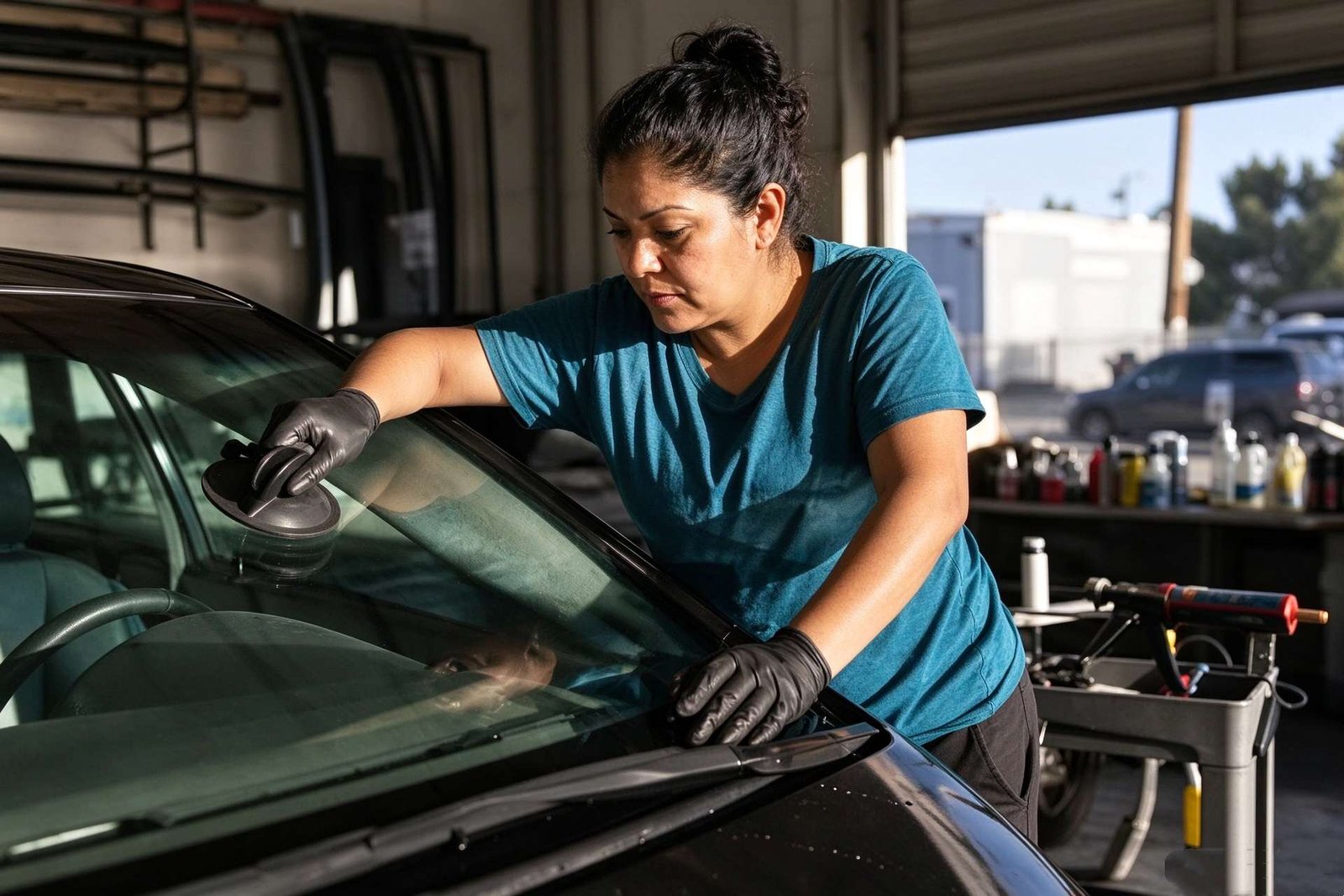
A fundamental technical rule governs primerless installations: the glass must possess an intact, baked-on black ceramic frit band. The ceramic frit serves two vital engineering functions:
First, it provides a high-energy micro-rough surface for silane chemical anchorage. Second, it forms an impenetrable optical barrier against destructive solar ultraviolet radiation. Because primerless adhesives lack the thick carbon-black film of a painted primer, the ceramic frit must block 100% of incoming UV rays to prevent photodegradation.
The Primer-Required Protocol: Cleaner, Activator, and Black Glass Primer
The traditional multi-step direct glazing protocol has served as the automotive assembly benchmark for over three decades. This multi-step process incorporates three specialized chemical layers:
1. Surface Decontamination Cleaner
Specialized solvent blends remove silicone release agents, road oils, and shipping residues from the glass perimeter. Without meticulous cleaning, surface oils interfere with chemical bonding.
2. Clear Glass Activator
Wiped on and buffed off, the activator leaves an invisible molecular monolayer of silane coupling agents. This monolayer pre-conditions the substrate for subsequent black primer adhesion.
3. Black Glass Pinchweld Primer
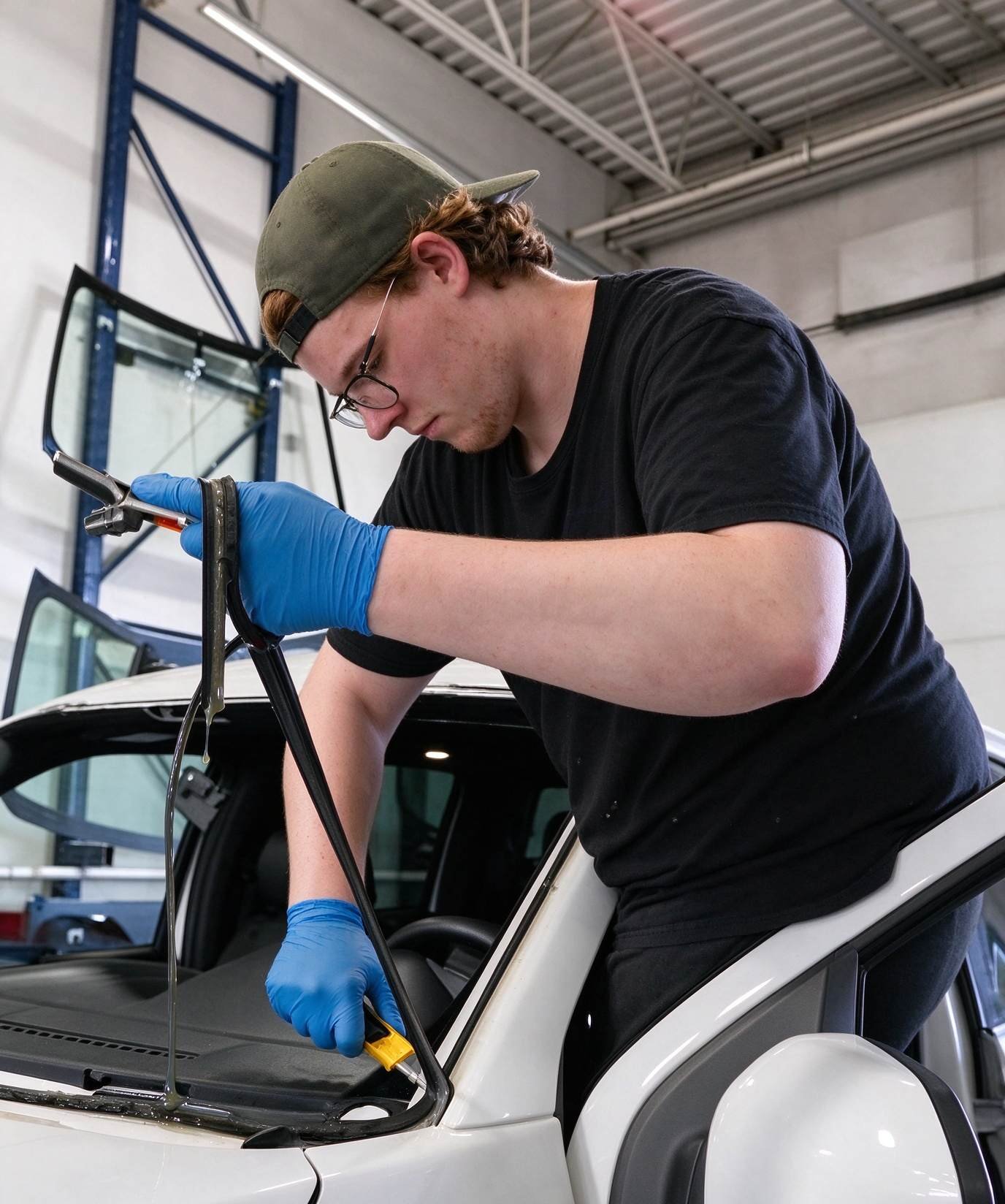
Applied via a felt dauber, this opaque black coating provides complete UV opacity. It also seals minor scratches on the painted metal pinchweld, preventing premature rust formation under the adhesive bead. Learn more about mechanical parameters in our 4.5 MPa shear strength polyurethane specifications.
Technical Shootout: Primerless vs. Primer-Required Adhesives
Examine the direct technical comparison below to understand operational trade-offs between both chemical systems:
| Evaluation Parameter | Primerless Urethane | Primer-Required System | Operational Impact |
|---|---|---|---|
| Preparation Steps | 1 Step (Clean Glass Only) | 3 Steps (Clean, Activate, Prime) | Primerless reduces technician touch time |
| Flash-Off Waiting Time | 0 Minutes (Immediate Extrusion) | 10 to 15 Minutes Mandatory | Saves 15 min per bay turnover |
| Bare Metal Scratch Protection | None (Requires Separate Primer) | Excellent (Black Primer Barrier) | Scratched pinchwelds must be primed |
| UV Photodegradation Resistance | Relies 100% on Glass Frit Band | Dual Barrier (Frit + Black Primer) | Primer protects low-opacity aftermarket glass |
| Cataplasm Aging Adhesion (70°C/95% RH) | 100% Cohesive Failure | 100% Cohesive Failure | Equal bond strength when properly prepped |
| Chemical Consumable Sourcing | Single Cartridge / Sausage | Cartridge + Daubers + Primer Cans | Lower inventory complexity with primerless |
| Risk of Application Error | Low (Fewer Manual Steps) | Moderate (Primer Over-application) | Eliminates wet primer wipe-off mistakes |
The comparison confirms that while both systems deliver identical cohesive failure strength, a certified primerless windshield adhesive streamlines workshop logistics. Compare global brand performance profiles in our Sikaflex, 3M, and Betaseal benchmark review.
Non-Negotiable Boundaries: When You Must Still Use Primer
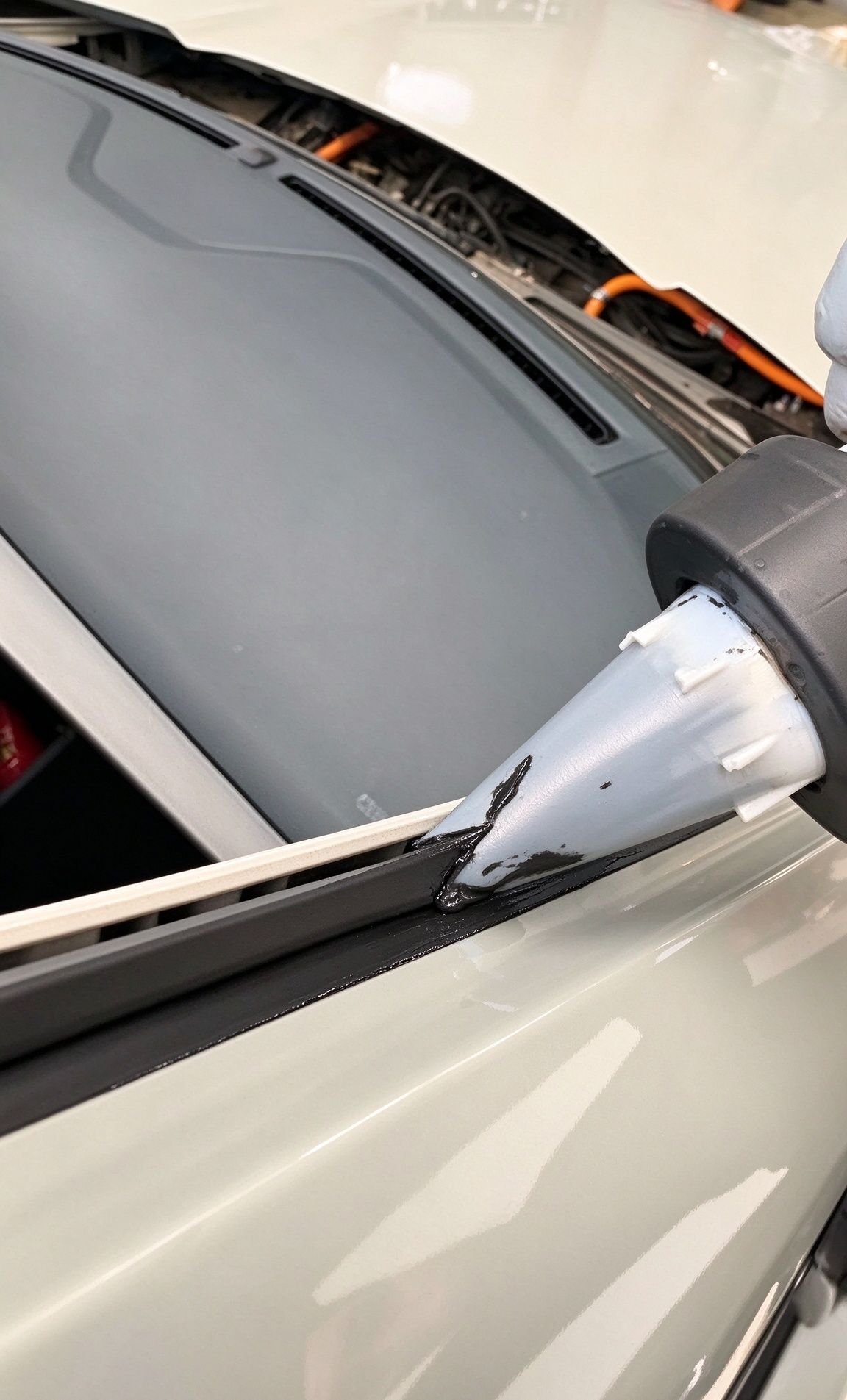
Automotive glass technicians must never treat primerless adhesives as universal magic coatings. Industry safety standards define strict conditions where applying a dedicated pinchweld primer remains mandatory:
Mandatory Primer Usage Scenarios
- Exposed Bare Metal Scratches: If a cold knife or oscillating blade cuts through the vehicle’s paint down to bare steel or aluminum, technicians must apply an approved pinchweld primer to prevent rust formation.
- Clear Glass or Missing Ceramic Frit: Vintage vehicles or inexpensive aftermarket glass lacking an opaque ceramic frit band require full black glass primer to prevent UV-induced adhesive failure.
- Contaminated or Degraded Old Urethane: If the residual pinchweld urethane was cut down hours earlier and exposed to dust, primer is required to re-activate the substrate.
- Specific OEM Procedure Directives: Certain vehicle manufacturers mandate multi-step primer systems within their official warranty repair procedures.
Encapsulated Glass and Pre-Applied Adhesive Modules
Many modern rear quarter glasses and liftgate assemblies arrive from parts suppliers with pre-applied RIM (Reaction Injection Molding) polyurethane gaskets. Technicians cannot assume these synthetic elastomer borders accept direct bonding without chemical activation.
Bonding directly to aged RIM moldings without specialized plastic adhesion promoters causes adhesive release under vibration. When installing modular encapsulated parts, technicians must clean the molding thoroughly and apply an approved specialty primer before applying primerless windshield adhesive.
Typical Application Scenario: Commercial Glass Fleet Efficiency Audit
Operational Efficiency Audit: 12-Van Mobile Windshield Operation
Operating Bottleneck: A regional mobile glass repair company completed an average of 48 windshield replacements daily across 12 mobile service vans. Technicians reported frequent installation delays while waiting for multi-step black glass primers to flash off in cool, humid weather conditions.
Transition to Certified Primerless Chemistry: Management transitioned technicians to ChemPU fast-curing primerless windshield adhesive. Technicians continued carrying pinchweld primer bottles exclusively for treating accidental bare metal scratches during old urethane cut-out.
Commercial Results: Eliminating the glass priming and flash-off step saved 12 minutes per job. Each technician gained sufficient time to complete one additional replacement daily, expanding company-wide service revenue by 25% without compromising safety warranties.
Frequently Asked Questions: Primerless Windshield Adhesives
Do primerless adhesives have a shorter shelf life than standard urethanes?
No. When packaged in moisture-barrier aluminum cartridges with hermetic metal base seals, certified primerless polyurethanes provide a standard 9 to 12-month shelf life when stored below 25°C.
Can you apply a primerless adhesive over an existing black glass primer?
Yes. Primerless polyurethane bonds securely to properly dried, compatible black glass primers. While priming clean frit is redundant, it will not impair adhesion provided the primer has fully flashed off.
How do technicians clean glass before applying primerless adhesive?
Clean the ceramic frit perimeter thoroughly using a residue-free non-ammoniated glass cleaner or specialized solvent wipe. The surface must be completely dry and free from silicone contaminants before adhesive gunning.
Engineering Conclusion: Optimizing Efficiency Without Compromise
Direct glazing technology has evolved toward greater workshop efficiency and reduced installation touch points. Modern primerless windshield adhesive systems deliver verifiable labor savings and cohesive lap shear parity when applied over OEM ceramic frit bands. Glass repair businesses maximize profitability and quality control by standardizing on primerless urethane while keeping pinchweld primer on hand for bare metal touch-ups.
Authored by ChemPU Automotive Application Engineering Team
Specializing in OEM direct-glazing polyurethane formulation, crash-retention validation per FMVSS 212 standards, and high-performance structural elastomeric bonding solutions for global automotive manufacturers.
Quality Certification: ISO 9001 / IATF 16949 Certified Adhesive Manufacturing
Source Certified OEM Direct Glazing Polyurethane Adhesives
Partner with ChemPU, an ISO 9001 and IATF 16949 certified Chinese manufacturer. We provide high-modulus polyurethane direct glazing adhesives, black glass primers, and private label cartridges for international distributors and fleet repair networks.
Direct WhatsApp Technical Inquiry: +86 15216655520

