
Automotive structural repairs along rocker panels, wheel arches, and floor pans frequently fail due to crevice rust and fatigue separation at the pinch weld. These failures compromise passenger cabin integrity during severe side-impact collisions.
Modern OEM manufacturing mandates weld-bonding to build unibody vehicle structures. Combining structural epoxy adhesives with squeeze-type resistance spot welding creates joints with double the fatigue resistance of conventional spot welds.
However, executing weld-bonding in production lines or collision repair facilities requires precise current settings, squeeze times, and external sealing. Improper adhesive shunting or unsealed flange edges cause weld expulsion and moisture penetration. This engineering protocol outlines weld-bonding parameters and elastomeric sealing procedures to guarantee complete joint integrity.
Key Takeaways: Weld-Bonding Joint Standards
- Structural Synergies: Weld-bonding yields over 28 MPa lap shear strength, surpassing mechanical fasteners and standard spot welds.
- Crevice Corrosion Defense: Structural epoxy fills the internal metal interface, while external seam sealer shields raw sheared sheet edges.
- Controlled Shunting: Calibrated electrode squeeze force displaces adhesive films, creating clean metal-to-metal contact before welding current initiates.
- Acoustic & NVH Damping: Continuous polymer layers eliminate microscopic joint friction, reducing road buzz and body structure vibrations.
- Safety Certification: Replicating OEM weld-bonding protocols restores original FMVSS 208 and FMVSS 214 passenger safety ratings.
Mechanical Metallurgy: Stress Distribution & Electrical Shunting
Conventional resistance spot welding concentrates mechanical load around individual weld nuggets. Under cyclic highway vibration, peak torsional stress concentrates at the nugget perimeter. This localized strain initiates fatigue micro-cracks across unibody joints.
Weld-bonding transforms point-load connections into uniform structural planes. The high-modulus epoxy matrix transfers shear forces across the entire overlapping flange. Spot welds serve as immediate mechanical fixtures that hold panels securely while the adhesive cures.
Electrode Squeeze Mechanics Through Liquid Epoxies
Structural epoxies behave as electrical insulators in their uncured state. Squeeze-type resistance spot welders (STRSW) must exert substantial pneumatic clamping pressure (typically 400 to 600 daN) before firing current.
This clamping force displaces viscous adhesive away from the weld zone. Steel sheets establish intimate microscopic contact, allowing high welding current (8,000 to 12,000 A) to forge a dense nugget without adhesive burning.
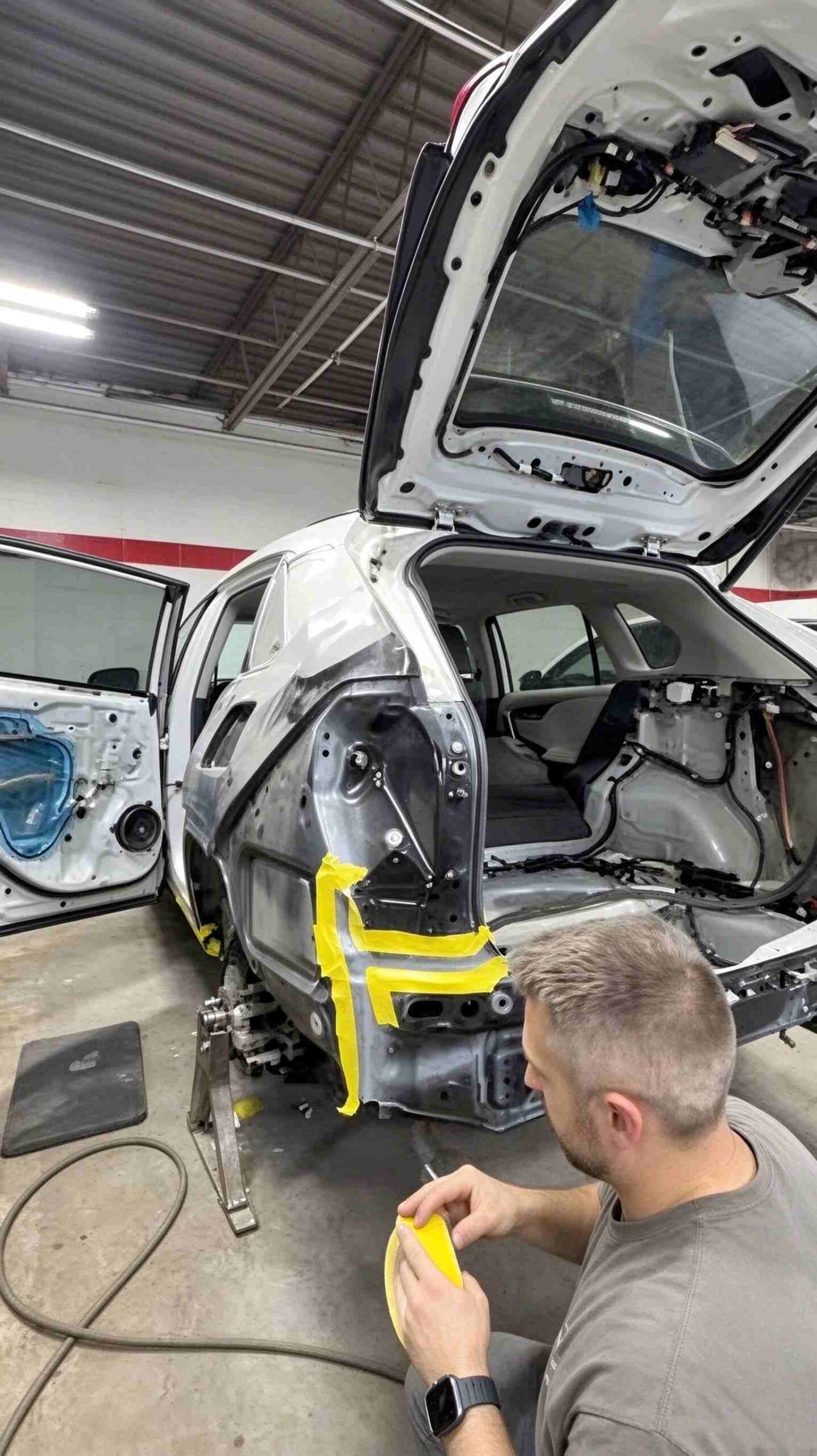
Figure 1: Technician aligning unibody structure flanges prior to structural adhesive dispensing and resistance spot welding.
Flange Joining Technology Performance Benchmark
Evaluating automotive joining methods demonstrates why global vehicle manufacturers adopt weld-bonding along primary passenger cell structures. The table below compares structural shear strength, fatigue life cycles, and corrosion resistance.
| Joining Method | Lap Shear Strength | Fatigue Endurance | Corrosion Resistance |
|---|---|---|---|
| Weld-Bonding (STRSW + 2K Epoxy) | > 28 MPa | > 1,000,000 Cycles | > 1,500 hrs (ASTM B117) |
| Conventional Resistance Spot Welding | 18 – 22 MPa | 250,000 Cycles | < 500 hrs (Crevice rust) |
| Structural Adhesive Alone | 22 – 25 MPa | 600,000 Cycles | > 1,000 hrs |
| MIG / MAG Plug Welding | 16 – 20 MPa | 180,000 Cycles | < 350 hrs (Zinc loss) |
Capillary Crevice Rust at Unsealed Pinch Welds
Spot welding without adhesive leaves microscopic gaps (0.05 mm to 0.25 mm) between stacked sheet metal layers. Road spray containing winter deicing salts enters these microscopic voids through capillary action.
Once trapped inside the unvented seam, acidic electrolytes trigger aggressive crevice oxidation. Internal rust expands by up to six times its original metal volume. This expansive force pries spot welds apart, causing structural joint failure.
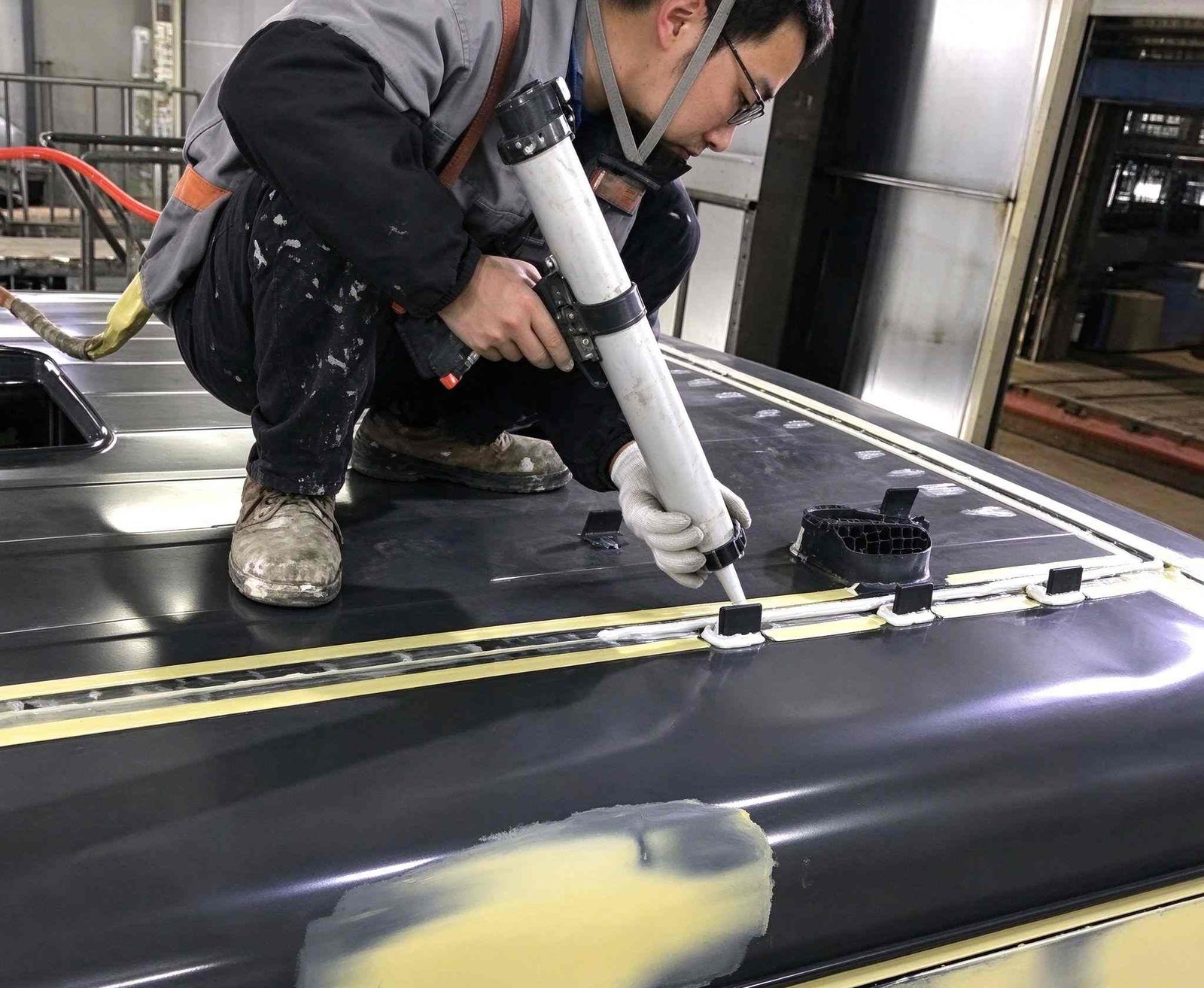
Figure 2: Technician applying flexible seam sealer along unibody vehicle seams to establish watertight corrosion barriers.
Standard Operating Procedure: Weld-Bonding & Pinch Weld Sealing
Fabricating defect-free weld-bonded assemblies requires rigorous execution of this four-stage engineering sequence.
Four-Step Weld-Bond & Seal Protocol
- Flange Profiling & Cleaning: Remove factory e-coat and rust down to bright steel using P80 abrasives. Wipe clean with residue-free solvent degreaser to ensure optimum chemical wetting.
- Structural Epoxy Application: Purge and balance the 2K structural epoxy cartridge. Dispense a uniform 6 mm continuous bead along the mating flange center, buttering bare metal to prevent air voids.
- Inverter Spot Welding Execution: Clamp panels with locking grips to establish baseline squeeze. Position STRSW electrode tips directly through wet adhesive. Program extended squeeze cycles (300 to 450 ms) to displace resin before firing weld current according to OEM thickness charts.
- External Seam Sealer Encapsulation: Clean external squeeze-out. Scuff exterior joints and apply high-elasticity automotive seam sealer along exposed sheared edges to prevent edge creep.
Sealing Raw Sheared Metal Edges
Even with structural adhesive between mating sheets, stamp-sheared sheet edges remain ungalvanized and unprotected. Direct atmospheric exposure oxidizes these bare edges rapidly under road wash.
Capping the exterior seam with flexible polyurethane or MS polymer seam sealer seals these raw edges. This durable cap prevents moisture ingress into the bonded assembly, ensuring long-term rust resistance.
Collision Standards & Nondestructive Joint Verification
Automotive crash structures such as lower rocker sills, B-pillar reinforcements, and rear frame rails must dissipate kinetic impact forces without unzipping.
OEM position statements prohibit replacing weld-bonded factory seams with simple plug welds. Maintaining continuous structural adhesive bonds, as detailed in our panel bond vs seam sealer technical guide, preserves critical unibody crashworthiness.
Chisel Tear Testing Quality Audits
Production facilities validate spot weld integrity by performing destructive chisel tests on scrap metal coupons. A calibrated chisel is driven between welded sheets adjacent to the spot nugget.
Acceptable joints demonstrate full parent metal tear-out (slug pull) rather than interfacial separation at the weld nugget. The surrounding epoxy layer must exhibit 100% cohesive failure without adhesive delamination from the steel substrate.
Typical Application Scenario: Electric Delivery Van Rocker Panel Repair
Restoring Battery Enclosure Structural Rigidity & Weatherproof Sealing
Vehicle Fleet: A commercial logistics operator repairing lower rocker panels on 25 electric delivery vans after heavy side-impact collisions.
Field Failure: Initial repairs utilized manual MIG plug welding without internal structural adhesive. Road vibration and battery pack weight caused fatigue cracks around plug welds within 12 months. Rainwater infiltrated through open gaps, saturating underfloor insulation and triggering battery pack insulation resistance fault warnings.
Corrective SOP: Technicians rebuilt all replacement outer rocker sills utilizing ChemPU high-modulus two-component structural epoxy. Inverter spot welding was executed with extended pre-squeeze cycles. External seams received an encapsulation bead of ChemPU MS polymer seam sealer along the lower pinch weld step.
Verification Results: Ultrasonic inspection confirmed 100% void-free adhesive coverage between spot welds. High-pressure water spray testing at 150 bar showed zero moisture penetration into battery cavities. Two-year commercial fleet audits documented flawless structural rigidity and zero electrical insulation faults.
Frequently Asked Questions: Weld-Bonding & Pinch Weld Sealing
Does wet structural adhesive damage spot welding electrodes during weld-bonding?
No. With adequate pneumatic clamping pressure and proper pre-squeeze programming, electrode tips displace the liquid adhesive completely. This ensures direct copper-to-steel contact before current initiation, preventing tip carbonization or contamination.
Why is seam sealer required if structural adhesive is already applied inside the pinch weld?
Structural adhesive seals internal overlapping mating faces, but exposed outer sheet edges remain raw stamped steel without protective coatings. Exterior seam sealer encapsulates these exposed metal edges, preventing atmospheric edge rust and moisture intrusion.
Can you weld through cured structural panel adhesive?
Never. Once structural epoxy cures into a solid thermoset polymer, it cannot be displaced by electrode force. Attempting to spot weld through cured adhesive creates violent electrical arcing, severe molten metal expulsion, and weak, brittle weld nuggets.
Technical Review by ChemPU Unibody Structure & Welding Lab
Authored by Senior Automotive Joining Engineers specializing in resistance spot welding (STRSW), structural epoxy weld-bonding, and unibody flange corrosion protection. Certified under ISO 9001 and IATF 16949 standards.
Source OEM-Grade Structural Adhesives & Seam Sealers
Upgrade your bus manufacturing, fleet rebuild, and collision facilities with ChemPU weld-bonding epoxies and elastic seam sealers. Double fatigue life, prevent pinch weld crevice corrosion, and meet OEM collision standards.
Direct WhatsApp Technical Inquiry: +86 15216655520

