
Collision repair facilities often battle paint wrinkling, solvent blistering, or alligator cracking along sealed body joints. These coating defects frequently occur when applying basecoat systems over a paintable seam sealer before internal curing stabilizes.
Accelerating dry cycles with short-wave infrared lamps introduces severe thermal stress. If oven radiant heat exceeds polymer glass transition thresholds, trapped moisture or escaping amine catalysts disrupt curing basecoat films.
Balancing vehicle throughput with paint durability requires strict adherence to chemistry-specific paint-over windows. This technical protocol defines skin formation kinetics, infrared heating curves, and elastomeric flexibility standards under ASTM and DIN testing.
Key Takeaways: Seam Sealer Paint Windows & Bake Rules
- Chemistry Paint Windows: 1K polyurethanes require 30 to 60 minutes skin-over; MS polymers allow immediate wet-on-wet coating within 20 minutes.
- Infrared Ramp-Up Limits: Limit short-wave infrared ramp rates to 5°C per minute to prevent solvent boiling and internal blister formation.
- Maximum Bake Thresholds: Cured 1K PU sealers tolerate peak temperatures of 70°C; hybrid silane polymers resist sustained baking up to 100°C.
- Paint Flexibility Matching: Always add 10% to 15% elastomeric flex agent to clearcoats applied over flexible joint beads.
- Sanding Protocol: If sealers cure beyond 72 hours, lightly abrade the rubberized bead surface with maroon non-woven scuff pads.
Polymer Curing Kinetics & Open Paint-Over Windows
Refinish sealers cure through distinct chemical mechanisms. Single-component polyurethane sealers crosslink by reacting with ambient atmospheric moisture. This reaction releases micro-traces of carbon dioxide gas through the vulcanizing rubber matrix.
Applying impermeable basecoats over green PU sealers traps carbon dioxide bubbles beneath the paint film. Technicians must respect skin-formation periods, ensuring the polymer achieves sufficient surface crosslinking before paint exposure.
Moisture-Cure PU vs Silane-Modified Polymers (SMP)
Silane-modified polymers (MS polymers) cure via moisture-initiated alkoxy exchange without generating carbon dioxide gas. This unique chemistry allows technicians to spray waterborne and solventborne basecoats wet-on-wet within 20 minutes.
High-productivity shops deploy certified paintable seam sealer systems based on SMP chemistry. These hybrid sealers eliminate paint wrinkling while matching factory electro-coat adhesion standards across welded assemblies.
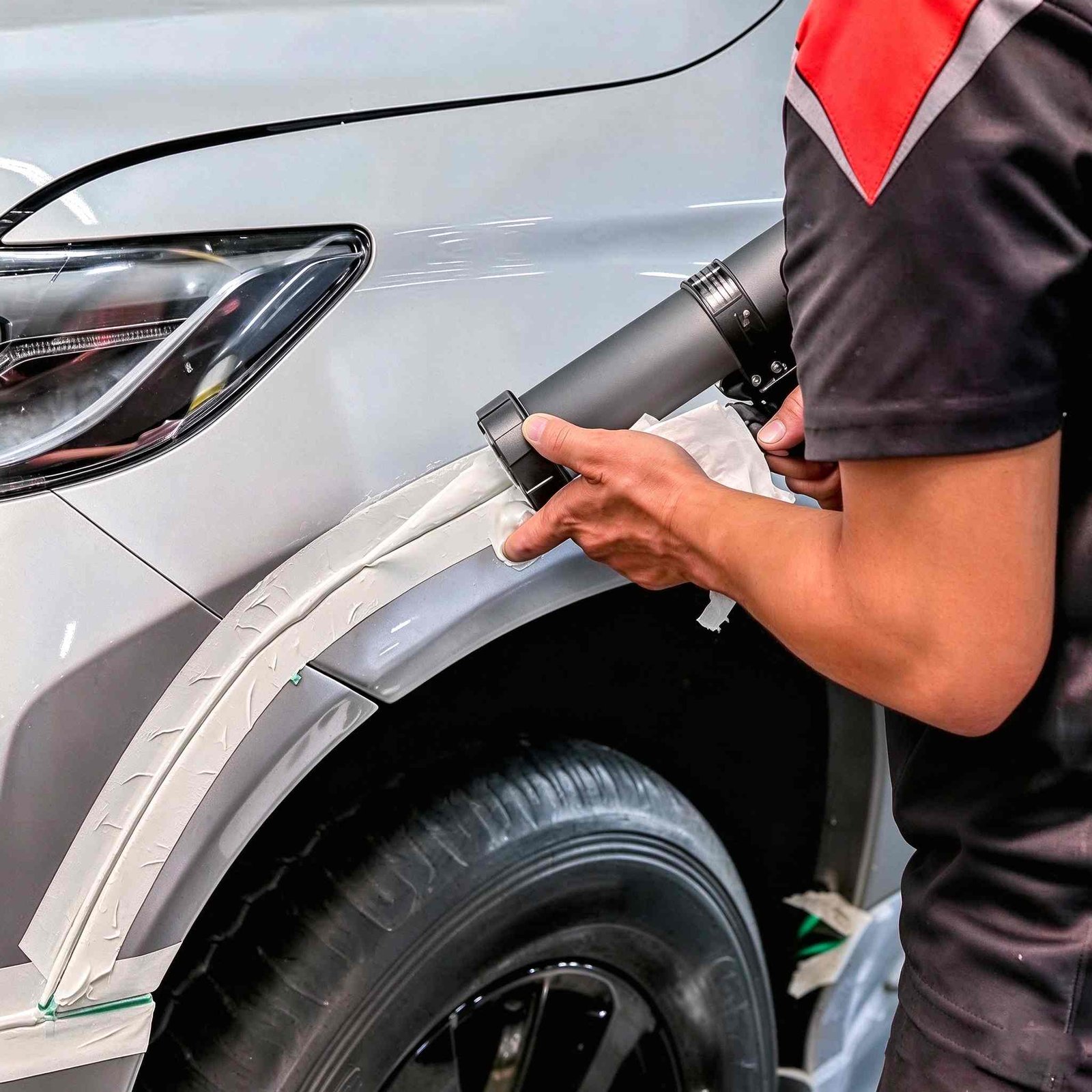
Figure 1: Precision application of flexible seam sealer along stamped wheel arch seams prior to paint booth bake cycles.
Sealer Chemistry & Paint Baking Performance Benchmark
Evaluating paintable sealers clarifies why commercial repair facilities transition toward modified polymers. The table below compares paint-over windows, maximum infrared bake resistance, and cross-hatch paint adhesion under DIN 53504 and ASTM D3359.
| Sealer Technology | Paint-Over Window | Max IR Bake Temp | ASTM D3359 Paint Adhesion |
|---|---|---|---|
| 1K Moisture-Cure PU | 45 – 90 minutes | 65°C – 70°C | 4B (Slight edge flaking) |
| MS Polymer / SMP Hybrid | 0 – 30 minutes (Wet-on-wet) | 90°C – 100°C | 5B (100% adhesion) |
| 2K Fast Chemical-Cure Urethane | 15 – 30 minutes | 70°C – 80°C | 5B (100% adhesion) |
| Rubberized Asphalt Undercoat | Non-Paintable (Bleed-through) | < 50°C (Softens/Runs) | 0B (Total delamination) |
Infrared Curing Physics: Short-Wave vs Medium-Wave
Short-wave infrared (IR) radiation penetrates through topcoat layers to warm the underlying steel substrate. Heat radiates outward from the metal, driving trapped solvents out before the surface skin crosslinks.
Conversely, conventional convection booths heat the outer surface first. If technicians ramp temperatures too aggressively, the surface cures prematurely, trapping volatile solvents and causing blistering.
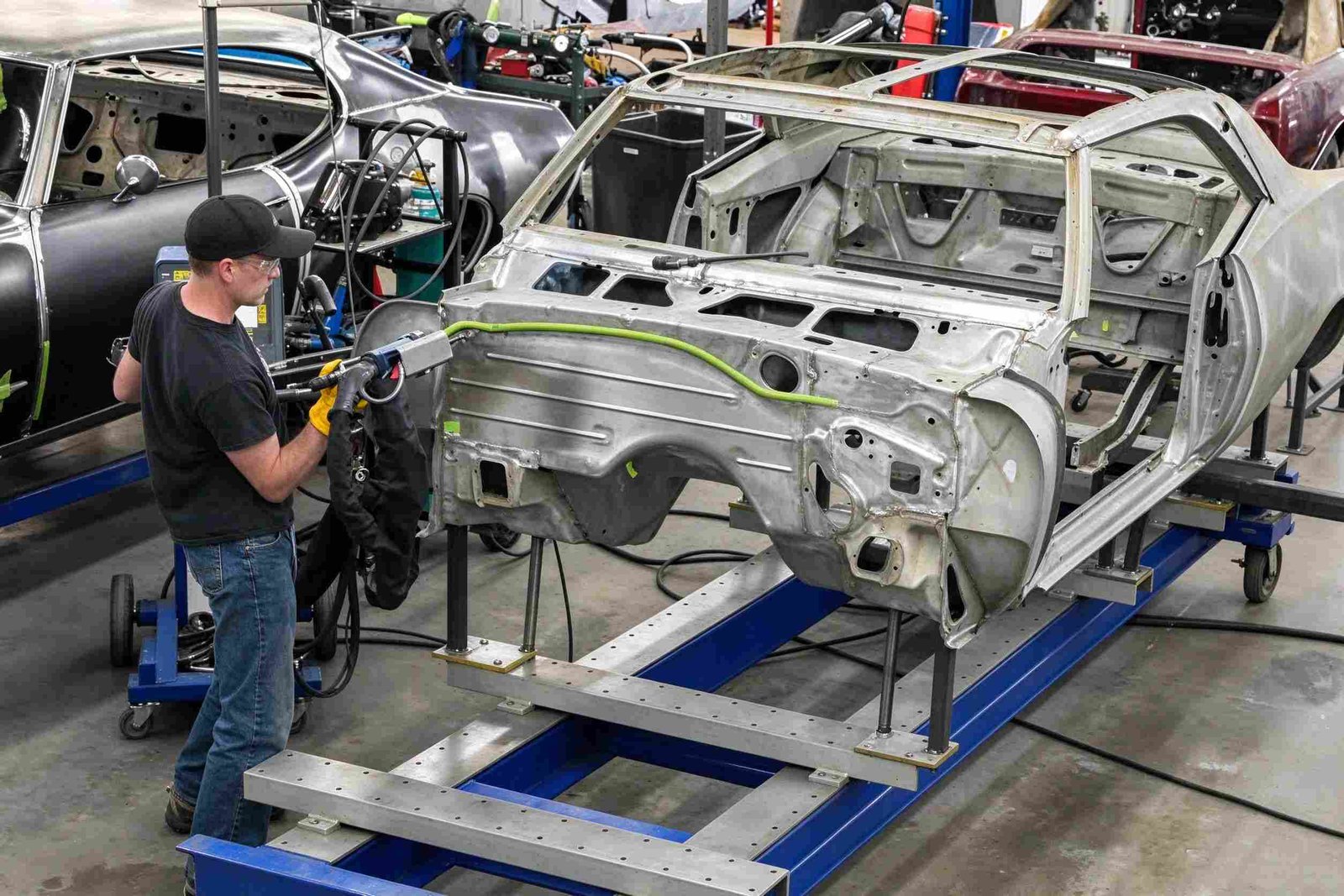
Figure 2: Professional seam sealer cartridge positioned for precision application along automotive body panel seams.
Standard Operating Procedure: Sealing, Painting & IR Baking
Eliminating paint defects along sealed seams requires disciplined execution across each refinishing phase.
Four-Step Paint Refinish Protocol
- Substrate Inspection: Verify underlying 2k epoxy primer is thoroughly cured and scuffed with P220 abrasive pads. Clean the joint using waterborne degreasers.
- Bead Extrusion: Extrude continuous beads of high-solids paintable seam sealer, tooling edges smoothly within ten minutes.
- Timed Flash-Off: Observe certified skin-over intervals (30 minutes for PU; 15 minutes for MS polymers). Avoid blowing high-velocity cold air directly across fresh beads.
- Controlled Topcoat & Bake: Apply basecoat and flexed clearcoat. Initiate short-wave IR bake cycles with a 5-minute preheat ramp before holding peak metal temperatures.
Preventing Paint Cracking: Elastomeric Modulus Matching
Automotive clearcoats dry into rigid acrylic-polyurethane matrices with low elongation capacity (5% to 10%). In contrast, seam sealers remain highly flexible, with elongation ratings exceeding 300%.
As detailed in our automotive seam sealer guide, road vibration causes joint expansion. Unflexed clearcoats crack along flexible rubber margins unless technicians blend 10% to 15% elastomeric flex additives into clearcoat mixtures.
Diagnosing & Preventing Paint Defects Along Seam Margins
Paint defects adjacent to seam sealer beads often stem from chemical incompatibilities or premature forced drying. Understanding defect root causes ensures first-time repair success.
Solvent pop occurs when topcoats skin over damp sealer films. During oven bake cycles, trapped reducer vapors boil upward, punching micro-volcano craters into the clearcoat.
Wrinkling and Lifting Over Bare Metal Primers
Aggressive topcoat solvents penetrate uncured 1K primers, lifting underlying resins into a wrinkled texture. Switching to cross-linked 2K epoxy foundations establishes an impervious barrier against solvent attack.
Following our seam sealer over epoxy primer protocol ensures robust chemical resistance, eliminating solvent wrinkling during high-temperature bake cycles.
Typical Application Scenario: Rapid Repair Transit Bus Assembly
Eliminating Roof Seam Paint Blistering in Express Refinish Lines
Shop Profile: A commercial coach refurbishment facility repainting roof gutter seams and side panels across 30 municipal transit buses.
Field Failure: Paint crews applied standard 1K polyurethane seam sealer along roof channels. To accelerate cycle times, technicians activated short-wave infrared heaters immediately at 80°C without an ambient flash-off. The rapid thermal spike caused escaping carbon dioxide and trapped solvent vapors to rupture curing clearcoat films, creating widespread pinholing and paint wrinkling along seams.
Corrective SOP: Engineering transitioned the facility to ChemPU paintable seam sealer based on silane-modified polymer chemistry. Technicians implemented a mandatory 15-minute ambient flash-off, followed by a ramped IR bake protocol (5 minutes at 40°C, followed by 15 minutes at 70°C). Clearcoat formulations were updated to include 12% elastomeric flex agent.
Verification Results: Cross-hatch adhesion testing under ASTM D3359 achieved a perfect 5B rating with zero micro-cracking along joint edges. Two-year commercial fleet audits in severe weather operations showed 100% paint gloss retention and zero paint peeling across all refurbished roof seams.
Frequently Asked Questions: Paintable Sealer & Baking
Can you spray basecoat immediately after applying paintable seam sealer?
It depends on polymer chemistry. Silane-modified polymers (MS polymers) allow immediate wet-on-wet basecoat application within 20 minutes. Standard 1K polyurethane sealers require 30 to 60 minutes of ambient moisture curing to form a stable surface skin before paint application.
Why does clearcoat crack over flexible seam sealer beads?
Clearcoats dry into rigid films with limited elongation capacity (5% to 10%), while underlying seam sealers expand up to 300%. Road vibration causes the flexible joint to flex, shattering un-flexed clearcoats. Adding 10% to 15% elastomeric flex additive to clearcoats prevents cracking.
What happens if you bake seam sealer under infrared lamps too hot?
Excessive radiant heat (above 80°C for 1K polyurethanes) causes moisture-curing sealers to boil internally. Expanding gases erupt through curing paint layers, creating solvent pop craters, pinholes, and permanent intercoat blistering.
Technical Review by ChemPU Refinish Engineering & Coatings Laboratory
Authored by Senior Polymer Chemists and Automotive Coatings Specialists with extensive expertise in infrared bake kinetics, silane-modified polyether sealers, and ASTM D3359 paint adhesion protocols. Certified under ISO 9001 and IATF 16949 standards.
Source Certified OEM Paintable Seam Sealers
Upgrade your collision repair and vehicle manufacturing lines with ChemPU high-productivity paintable seam sealers. Achieve instant wet-on-wet paint capability, withstand 100°C infrared baking, and eliminate paint cracking.
Direct WhatsApp Technical Inquiry: +86 15216655520

