
Collision repair technicians frequently debate whether automotive seam sealers belong over bare metal or cured epoxy primer. Applying sealant directly to bare steel creates trapped moisture pockets that trigger severe crevice corrosion.
Automotive OEMs specify two-component epoxy primer automotive coatings as the foundational corrosion barrier. Cured epoxy isolates bare steel from electrolytic salts, while providing ideal mechanical tooth for subsequent polyurethane and silane-modified sealants.
Skipping the primer stage leads to adhesive delamination and rust creep beneath the bead. This standard operating procedure evaluates electrochemical corrosion mechanisms, mechanical adhesion anchors, and OEM technical service bulletins.
Key Takeaways: Seam Sealer & Epoxy Primer Standards
- Corrosion Hierarchy: Always apply certified epoxy primer automotive coatings over bare steel prior to seam sealer dispensing.
- Adhesion Anchor: Scuffing cured epoxy with P180 to P240 abrasive pads creates microscopic mechanical interlocking for maximum bond strength.
- Moisture Exclusion: Epoxy resins form dense, crosslinked polymer matrices that block water and chloride ion penetration into welded joints.
- OEM Mandates: Major vehicle manufacturers prohibit sealing directly over bare steel or 1K aerosol wash primers on structural repairs.
- Recoat Window: Apply seam sealers within the epoxy recoat window to achieve chemical cross-linking without aggressive mechanical abrading.
Corrosion Mechanisms: Bare Metal Sealing vs Epoxy Protection
Bare automotive sheet metal begins oxidizing immediately upon contact with ambient humidity. Applying an elastomeric seam sealer directly over bare steel traps micro-droplets of water and air within surface asperities.
Under temperature cycling, condensation inside microscopic crevices initiates an electrochemical cell. Iron atoms surrender electrons, creating ferrous oxide beneath the sealant bead while the outer bead surface appears intact.
The Epoxy Chemical Barrier Mechanism
Two-component epoxy primer for metal forms an impermeable, highly cross-linked thermoset barrier. The bisphenol-A epoxy resin and polyamide amine curing agents cross-link into a rigid shield impervious to water and salt ions.
Modern epoxy primer automotive systems contain anti-corrosive zinc phosphate pigments. These active inhibitors passivate bare metal surfaces, halting oxidation before seam sealer dispensing begins.
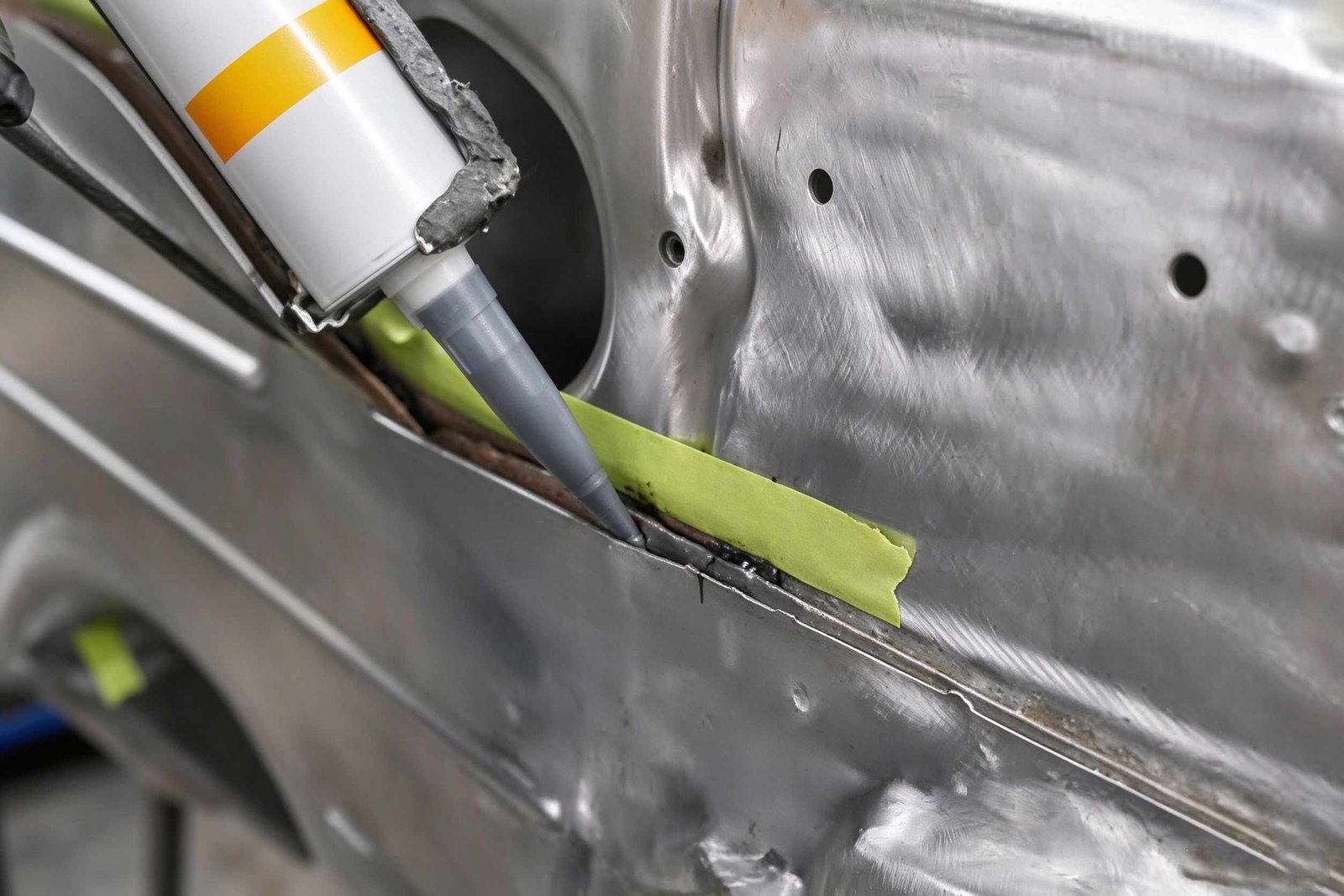
Figure 1: Vehicle metal frame inspection prior to applying protective epoxy primer and elastomeric seam sealer along structural overlaps.
Surface Preparation & Primer Performance Benchmark
Evaluating primer types clarifies why vehicle manufacturers mandate two-component epoxy foundations. The following comparison highlights salt spray resistance, adhesion, and chemical barrier properties under ASTM standards.
| Substrate Preparation | Salt Spray Resistance | Lap Shear Adhesion | Failure Mode |
|---|---|---|---|
| Direct Over Bare Steel | < 240 hours | 1.2 – 1.8 MPa | Interfacial peel / Rust creep |
| 1K Etch / Wash Primer | 350 – 500 hours | 1.5 – 2.0 MPa | Acid-cure inhibition failure |
| 2K Epoxy Primer (Scuffed) | > 1,000 hours | 2.8 – 3.5 MPa | 100% Cohesive rubber tear |
| OEM Electro-Coat (E-Coat) | > 1,000 hours | 2.7 – 3.4 MPa | 100% Cohesive rubber tear |
Why 1K Wash Primers Cause Sealer Failure
Single-component etch primers contain phosphoric acid to bite into raw metal. Residual free acid on the primer surface reacts with basic catalysts in polyurethane sealers, neutralizing crosslinking agents.
This chemical inhibition prevents the sealant from vulcanizing at the bond interface. The outer bead skins over while the contact layer remains a sticky gel, peeling off under minimal mechanical stress.
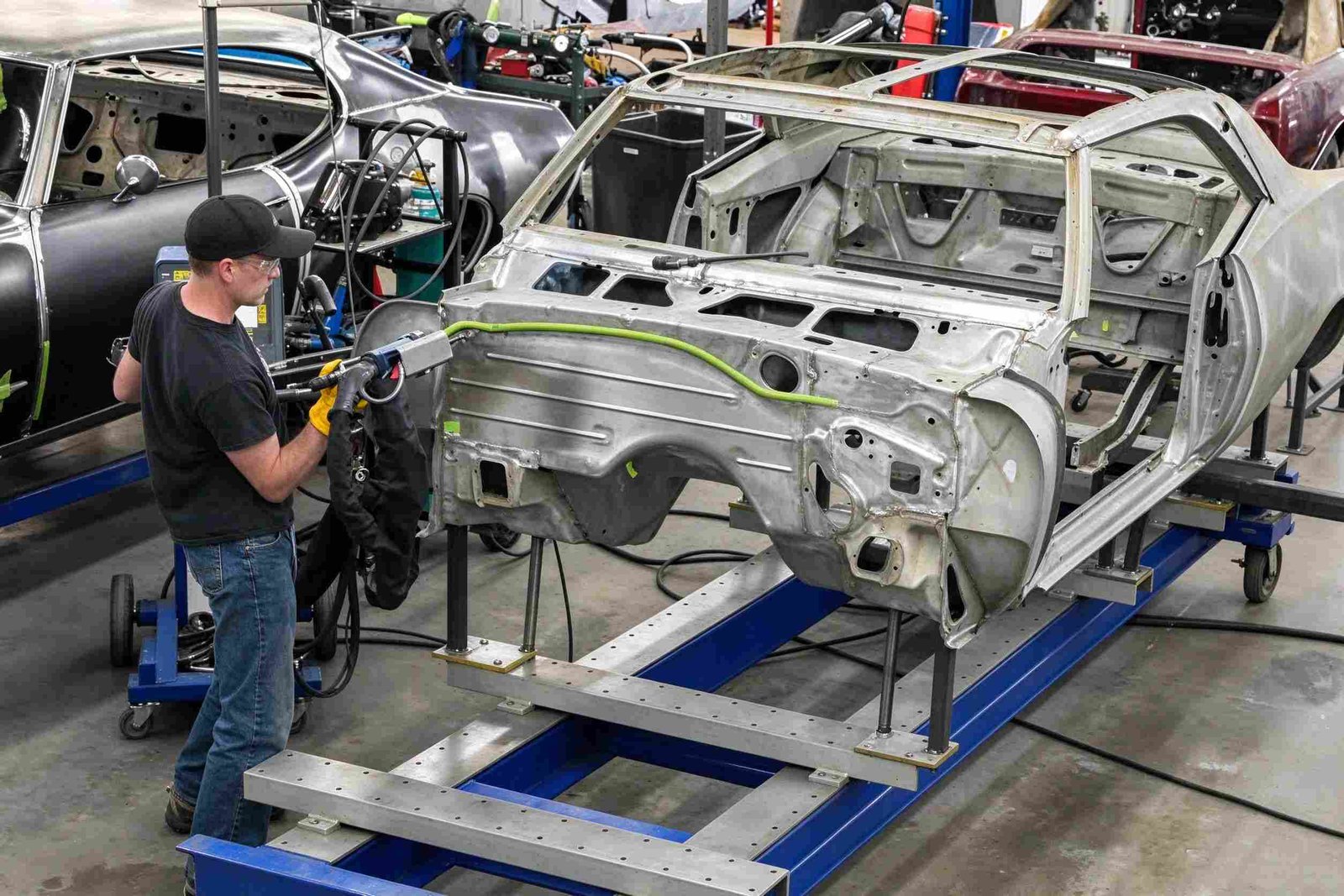
Figure 2: Professional seam sealer cartridge ready for precision application over cured epoxy primer along automotive body flanges.
Standard Operating Procedure: Metal Prep, Priming & Sealing
To guarantee factory durability and zero corrosion comeback, collision centers must enforce a strict step-by-step refinishing protocol.
Four-Step Repair Protocol
- Metal Cleaning & Abrading: Clean bare steel with waterborne wax-and-grease remover. Grind welds flat and abrade surrounding metal using P80 to P120 abrasive discs.
- 2K Epoxy Application: Mix a certified 2k epoxy primer according to manufacturer ratios. Spray two medium wet coats to achieve 40 to 50 microns dry film build.
- Scuffing Cured Epoxy: Allow overnight cure or force-dry epoxy primer automotive coatings at 60°C for 30 minutes. Scuff the sealing path with P220 abrasive paper or maroon scuff pads to create mechanical tooth.
- Extruding Seam Sealer: Degrease with fast solvent cleaner. Extrude continuous beads of automotive seam sealer, tooling edges smoothly within ten minutes.
Mechanical Interlocking and Surface Profiling
Applying sealant over glossy, unscuffed epoxy reduces peel strength by more than 50%. Abrasive scuffing produces microscopic valleys that increase total bonding surface area.
The liquid sealant flows into these micro-scratches before crosslinking. Once cured, the polymer forms physical micro-anchors that resist peeling under dynamic chassis twisting.
OEM Technical Mandates and Refinish Guidelines
Global automobile manufacturers issue explicit Technical Service Bulletins regarding joint sealing. Major European and North American OEMs require all replaced structural panels to receive two-part epoxy coating before seam sealing.
OEM corrosion warranties range from 10 to 12 years against perforation. Technicians who seal directly over bare steel invalidate paint manufacturer lifetime warranty guarantees.
Zinc-Rich Primer Integration on Pinch Welds
Resistance spot welding burns away pre-existing electro-coat along overlap margins. Technicians combine zinc weld-through primers inside the weld flange with high-grade auto epoxy primer over exterior weld steps.
Understanding this multi-layer defense, combining zinc weld-through primers with certified epoxy primer automotive formulations detailed in our weld-through primer protocol, ensures replaced rocker panels match original factory corrosion resistance.
Typical Application Scenario: Rear Quarter Panel Replacement
Correcting Premature Flange Corrosion in Fleet Vehicles
Shop Profile: An authorized commercial fleet collision center replacing damaged rear quarter panels and wheelhouse tubs across 60 municipal utility vans.
Field Failure: Previous repair technicians sealed bare welded joints directly with 1K polyurethane seam sealer to save time. After 14 months of winter road service, several vans returned with bubbling paint along wheelhouse arches. Scraping the sealer exposed active red rust creeping beneath the rubber bead.
Corrective SOP: Shop leadership mandated applying ChemPU two-component epoxy primer automotive coating over all welded flanges. Technicians baked the primer for 30 minutes at 60°C, scuffed the sealing path with P220 pads, and extruded calibrated 10 mm polyurethane seam sealer beads.
Verification Results: Destructive peel testing on scrap coupons confirmed 100% cohesive failure inside the sealant body rather than interfacial debonding. Two-year follow-up fleet inspections showed zero paint blistering or rust creep along replaced wheel arch flanges.
Frequently Asked Questions: Epoxy Primers & Seam Sealer
Can seam sealer be applied directly over bare metal if the product claims direct-to-metal?
While some modern sealers adhere to clean bare metal, applying them over bare steel provides no sacrificial corrosion defense. Microscopic moisture trapped during application causes crevice rust over time. Applying 2K epoxy primer first remains the mandatory OEM industry standard.
Do you have to scuff cured epoxy primer automotive coatings before applying seam sealer?
Yes, if the epoxy has fully cured beyond its open recoat window (typically 24 hours). Scuffing with P180 to P240 abrasive pads breaks the glossy surface and creates micro-scratches that provide physical mechanical interlocking for the sealant.
Can you use aerosol 1K etch primer under automotive seam sealer?
No. 1K etch primers contain free phosphoric acid that chemically neutralizes the curing catalysts in polyurethane seam sealers. This inhibition creates a soft, uncured boundary layer that causes the sealant bead to peel away easily.
Technical Review by ChemPU Corrosion Prevention & Coatings Engineering Team
Authored by Senior Coatings Chemists specializing in two-component epoxy primers, automotive cathodic electro-coat barrier systems, and OEM collision repair corrosion protocols. Certified under ISO 9001 and IATF 16949 standards.
Source Certified OEM Epoxy Primers & Seam Sealers
Partner with ChemPU, an ISO 9001 and IATF 16949 certified Chinese manufacturer. We supply high-solid 2K epoxy primers and high-performance automotive seam sealers engineered to pass 1,000-hour ASTM B117 salt spray testing and eliminate crevice rust.
Direct WhatsApp Technical Inquiry: +86 15216655520

