
International chemical distributors, auto glass retail chains, and aftermarket brands face severe operational challenges when procurement strategies fail. Sourcing direct glazing polyurethanes across global supply chains involves high technical risks. When evaluating sourcing automotive windshield adhesive china, buyers must distinguish certified chemical synthesizers from commercial trading intermediaries.
Partnering with a verified china windshield adhesive manufacturer demands strict verification of ISO 9001 and IATF 16949 quality certifications. Importers seeking private label windshield urethane must master raw material batch control, packaging moisture barriers, and hazardous maritime logistics.
This standard B2B procurement guide provides an exhaustive engineering roadmap for global buyers. We examine raw MDI prepolymer synthesis, moisture barrier packaging specs, factory audit checklists, and dangerous goods maritime shipping protocols. Overseas purchasing directors, supply chain managers, and brand owners will master reliable factory selection rules.
Executive Summary: Global Procurement & Manufacturing Verification
- IATF 16949 Factory Verification: Genuine OEM-tier manufacturers possess certified automotive quality systems with strict NCO content titration and automated reaction kettle controls.
- Packaging Barrier Engineering: Aluminum cartridges require seamless drawn walls and internal barrier lacquers; foil sausages demand multi-layer aluminum-PET laminates to guarantee a 12-month shelf life.
- Private Label Customization: Professional factories deliver custom nozzle cutouts, lithographic 4-color cartridge printing, and localized multilingual technical data sheets (TDS/MSDS).
- DG Export Compliance: Polyurethane adhesives classify under non-hazardous or Class 9 maritime shipping; associated solvent glass primers classify as UN 1133 / UN 1993 Class 3 Flammable Liquids requiring certified dangerous goods export packaging.
Factory Auditing: Identifying Authentic Chemical Manufacturers in China
When sourcing from an oem auto glass sealant supplier, verifying reactor kettle infrastructure separates actual chemical synthesis from secondary repackagers.
Polymer Polymerization Infrastructure vs. Blending Workshops
True tier-one chemical manufacturers operate automated vacuum reaction vessels capable of synthesizing MDI prepolymers under inert nitrogen blankets. Secondary compounders merely mix imported bases with plasticizers, leading to batch-to-batch instability.
Auditors should inspect raw material storage for pure isocyanate storage tanks, desiccant distillation columns, and automated carbon black pneumatic conveying systems.
Essential Analytical Lab Equipment
A qualified manufacturer’s quality control laboratory must be equipped with Karl Fischer coulometric moisture titrators (measuring water content below 300 ppm) and dynamic rheometers.
Each production batch must undergo universal tensile testing for lap shear strength and Shore A hardness verification before packaging clearance.
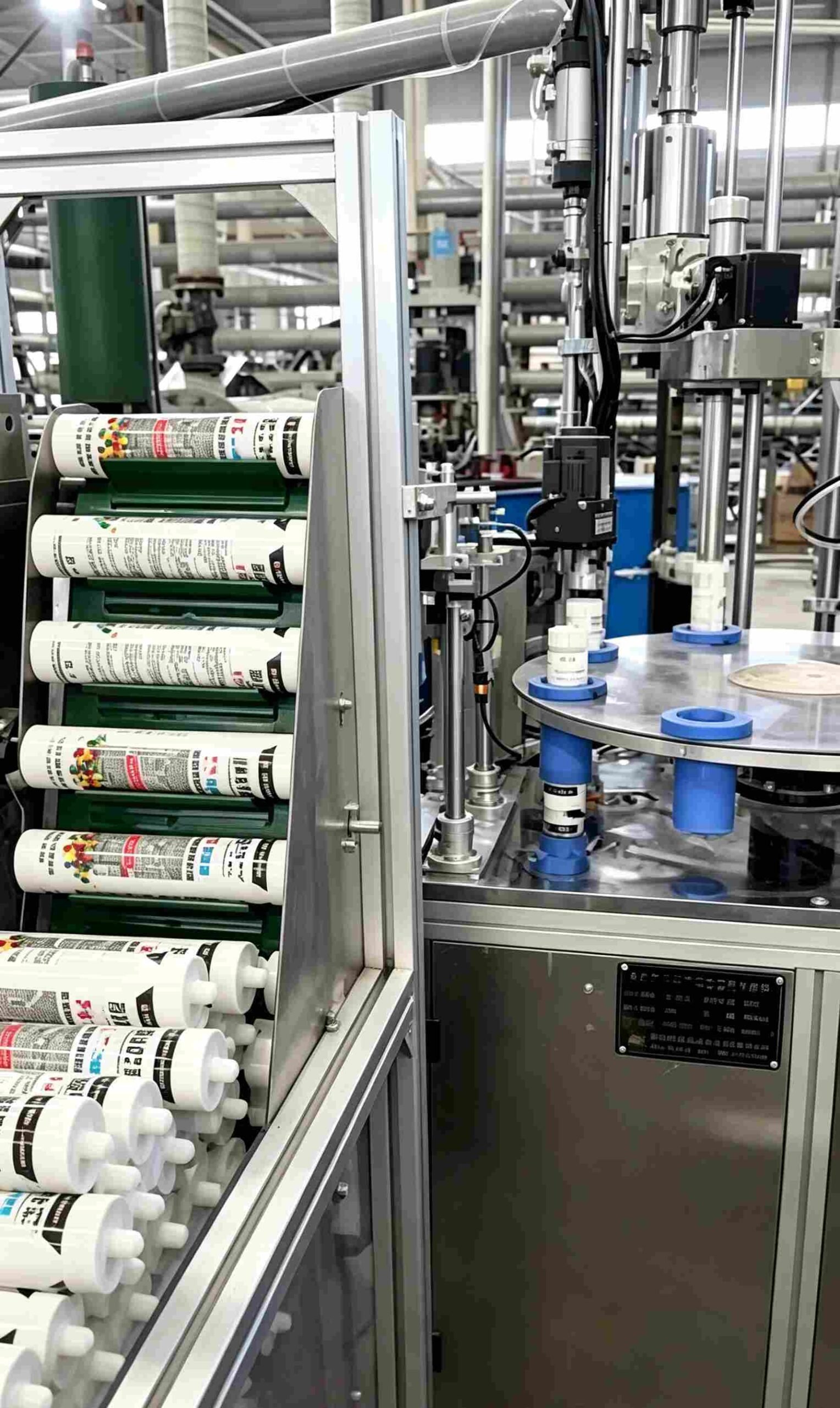
Packaging Specification Matrix: Aluminum Cartridges vs. Foil Sausages
The packaging engineering matrix below contrasts the two primary industrial packaging configurations for global maritime export.
| Packaging Format | Standard Net Volume | Moisture Barrier Material | Primary Overseas Market Role |
|---|---|---|---|
| Rigid Aluminum Cartridge | 310 ml (approx. 400g) | Drawn pure aluminum + epoxy phenolic lacquer | Retail auto glass shops, manual caulking guns |
| Foil Sausage (Unipack) | 400 ml / 600 ml | Multi-ply Aluminum-PET composite film | Fleet glazing, commercial buses, pneumatic dispensers |
| Bulk Steel Drum | 200 Liter (approx. 250kg) | Steel drum + nitrogen purged foil liner bag | Automotive OEM robotic assembly lines |
| Glass Primer Bottle | 30 ml / 100 ml / 250 ml | Amber glass bottle + hermetic induction seal | Pre-treatment wipe kits for glass and pinchwelds |
Typical Application Scenarios: Procurement Pitfalls & Maritime Realities
Examining real procurement failures illustrates why international importers must audit production and packaging integrity.
Scenario A: Premature Curing in Container Due to Plastic Cartridge Substitution
An overseas buyer contracted a low-cost supplier for 20,000 cartridges of polyurethane adhesive packaged in standard plastic HDPE cartridges instead of drawn aluminum.
During 35 days of tropical ocean transit, atmospheric humidity permeated the microscopic pores of the plastic cartridge walls. Upon destination arrival, the entire shipment had cross-linked into solid rubber inside the tubes, resulting in a total commercial loss.
Scenario B: Customs Detention Over Undeclared Primer Solvents
An importer shipped a mixed container containing 15,000 sausages of polyurethane along with 1,000 bottles of fast-evaporating solvent glass primer declared as non-hazardous goods.
Maritime customs seized the container during port transshipment. The primer contained methyl ethyl ketone (MEK), classifying it as UN 1133 Class 3 Flammable Liquid. The importer incurred heavy port demurrage fees and fines before re-manifesting through a certified dangerous goods chemical shipping china agent.

Standard Operating Procedure: Five-Stage China Sourcing Protocol
Executing this standardized procurement protocol guarantees quality stability, regulatory compliance, and seamless customs clearance.
Step 1: Technical Specification Matching and TDS Verification
Define required mechanical benchmarks: tensile lap shear (≥ 6.0 MPa), Shore A hardness (55 to 65), shear modulus (high modulus ≥ 2.0 MPa), and electrical resistivity. Request official factory Technical Data Sheets (TDS) and independent third-party test reports.
Step 2: Pre-Production Lab Sample Validation
Request express air samples of adhesive cartridges and matched primers. Conduct in-house extrusion viscosity testing, open time validation, and lap shear adhesion pulls on primed glass substrates after 24-hour curing.
Step 3: Private Label Packaging Artwork and Lithography
Submit high-resolution vectorized brand artwork. Verify cartridge plate printing proofs, barcode scanning legibility, and destination-specific regulatory hazard pictograms (GHS labeling) in the target language.
Step 4: In-Process Inspection and Batch Retention Samples
Require the manufacturer to retain numbered witness samples from every production batch for 18 months. Verify carton burst strength and ensure desiccant sachets are sealed inside palletized moisture-barrier shrink film.
Step 5: Maritime Export Documentation and DG Booking
Verify the factory delivers complete maritime export documentation: Certificate of Analysis (COA), 16-section SDS compliant with EU REACH / US OSHA, and certified UN packaging certificates for solvent primers.
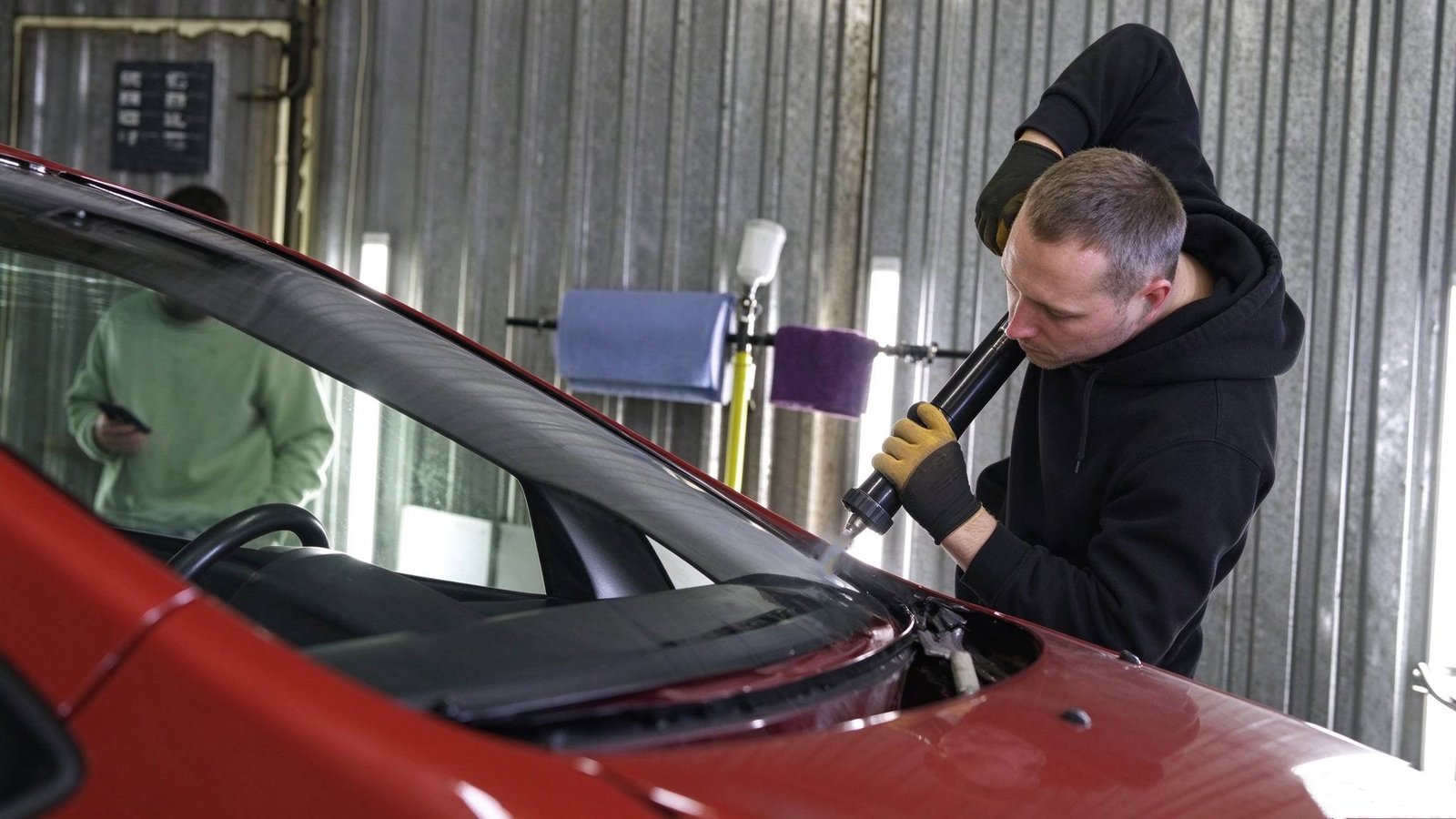
B2B Purchasing Trade-Offs: Boundaries of Chinese Adhesive Sourcing
Overseas procurement directors must navigate real commercial and operational constraints when contracting manufacturing runs.
- Minimum Order Quantities (MOQ): Custom litho-printed aluminum cartridges require minimum plate runs of 10,000 to 15,000 units; smaller initial orders must utilize foil label over-wraps.
- Seasonal Winter Transportation: Moisture-curing polyurethanes frozen during sub-zero rail or ocean transit experience delayed reactivity; heated containers may be required in extreme latitudes.
- Primer Maritime Surcharges: Shipping solvent primers in the same container triggers dangerous goods (DG) freight surcharges; ordering primer in concentrated volume reduces logistics overhead.
Frequently Asked Questions: Sourcing Adhesives from China
Why can polyurethane windshield adhesive never be packaged in plastic cartridges?
Polyurethane adhesives cure via reaction with atmospheric moisture. Standard plastic polyethylene (HDPE) cartridges are microscopic moisture semi-permeable membranes. Over a few months of ocean transit and warehouse storage, moisture passes through plastic walls, causing the urethane to solidify inside the tube. Only seamless aluminum cartridges or foil sausages provide a 100% hermetic moisture barrier.
What quality certifications should an authentic Chinese adhesive factory have?
A qualified automotive adhesive manufacturer must hold ISO 9001 (Quality Management) and ideally IATF 16949 (Automotive Quality Management System). Additionally, verify compliance with ISO 14001 for environmental safety and inspect crash compliance test reports certifying conformity with FMVSS 212 / FMVSS 216 crash standards.
Are automotive windshield adhesives considered Dangerous Goods (DG) for shipping?
One-component polyurethane adhesives are solvent-free pastes classified as non-hazardous general cargo for ocean shipping. However, associated black glass primers and activators contain volatile organic solvents (such as MEK or ethyl acetate) and classify as UN 1133 / UN 1993 Class 3 Flammable Liquids, requiring certified dangerous goods packing and declaration.
Engineering Summary: Building Reliable Global Chemical Supply Chains
Sourcing automotive windshield adhesives from China offers international distributors exceptional technical capability and competitive manufacturing scale. By auditing factory reaction kettle infrastructure, enforcing seamless aluminum packaging standards, and managing dangerous goods shipping protocols, global brands build resilient, high-margin adhesive portfolios.
Authored by ChemPU Automotive Application Engineering Team
Specializing in OEM direct-glazing polyurethane formulation, crash-retention validation per FMVSS 212 standards, and high-performance structural elastomeric bonding solutions for global automotive manufacturers.
Quality Certification: ISO 9001 / IATF 16949 Certified Adhesive Manufacturing
Source Certified OEM Direct Glazing Adhesives & Private Label Cartridges
Partner directly with ChemPU, an ISO 9001 and IATF 16949 certified Chinese chemical manufacturer. We provide high-modulus polyurethane windshield adhesives, glass primers, and custom private label packaging for international distributors and retail chains.
Direct WhatsApp Technical Inquiry: +86 15216655520

