
Automotive glazing engineers and collision repair technicians face critical bonding decisions daily. Selecting the proper urethane windshield adhesive determines whether a replacement windshield preserves structural cabin safety or fails catastrophically during an accident.
In early automotive manufacturing, vehicles relied on mechanical rubber channels or soft butyl tapes. Modern unibody vehicles require high-strength polyurethane windshield adhesive to integrate glass directly into the vehicle structure. Using general-purpose silicone or butyl as an automotive glass bonding agent compromises vehicle rollover protection and airbag support.
This technical engineering guide provides an objective comparison between 1-part moisture-curing polyurethane, silicone, and butyl chemistries. We analyze lap shear strength, dynamic crash loads under FMVSS 212, modulus ratings, and workshop failure modes. Automotive glass shops, body repair centers, and fleet managers will find verified data to choose certified direct glazing systems.
Key Takeaways: Windshield Chemical Selection
- Structural Contribution: A properly applied windshield urethane provides up to 30% of the vehicle cabin torsional rigidity. Silicone and butyl offer zero structural reinforcement.
- High Lap Shear Thresholds: Structural polyurethanes deliver lap shear strengths exceeding 4.5 MPa, while silicone averages under 1.2 MPa and butyl remains non-structural.
- FMVSS 212 Compliance: Passenger airbags deploy directly against the windshield at 320 km/h. Only automotive-grade polyurethane adhesives maintain glass retention during 30 mph barrier collisions.
- Chemical Compatibility: Moisture-curing polyurethanes bond tenaciously to ceramic frit bands and electro-coated pinchwelds when paired with matching black glass primers.
The Structural Role of Modern Automotive Direct Glazing
A modern automotive windshield is an engineered structural member. Treating windshield installation as a cosmetic sealing job creates severe liability risks for collision facilities.
Evolution from Rubber Gaskets to Chemical Direct Glazing
Automotive vehicle bodies prior to 1980 mounted glass inside thick rubber gaskets. This floating assembly isolated the glass from sheet metal twists. As automakers switched to unibody architectures, chassis designers needed stiffer, lighter structures without adding heavy steel reinforcements.
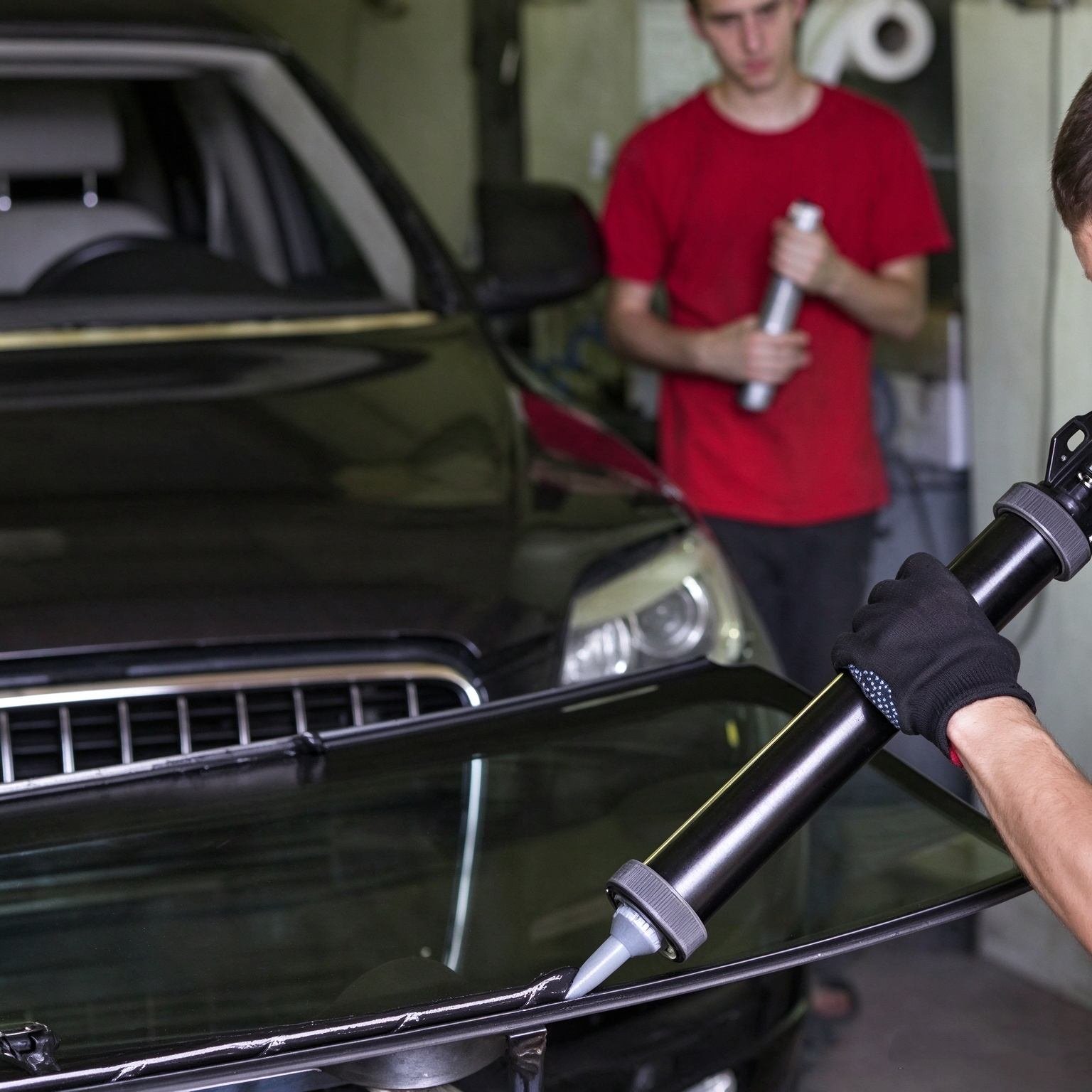
Direct glazing solved this challenge. By bonding curved laminated glass directly to the pinchweld aperture using a high-viscosity auto glass sealant, the glass acts as a shear plate. The cured adhesive bead stabilizes the A-pillars, dampens road vibrations, and prevents windshield detachment.
Cabin Structural Integrity and Roof Crush Resistance
Under the Federal Motor Vehicle Safety Standard FMVSS 216, a vehicle roof must withstand up to three times its unloaded vehicle weight. In rollover crashes, the windshield prevents the roof panel from buckling downward into passenger survival space.
Without high-modulus adhesive bonding, the glass separates instantly from the pinchweld flange. The A-pillars then collapse under concentrated compressive force. An engineered black windshield sealant distributes collision forces across the entire body perimeter.
Chemistry and Mechanical Properties of 1K Urethane Windshield Adhesive
One-component (1K) moisture-curing polyurethane represents the benchmark chemical system for automotive direct glazing. A certified urethane windshield adhesive is formulated with isocyanate prepolymers, carbon black reinforcing fillers, plasticizers, and stabilizers.
The Moisture-Curing Cross-Linking Reaction
The curing reaction begins immediately upon dispensing from the cartridge. Atmospheric humidity (H2O) reacts with terminal isocyanate (-NCO) functional groups. This chemical reaction generates unstable carbamic acid, which decomposes into amine groups and carbon dioxide gas.
The formed amine groups react rapidly with surrounding unreacted isocyanates to create strong polyurea linkages. This three-dimensional molecular network delivers exceptional mechanical strength, heat resistance, and long-term elasticity.
Critical Physical Parameters: Tensile, Shear, and Elongation
Automotive OEM specifications mandate three essential mechanical thresholds:
- Tensile Strength (≥ 6.0 MPa): Resistance to longitudinal pulling forces during sudden vehicle deceleration per ASTM D412.
- Lap Shear Strength (≥ 4.5 MPa): Resistance to lateral shearing stresses between glass and steel flanges under cornering torsion per ASTM C961.
- Elongation at Break (≥ 400%): Elastic expansion capacity ensuring the adhesive absorbs shock loads without brittle fracture. Inspect our high-elongation windshield adhesive for technical data.
Technical Comparison: Polyurethane vs. Silicone vs. Butyl Rubber
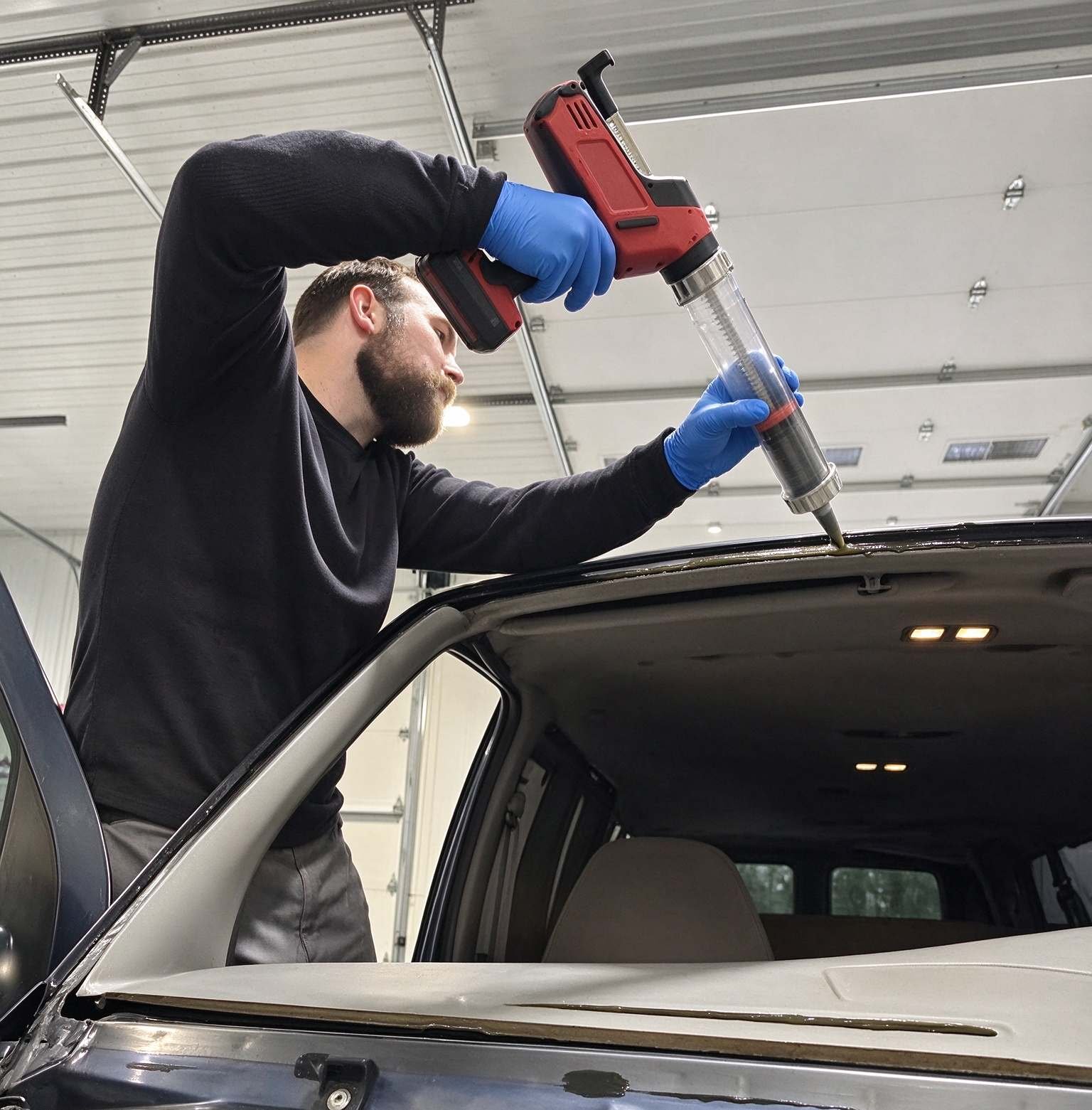
To understand why regulatory bodies ban non-urethane adhesives for windshield replacement, review the empirical comparison matrix below:
| Performance Parameter | 1K Polyurethane (PU) | RTV Silicone | Butyl Tape / Mastic |
|---|---|---|---|
| Lap Shear Strength (ASTM C961) | 4.5 – 7.5 MPa | 0.8 – 1.5 MPa | < 0.2 MPa (Plastic Flow) |
| Tensile Strength (ASTM D412) | 6.0 – 9.0 MPa | 1.5 – 2.5 MPa | Non-measurable (Zero Elasticity) |
| Structural Crash Load Rating | Meets FMVSS 212 / 216 | Unsafe / Fails Barrier Test | Zero Crash Resistance |
| Airbag Backboard Support | Full Structural Support | Glass Detaches on Impact | Immediate Glass Ejection |
| Thermal & Creep Resistance | High Elastic Recovery | Extreme Thermal Stability | Softens & Oozes above 60°C |
| Paintability (Body Shop Repair) | Compatible with Topcoats | Non-Paintable (Fish-Eyes) | Solvent Bleed-Through |
| Primary Automotive Use | Direct Glazing Windshields | Engine Gaskets & Gap Sealing | Vapor Barriers & Headlamps |
Silicone Sealants: High Thermal Stability with Low Shear Modulus
Silicone polymers possess outstanding UV stability and heat tolerance up to 250°C. Their molecular backbone yields a low shear modulus. Under dynamic stress, silicone stretches excessively without transmitting load into the vehicle structure.
Silicone sealants also release volatile siloxanes. These compounds contaminate surrounding automotive paint surfaces, causing severe paint fish-eyes during body refinishing. While silicone excels in powertrain gasket sealing, it remains unsuitable for structural windshield direct glazing.
Butyl Tapes: Non-Hardening Cushioning vs. Complete Structural Deficit
Butyl rubber is a non-curing, permanently plastic hydrocarbon polymer. During the 1970s, installers used round butyl tape beads to seat windshields quickly without waiting for chemical cures.
Butyl lacks cohesive cross-linking. When exposed to summer cabin temperatures exceeding 75°C, butyl softens and creeps under vehicle cornering loads. In a frontal barrier impact, the passenger airbag punches the windshield clean off a butyl bondline, leading to catastrophic occupant injury.
Automotive Glazing Safety Standards: FMVSS 212 and Airbag Dynamics
Vehicle safety regulations dictate exact adhesive performance standards. The Federal Motor Vehicle Safety Standard FMVSS 212 mandates that upon a 30 mph head-on rigid barrier impact, the windshield mounting must retain at least 75% of the glass perimeter on passenger vehicles with passive restraints. Specifying an approved urethane windshield adhesive ensures compliance with this federal mandate.
During crash deployment, the passenger-side dashboard airbag expands upward and rearward. The windshield glass serves as a solid structural backboard, deflecting the airbag outward to cushion the occupant torso. If the safe drive away time is violated or a weak sealant is used, the airbag blows the glass out, offering zero restraint.
Typical Application Scenario: Commercial Fleet Glass Failure Analysis
Technical Incident Evaluation: High-Roof Delivery Van Delamination
Operating Condition: A regional commercial fleet experienced chronic water leaks and windshield stress fractures on three newly re-glazed light commercial vans operating on secondary rural roads.
Root Cause Investigation: Forensic examination revealed the contract installer used an architectural silicone sealant instead of a structural urethane windshield adhesive. The silicone exhibited adhesive failure along the ceramic frit band due to missing UV activation primers. Unibody torsional chassis twist sheared the weak silicone bondline within two weeks of operation.
Corrective Action: Fleet managers stripped the flanges to bare metal, applied anti-corrosion epoxy primers, and re-bonded the glass using high-modulus 1K polyurethane with certified pinchweld black primers. Zero further bondline leaks or structural movements occurred across 100,000 km of service.
Frequently Asked Questions: Auto Glass Adhesive Selection
Can clear silicone sealant be used to fix a leaking windshield?
No. Applying clear silicone as a quick fix to a leaking windshield is an unsafe practice. Silicone does not bond reliably to polyurethane residue, accelerates sub-surface flange corrosion, and prevents proper future urethane adhesion when the windshield requires replacement.
What is the difference between windshield urethane and construction polyurethane sealant?
Automotive windshield urethane features higher lap shear strength (≥ 4.5 MPa vs. ~1.5 MPa), faster green strength development, and specific rheology to prevent glass sag. Construction sealants prioritize joint movement and cure too slowly for safe automotive drive-away standards.
Why is black ceramic frit printed on automotive glass?
The black ceramic frit band baked onto windshield borders provides two essential functions: it blocks ultraviolet (UV) solar radiation from decomposing the polyurethane adhesive bondline, and creates a microscopically rough surface for optimal primer adhesion.
Engineering Summary: Choosing Certified Direct Glazing Systems
Modern automotive safety engineering leaves no room for adhesive compromise. When installing or servicing automotive windshields, a certified urethane windshield adhesive is the only polymer class capable of meeting vehicle torsional stiffness, rollover resistance, and passenger airbag compliance standards.
Authored by ChemPU Automotive Application Engineering Team
Specializing in OEM direct-glazing polyurethane formulation, crash-retention validation per FMVSS 212 standards, and high-performance structural elastomeric bonding solutions for global automotive manufacturers.
Quality Certification: ISO 9001 / IATF 16949 Certified Adhesive Manufacturing
Source Certified OEM Direct Glazing Polyurethane Adhesives
Partner with ChemPU, an ISO 9001 and IATF 16949 certified Chinese manufacturer. We provide high-modulus polyurethane direct glazing adhesives, black glass primers, and private label cartridges for international distributors and fleet repair networks.
Direct WhatsApp Technical Inquiry: +86 15216655520

