
Automotive collision repair centers and multi-material vehicle builders face complex bonding challenges across mixed substrates. High-strength steel, lightweight aluminum, sheet molding compound (SMC), and direct-glazed glass require specialized chemical fasteners. Understanding auto body panel bonding adhesives alongside elastomeric glass urethanes is vital for modern structural integrity.
Deploying certified panel bonding adhesive systems replaces traditional squeeze-type resistance spot welding (STRSW). When combining composite roof skins, quarter panels, and direct glazing, technicians must harmonize rigid two-component epoxies with flexible polyurethanes.
This standard engineering guide delivers an exhaustive technical breakdown of structural epoxy, acrylic, and polyurethane bonding systems. We analyze lap shear dynamics, glass bead thickness control, weld-bonding protocols, and galvanic corrosion barriers. Collision structural technicians, custom fabricators, and body shop managers will master compliant multi-material assembly procedures.
Executive Summary: Structural Panel Bonding & Hybrid Assembly
- High Lap Shear (> 18 MPa): Structural 2K epoxy panel adhesives deliver extreme tensile shear strength exceeding spot welds, distributing crash impact energy evenly across bonded seams.
- Rigid Epoxies vs. Flexible Urethanes: Use 2K epoxies for steel and SMC outer skin panels; use flexible high-modulus polyurethanes for windshield direct glazing to absorb dynamic road vibrations.
- Micro-Glass Spacer Beads: Quality 2K panel adhesives incorporate calibrated 10-mil to 15-mil (0.25mm to 0.38mm) glass spacer spheres, preventing technicians from over-clamping adhesive out of the joint.
- Weld-Bonding Corrosion Barrier: Adhesives seal raw flange overlaps hermetically, eliminating galvanic corrosion between dissimilar metals while reducing welding heat heat-affected zones (HAZ).
Adhesive Chemistry: Epoxies, Acrylics, and Polyurethanes in Collision Repair
When selecting automotive structural adhesives, repairers must differentiate between rigid thermoset resins and elastomeric polymers.
Two-Component Toughened Epoxies for Steel and SMC
Modern crash-durable structural adhesives (CDA) utilize rubber-toughened two-component epoxy resins. Epoxies polymerize via cross-linking between bisphenol diglycidyl ethers and amine hardeners.
Rubber core-shell nanoparticles absorb localized impact energy, preventing brittle crack propagation. Cured epoxies achieve tensile lap shear strengths of 18 to 25 MPa, bonding permanently to steel, aluminum, and sheet molding compound (SMC).
Elastomeric Polyurethanes for Glass Interfaces
In contrast, windshield direct glazing requires moisture-curing single-component or boosted two-component polyurethanes. Polyurethanes provide controlled flexibility (300% to 450% elongation) and 5.0 to 8.0 MPa lap shear strength.
This elastomeric behavior absorbs thermal expansion differentials between soda-lime glass and steel roof frames, preventing brittle fracture during vehicle body twist.
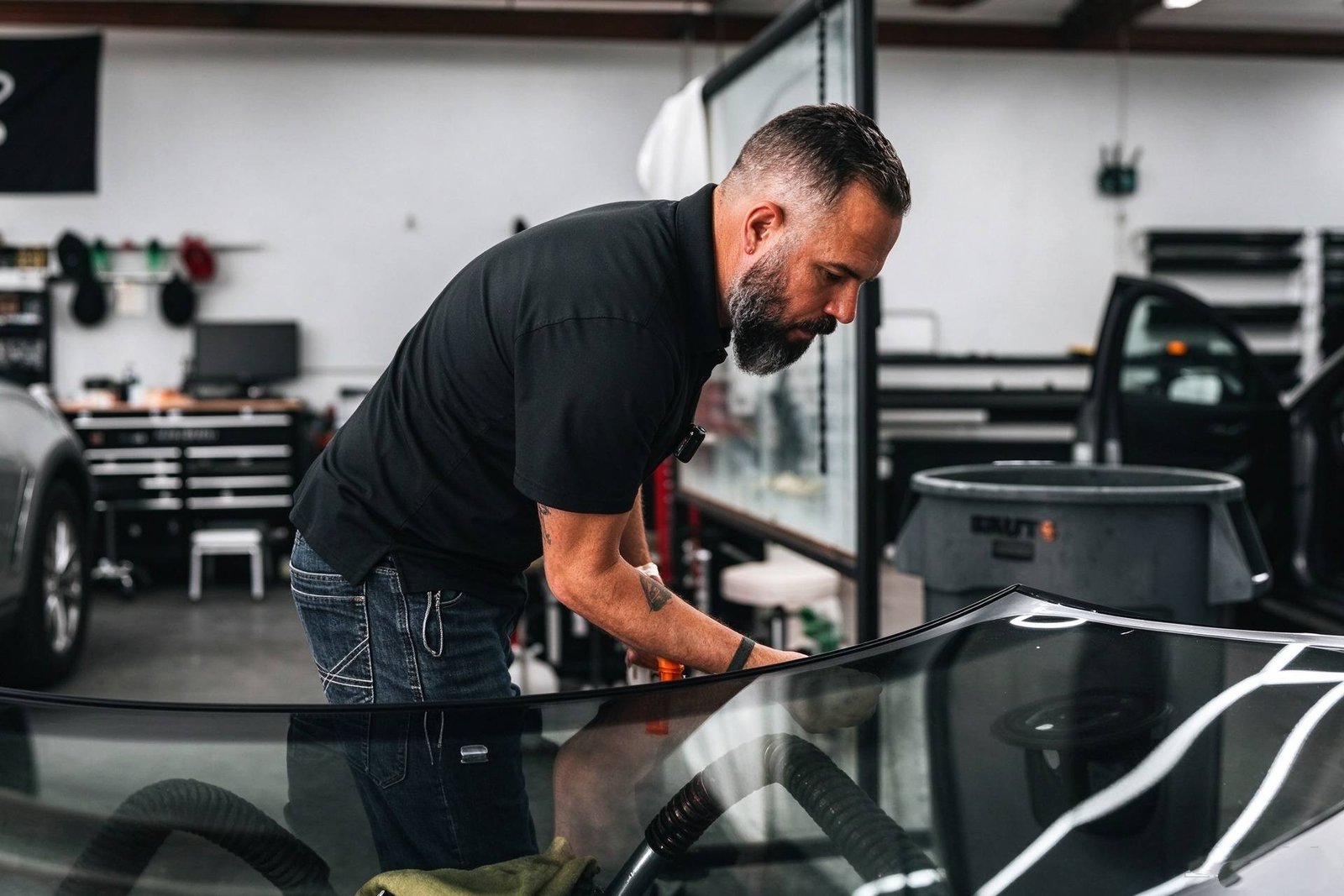
Structural Material Comparison: 2K Epoxy vs. Structural Acrylic vs. PU
The comparative engineering matrix below demonstrates performance boundaries across structural collision adhesives.
| Adhesive Chemical Type | Tensile Lap Shear Strength | Elongation at Break | Primary Body Shop Application |
|---|---|---|---|
| Crash-Durable 2K Epoxy | 18.0 to 25.0 MPa | 5% to 15% (Rigid) | Roof skins, quarter panels, rear body panels |
| Structural Methacrylate (MMA) | 15.0 to 22.0 MPa | 15% to 30% (Semi-rigid) | SMC composite bonding, thermoplastics, bracketry |
| Direct Glazing Polyurethane | 5.0 to 8.5 MPa | 300% to 450% (Elastomeric) | Windshield, rear glass, stationary quarter glass |
| MS Polymer Seam Sealer | 1.0 to 2.5 MPa | 450% to 700% (Flexible) | Exterior weld seams, floor pans, wheel arches |
Typical Application Scenarios: Workshop Realities & Multi-Material Assembly
Examining real collision shop workflows highlights why sequencing different chemical adhesives determines structural success.
Scenario A: Carbon Fiber and SMC Roof Skin Replacement
A performance vehicle required a composite roof replacement after rollover damage. Technicians bonded the new composite panel onto steel roof bows using high-strength smc panel bonding 2K epoxy containing micro-glass spacer beads.
After full thermal curing, the front windshield was installed onto the front pinchweld flange using structural high-modulus polyurethane. The rigid epoxy provided unibody shear stiffness, while the polyurethane isolated the glass from chassis vibration.
Scenario B: Stress Cracking from Inappropriate Epoxy Glass Bonding
A custom vehicle builder mistakenly bonded a fixed quarter glass panel directly into a steel channel using rigid 2K epoxy panel adhesive instead of polyurethane.
During cold weather testing, the differential thermal contraction between steel (12 × 10-6 / K) and glass (8.5 × 10⁻⁶ / K) generated massive shear stress. Lacking elastomeric cushioning, the quarter glass shattered spontaneously over a minor pothole.
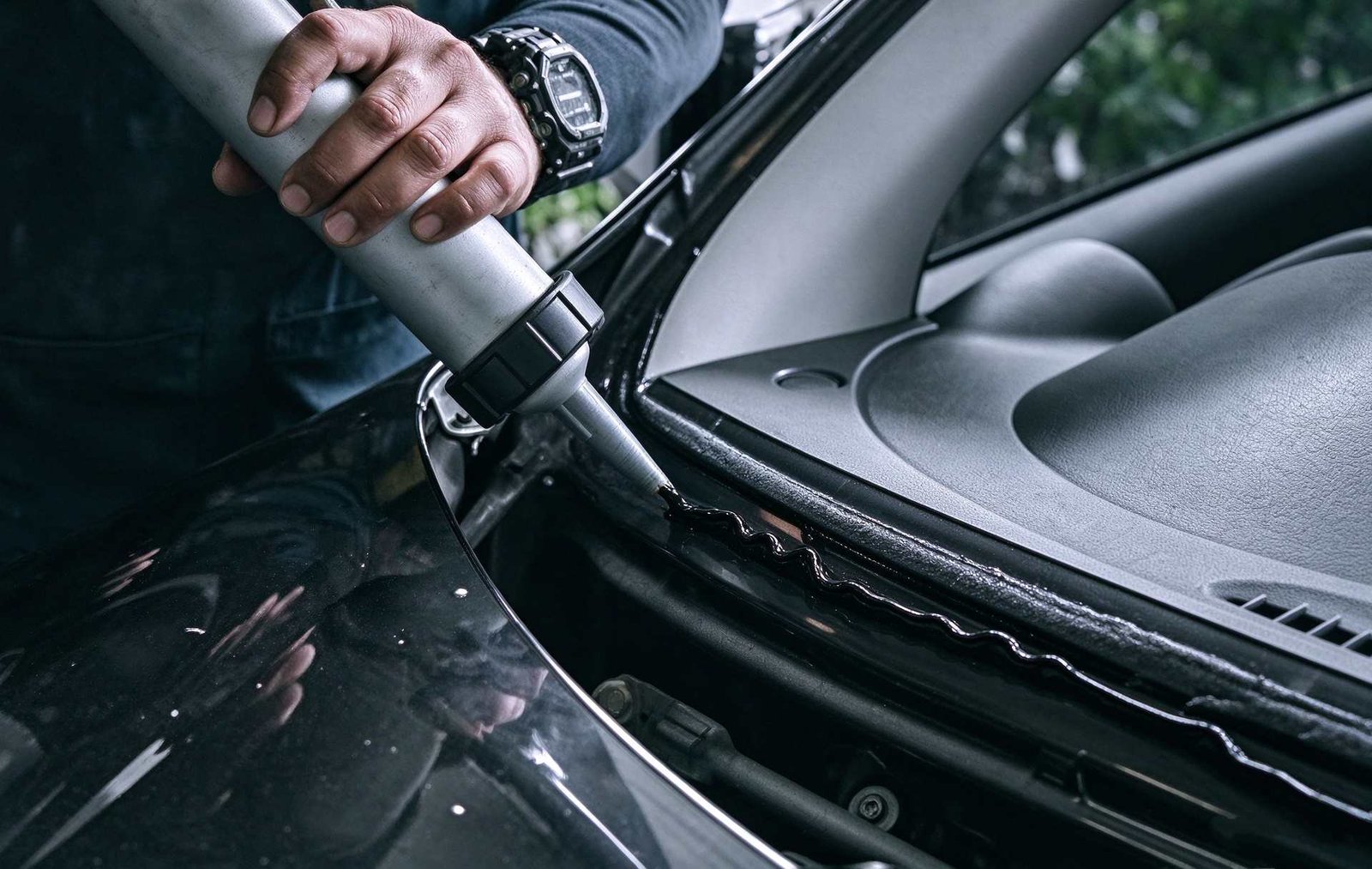
Standard Operating Procedure: Five-Stage Hybrid Bonding SOP
Executing this standardized procedure guarantees structural joint strength, uniform bond lines, and full crash compliance.
Step 1: Substrate Abrasion and Degreasing
Mechanically abrade e-coated steel flanges and SMC composite mating surfaces using 80-grit abrasive discs. Blow away dust with clean compressed air and wipe thoroughly with fast-evaporating solvent degreaser.
Step 2: Equalizing 2K Cartridge and Static Mixer Purge
Insert the 2K epoxy cartridge into a manual or pneumatic dispenser. Purge a small amount of material without a tip to ensure both plungers advance evenly. Attach the static mixing nozzle and dispense a 5cm test bead to verify complete color blending.
Step 3: Continuous Bead Application and Clamping
Apply a continuous 8mm bead along the inner bonding flange. Install the replacement panel and apply locking C-clamps. The integrated glass spacer beads maintain an exact 0.3mm bond line thickness; do not over-tighten clamps.
Step 4: Weld-Bonding or Full Cure Verification
If performing weld-bonding, execute squeeze-type resistance spot welds (STRSW) through the wet adhesive bead within the open time. Allow the epoxy to cure fully (typically 24 hours at 20°C or 60 minutes with infrared heat lamps).
Step 5: Direct Glazing Windshield Installation
Once body panel epoxies are cured and painted, prepare the windshield pinchweld. Prime the glass ceramic frit and dispense structural polyurethane adhesive, observing verified Safe Drive-Away Times.
Engineer’s Technical Trade-Offs: Boundaries of Panel Bonding
Collision structural technicians must understand the strict operational boundaries governing adhesive fastening.
- Structural Pillar Prohibitions: Never use panel bonding adhesive on structural A-pillars, B-pillars, rocker panels, or frame rails unless explicitly mandated by OEM repair procedures with insert sleeves.
- Thermal Curing Delays: Structural 2K epoxies require ambient temperatures above 18°C (65°F); curing halts completely below 10°C unless accelerated with controlled infrared heating.
- Strict Material Separation: Never use 2K panel bonding epoxy to install automotive glass, and never use 1K windshield polyurethane to bond outer quarter panels.
Frequently Asked Questions: Panel Bonding Adhesives
Is automotive panel bonding as strong as welding?
In non-structural outer panels, bonded joints are often stronger and more fatigue-resistant than spot welds. Resistance spot welding concentrates crash stress at individual weld points and degrades steel galvanizing. Structural 2K epoxies distribute loads evenly along the entire joint seam while providing 100% corrosion protection.
Why do panel bonding adhesives contain tiny glass beads?
Microscopic glass spacer beads (typically 0.25mm to 0.38mm in diameter) ensure precise bond line control. When technicians tighten locking clamps, the incompressible glass spheres prevent the adhesive from squeezing completely out of the joint, guaranteeing optimal structural lap shear strength.
Can you use 2K epoxy panel bonding adhesive to glue a windshield?
No. Never bond automotive glass with rigid 2K epoxy adhesives. Glass and steel expand and contract at different thermal rates. Rigid epoxy lacks the elastomeric elongation required to absorb thermal expansion differentials and road shock, which will cause the windshield to fracture under thermal stress.
Engineering Summary: Harmonizing Structural Epoxies and Glass Urethanes
Modern collision repair demands absolute material discipline. By deploying high-strength toughened 2K epoxies for outer sheet metal and SMC panels, while utilizing elastomeric high-modulus polyurethanes for direct glass glazing, collision specialists achieve flawless aesthetic alignment, total corrosion prevention, and uncompromising vehicle crash safety.
Authored by ChemPU Automotive Application Engineering Team
Specializing in OEM direct-glazing polyurethane formulation, crash-retention validation per FMVSS 212 standards, and high-performance structural elastomeric bonding solutions for global automotive manufacturers.
Quality Certification: ISO 9001 / IATF 16949 Certified Adhesive Manufacturing
Source Certified OEM Direct Glazing Adhesives & Structural 2K Resins
Partner with ChemPU, an ISO 9001 and IATF 16949 certified Chinese manufacturer. We supply certified polyurethane direct glazing adhesives, structural 2K panel epoxies, and private label cartridges for collision repair networks and international distributors.
Direct WhatsApp Technical Inquiry: +86 15216655520

