
Industrial concrete slabs endure relentless physical abuse daily. In active manufacturing plants and logistics hubs, heavy forklift traffic constantly hammers control joints. If horizontal expansion joints remain unprotected or sealed with rigid mortar, catastrophic spalling occurs rapidly. Concrete shoulders crack, vehicle wheels chip, and expensive floor repairs become unavoidable as a result.
Water intrusion through unsealed pavement joints accelerates sub-base erosion and slab settlement. During winter freeze-thaw cycles, trapped water expands and destroys highway and apron joints. Specifying an elastomeric self-leveling joint sealant solves these challenges permanently. Because these low-viscosity polymers flow under gravity, they create an airtight, watertight, and flush barrier without manual tooling.
Achieving long-term joint durability requires strict adherence to polymer chemistry and joint design. Moisture-induced bubbling, improper backer rod sizing, and chemical attack frequently cause premature failure. To address these challenges, SHCHEMPU presents this comprehensive engineering handbook based on manufacturing data across global flooring projects. Specifically, this guide covers rheology, forklift load resistance, substrate preparation, ASTM C920 standards, and failure forensics.
Executive Summary: Key Takeaways for Contractors & Facility Managers
- Gravity-Assisted Flow Eliminates Tooling Costs: A true self-leveling joint sealant features a low-viscosity formula. As a result, it automatically self-levels within horizontal joints, significantly reducing labor hours compared to non-sag sealants.
- Shore Hardness Dictates Traffic Resistance: For light pedestrian traffic and driveways, flexible sealants with Shore A 25 to 35 provide optimal movement. Conversely, high-traffic warehouse floors demand Shore A 45 to Shore D 50. Ultimately, these heavy-duty formulations prevent severe joint edge spalling under hard forklift wheels.
- Substrate Moisture Control Prevents Outgassing: Polyurethane sealants react with concrete pore water, releasing carbon dioxide gas. Therefore, concrete moisture levels must remain below 4% to 5% before installation. In addition, moisture-tolerant MS polymers or 2K epoxy primers can prevent unsightly blisters.
- Engineered Joint Dimensions Ensure Longevity: Contractors must maintain a strict 2:1 width-to-depth ratio using closed-cell polyethylene backer rods. Pairing horizontal sealants with compatible polyurethane construction sealants on perimeter verticals ensures complete envelope protection as well.
What Are Self-Leveling Joint Sealants & How Do They Work?
Self-leveling joint sealants are low-viscosity elastomeric polymers engineered for horizontal expansion and control joints. In particular, SHCHEMPU formulations combine automated surface leveling with ±25% to ±50% joint movement capability under ASTM C920 standards.
Low Viscosity Rheology & Gravity-Assisted Tooling-Free Wetting
Traditional sealants rely on high thixotropy to prevent slumping on vertical facades. In contrast, horizontal applications demand low-viscosity rheology. Once dispensed into a prepared concrete channel, a premium self-leveling polyurethane sealant immediately flows outward under gravity.
The fluid polymer achieves 100% surface wetting along irregular concrete sidewalls. It fills micro-voids, saw-cut grooves, and hairline cavities without requiring manual tooling. Because labor represents a substantial portion of commercial joint sealing costs, eliminating tooling accelerates daily linear meter output consequently.
Critical Distinction: Self-Leveling vs. Non-Sag Polyurethane Sealants
Choosing between self-leveling (SL) and non-sag (NS) sealants is a fundamental engineering decision. For instance, applicators must never place self-leveling sealants on vertical facades, precast panels, or slopes exceeding 2%. If applied to a slope, the material flows downhill and escapes the joint cavity.
Conversely, contractors should specify thixotropic polyurethane construction sealants for perimeter tilt-up walls and parapets. For complete envelope design parameters, contractors can review our comprehensive architectural construction sealants guide. Meanwhile, horizontal slabs, low-slope ramps, and parking aprons strictly require self-leveling grades.
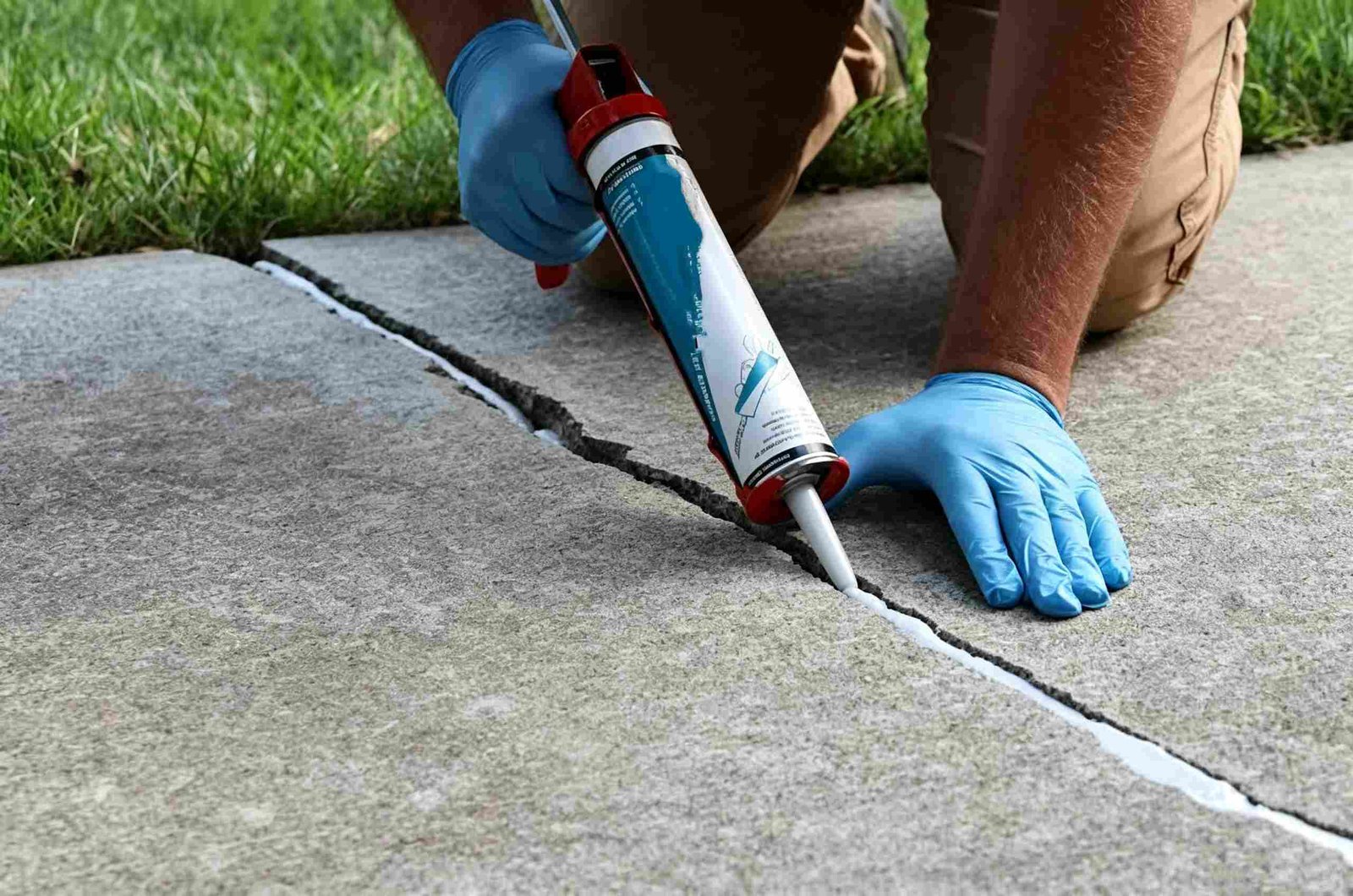
Heavy-Duty Performance Demands for Warehouse & Factory Floors
Industrial warehouse floors face point contact pressures exceeding 5 MPa from solid polyurethane forklift wheels. Therefore, selecting an inadequate joint sealant causes immediate joint shoulder breakdown, racking instability, and costly facility downtime.
Shore Hardness & Load Bearing: Resisting Hard-Wheeled Forklift Traffic
In logistics facilities, forklifts and automated guided vehicles (AGVs) carry loads up to 10 tons. Standard architectural caulks typically provide a Shore A hardness of only 20 to 30. Under heavy solid-rubber or polyurethane wheels, such soft sealants deflect excessively as a result.
Unreinforced concrete edges absorb massive impact loads and fracture under repeated traffic. In contrast, heavy-duty industrial floor sealants feature a Shore A hardness between 40 and 55. For static control joints in high-rack aisles, semi-rigid polyureas reaching Shore D 45 to 50 provide maximum mechanical shoulder support instead.
Preventing Concrete Joint Edge Spalling & Slab Breakdown
Joint spalling is the leading cause of concrete floor deterioration in automated fulfillment centers. When wheels drop into receded joint channels, the impact pulverizes brittle concrete shoulders. Over time, narrow 6 mm saw cuts widen into 50 mm ragged chasms.
Installing a traffic-grade horizontal joint sealant flush with the floor surface eliminates wheel drop. Because the cured polymer transfers wheel loads smoothly across the joint interface, it preserves concrete integrity. It also prevents wheel bearing damage on expensive material handling equipment.
Industrial Chemical Resistance: Oils, Solvents, Battery Acids, and Cleaners
Manufacturing facilities subject floor joints to continuous chemical exposure. Forklifts leak hydraulic fluids, automotive repair bays encounter petroleum fuels, and food processing plants utilize aggressive alkaline detergents. In battery charging zones, joints encounter corrosive sulfuric acid spills as well.
High-grade polyurethane and hybrid silyl-modified polymer (MS) sealants offer robust chemical resistance across pH 3 to 11. Specifically, they resist swelling, softening, and chemical extraction under demanding conditions. When paired with high-performance waterproof coatings, they form an impervious defensive barrier against liquid contamination.
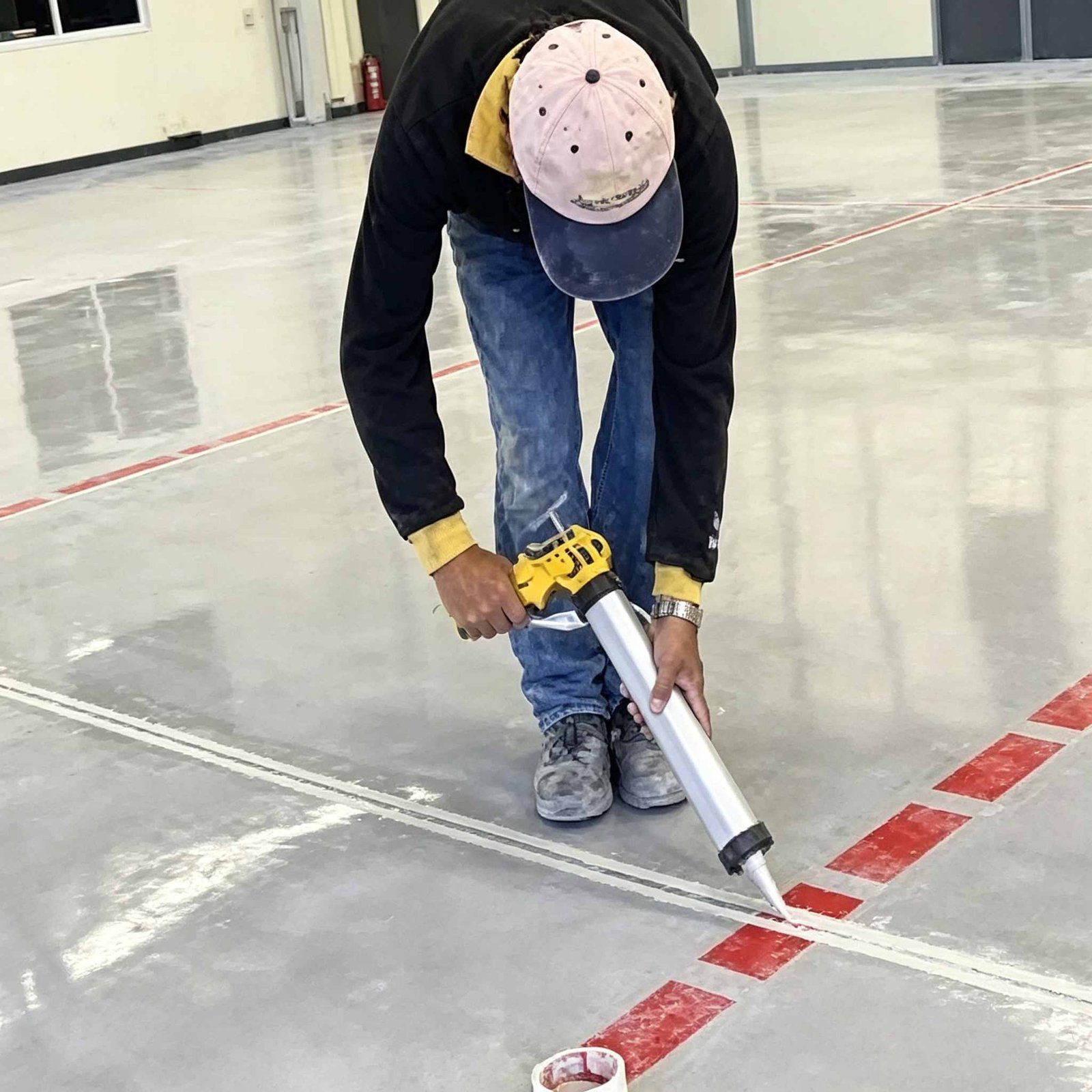
Polymer Chemistry Matrix: Comparing SL Polyurethane, Polyurea, and MS Polymer
Selecting the right polymer chemistry requires balancing joint movement, cure speed, and traffic demands. For this reason, the comparative table below outlines the primary technical parameters governing commercial horizontal sealants.
| Performance Parameter | 1K Polyurethane (PU) | 2K Plural Polyurea | MS / SMP Hybrid |
|---|---|---|---|
| Joint Movement (ASTM C719) | ±25% to ±35% (Class 35) | ±10% to ±15% (Semi-Rigid) | ±25% to ±50% (Class 50) |
| Shore Hardness (ASTM D2240) | Shore A 35 – 45 | Shore A 80 / Shore D 50 | Shore A 30 – 40 |
| Tack-Free / Return to Traffic | 2 to 4 hours / 24 to 48 hours | 5 to 15 min / 1 to 2 hours | 1 to 2 hours / 12 to 24 hours |
| Moisture Sensitivity | High (Dry concrete ≤ 4%) | Moderate to High | Zero Outgassing (Tolerates damp) |
| Primary Application | Commercial floors, driveways, pavements | Heavy AGV warehouse control joints | Green concrete, food facilities, cold rooms |
Pavement, Highway & Airport Apron Horizontal Joint Engineering
Exterior concrete pavements face extreme temperature fluctuations from -30°C in winter to +70°C under solar radiation. Sealants must maintain high tensile recovery, UV resistance, and resistance to fuel spills.
Thermal Cycling & Extreme Movement Capabilities (ASTM C920 Class 25/35/50)
Exterior concrete slabs expand significantly during summer heat and contract during winter freezes. If a sealant lacks sufficient movement capability, adhesive failure tears the bond line, or cohesive failure splits the bead.
Highway specifications require sealants complying with ASTM C920 Grade P (Pourable), Class 25, 35, or 50. High-performance horizontal joint sealants accommodate continuous thermal expansion cycles, preventing joint fatigue cracking and permanent deformation.
Fuel Spill & Deicing Salt Resistance in Exterior Infrastructure
Airport aprons, fueling depots, and bus terminals impose aggressive chemical stresses on joint seals. Aviation kerosene, gasoline, and hydraulic fluids quickly dissolve standard asphaltic joint compounds. Once the compound liquefies, debris wedges into the open joint as a consequence.
Highway deicing salts and anti-icing chemicals also attack non-elastomeric fillers. Fortunately, specialized fuel-resistant polyurethane formulations remain unaffected by hydrocarbon immersion. Pairing sealants with dedicated pneumatic caulking guns and dispensing tools ensures continuous contractor productivity.
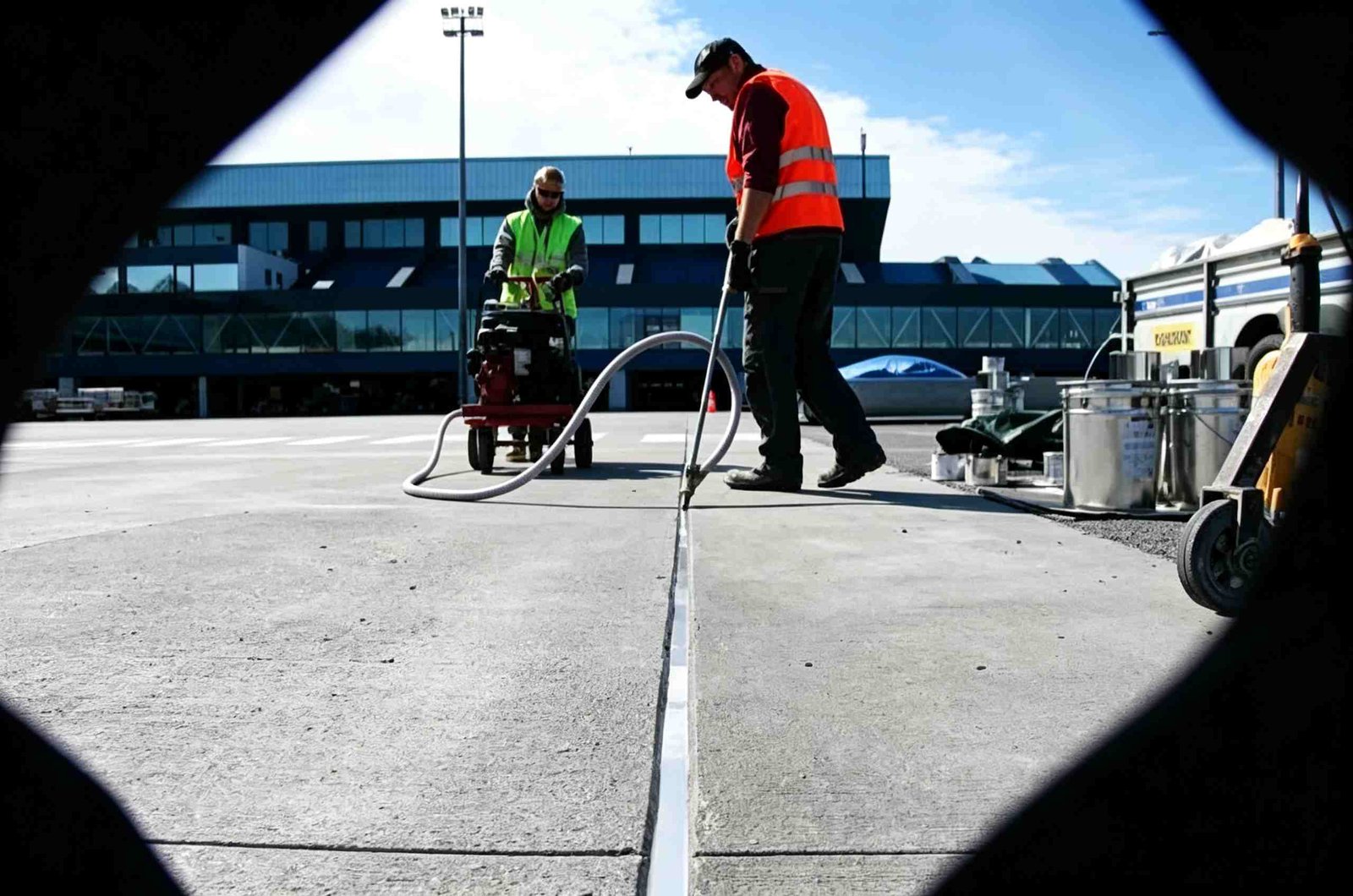
Contractor Installation Protocol: Preventing Bubbling and Joint Failures
Over 85% of premature horizontal joint failures stem from inadequate cleaning, improper backer rod sizing, or trapped moisture outgassing rather than chemical formulation defects. Following a systematic installation protocol guarantees maximum joint service life.
Joint Preparation: Diamond Saw Cutting, Dust Extraction, and Moisture Check
Successful joint sealing begins with rigorous mechanical substrate preparation. Therefore, contractors must chase existing cracks or saw-cut control joints using diamond blades to expose clean aggregates. All weak laitance, old curing compounds, and loose debris must be mechanically abraded.
Applicators vacuum the joint cavity using industrial HEPA extractors, and subsequently blow out remaining micro-dust with oil-free compressed air. Technicians measure concrete moisture content using an electronic impedance meter. Moisture content must not exceed 4% to 5% before proceeding.
Sizing and Inserting Closed-Cell Polyethylene Backer Rods
Correct backer rod selection is essential to prevent three-sided joint adhesion. If sealant bonds to the bottom of the concrete joint, tensile movement causes cohesive splitting. Installing a closed-cell polyethylene backer rod creates a two-sided bond that permits free elastic movement.
The backer rod diameter should exceed the joint width by approximately 25%. For instance, an applicator inserts a 13 mm backer rod into a 10 mm joint channel. Technicians set the rod to a consistent depth using a roller tool, avoiding punctures that trigger outgassing.
Outgassing & Blistering Prevention: Moisture Limits and Primer Application
The most common cosmetic defect in moisture-curing polyurethane sealants is blistering. When isocyanate groups react with moisture trapped inside damp concrete pores, they generate carbon dioxide gas. If the sealant skins over before gas escapes, trapped bubbles form inside the polymer as a result.
To eliminate outgassing, contractors employ three proven methods. First, ensure the slab cures for at least 28 days and passes moisture testing. Second, apply a fast-drying 2K epoxy barrier primer to seal concrete sidewalls. Third, switch to hybrid MS sealants, which cure through non-gassing silane crosslinking even on damp substrates.
Pouring Technique, Width-to-Depth Ratios, and Recessed Finishes
Maintain an engineered 2:1 width-to-depth ratio. For a 12 mm wide joint, the sealant depth over the crown of the backer rod must measure exactly 6 mm. For joints narrower than 10 mm, maintain a 1:1 ratio with a minimum 6 mm depth instead.
In traffic areas, never fill the joint completely flush with the top slab surface. Leave the finished sealant surface 3 mm to 5 mm below the concrete slab surface. This slight recess prevents snowplow blades, street sweepers, and metal wheels from abrading the cured elastomeric bead.
Engineering Field Scenario: Logistics Hub Concrete Floor Joint Remediation
A regional fulfillment center experienced recurring control joint breakdown across its automated transit corridors. Installing a heavy-traffic polyurethane self-leveling system restored structural joint integrity and eliminated concrete shoulder spalling.
Operating Conditions & Technical Remediation
OPERATING CHALLENGE
- Facility Conditions: Continuous 24/7 automated guided vehicle (AGV) traffic operating across heavily loaded concrete aisles.
- Failure Mechanism: The existing joint caulk recessed excessively. Hard solid wheels battered unreinforced joint shoulders, fracturing concrete edges along main transport lines.
- Downtime Constraint: High logistics throughput prohibited prolonged aisle shutdowns, requiring fast-curing chemistries and rapid return to traffic.
TECHNICAL SOLUTION
- Engineered Chemistry: Supplied SHCHEMPU PU-910 Heavy-Traffic Self-Leveling Polyurethane Sealant with Shore A 45 hardness and ±35% movement capability per ASTM C920.
- Packaging & Tooling: Delivered 600ml foil sausage packs alongside high-thrust pneumatic dispensers to ensure fast, bubble-free joint filling.
- Standardized Protocol: Contractors chased damaged joint shoulders, vacuumed debris, installed closed-cell backer rods, and cast self-leveling beads flush with the specified 3 mm recess.
ENGINEERING PERFORMANCE
- Durable Load Transfer: The cured elastomeric bead supported hard AGV wheels across joint shoulders, thereby preventing deflection and shoulder spalling.
- Equipment Protection: Eliminating rough joint chasms reduced dynamic impact shocks to vehicle wheel bearings and steering assemblies as well.
- Efficient Application: The gravity-flow formula eliminated manual tooling, allowing maintenance teams to complete linear joint runs within scheduled facility maintenance windows.
Technical reference: SHCHEMPU engineering field report, high-traffic logistics floor remediation. Product series: PU-910 Heavy-Traffic SL System.
SHCHEMPU Chemical Engineering Team
Technical R&D Division · SHCHEMPU Manufacturing · Since 2013 (13+ years of experience) Expertise
SHCHEMPU specializes in R&D and large-scale manufacturing of polyurethane sealants, silane-modified polymers, and industrial floor joint formulations. Our technical engineering group supports flooring contractors, civil engineering teams, and facility owners across international markets.
Frequently Asked Questions: Self-Leveling Joint Sealants
Selection, Curing & Traffic Return
Can self-leveling joint sealant be used on sloped concrete driveways?
Self-leveling sealants should only be used on slopes up to 2% to 3%. On steeper inclines, the low-viscosity polymer will flow downhill before curing, pooling at the lowest point as a result. For slopes exceeding 3%, specify a non-sag polyurethane or hybrid construction sealant instead.
How long after application can an industrial floor be opened to traffic?
Pedestrian traffic is typically permitted within 12 to 24 hours. Furthermore, for pneumatic-tired forklift traffic, wait at least 48 hours. For heavy solid-wheeled forklifts in high-traffic distribution hubs, allow 72 hours for complete through-cure to achieve full Shore A hardness before opening.
Why does polyurethane self-leveling sealant bubble during curing?
Bubbling occurs because polyurethane reacts with residual moisture in concrete pores, releasing carbon dioxide gas. If concrete moisture exceeds 4% to 5%, or if installed under direct hot sun on damp concrete, trapped gas forms blisters. Using an epoxy moisture barrier primer or switching to non-gassing MS polymer sealants prevents this issue.
What is the ideal joint width-to-depth ratio for self-leveling sealants?
The standard rule for horizontal expansion joints is a 2:1 width-to-depth ratio. For example, a 12 mm wide joint requires a 6 mm sealant depth above the backer rod crown. For narrower saw cuts under 10 mm, maintain a 1:1 ratio with a minimum depth of 6 mm instead.
Maintenance, Primer & Compatibility
Is a primer necessary before applying self-leveling polyurethane sealant?
On clean, dry, well-cured concrete subjected to normal traffic, premium SHCHEMPU self-leveling sealants provide primerless adhesion. However, primer is strongly recommended for damp substrates, dynamic high-load warehouse floors, or joints subject to continuous water immersion.
Can self-leveling joint sealants be painted over?
Yes, polyurethane and MS hybrid self-leveling sealants can be painted with high-grade epoxy or polyurethane floor coatings once fully cured. Because the sealant flexes with joint movement, use flexible elastomeric coatings over the joint interface to prevent coating hairline cracking.
How does temperature affect the flow and cure of self-leveling sealants?
Viscosity increases in cold weather, slowing gravity self-leveling. Meanwhile, in hot temperatures, sealants flow faster and skin over rapidly. Optimal application temperatures range from 10°C to 35°C (50°F to 95°F). In colder environments, store cartridges in a conditioned room prior to dispensing.
What packaging options are available for commercial contractors?
SHCHEMPU provides 310ml aluminum cartridges for small crack repairs, 600ml foil sausage packs for commercial contractor efficiency, and 20L pails or 200L drums for continuous automated industrial pump dispensing on infrastructure projects.
Direct Factory Supply & Engineering Support
Source Factory-Direct Self-Leveling Sealants for Your Flooring Projects
Partner directly with SHCHEMPU for ASTM C920 certified polyurethane and MS hybrid self-leveling joint sealants. We provide tailored Shore hardness grades, custom color matching, wholesale packaging (600ml sausages, 20L pails, 200L drums), and full technical specification support for commercial flooring contractors and distributor brands.

