
Automotive detailers and fleet maintenance technicians regularly face scratched vehicle windshields caused by worn wiper blades, gritty road dust, and ice scrapers. Applying high-purity cerium oxide polish eliminates light surface scratches, restoring factory optical clarity without replacing costly laminated glass.
However, aggressive mechanical buffing introduces serious optical distortion hazards. Over-polishing localized spots creates focal depressions that act as concave optical lenses, distorting driver perception. Mastering chemical slurry dilution, rotary speed regulation, and surface heat dissipation guarantees safe glass restoration.
Key Takeaways: Safe Glass Scratch Restoration
- Dual Polishing Mechanism: Cerium oxide combines mechanical micro-abrasion with chemical hydrolysis, softening silica molecular bonds for flat planarization.
- The Fingernail Threshold: Scratches deep enough to catch a fingernail (exceeding 0.05 mm) cannot be polished out without creating dangerous optical distortion.
- Rotational Speed Limits: Maintain rotary buffer speeds strictly between 1,200 RPM and 1,500 RPM, using continuous water misting to prevent thermal stress fractures.
- Pad Material Selection: Always utilize dense compressed rayon felt or hard wool pads; soft foam detailing pads absorb slurry and generate excessive heat.
Chemical-Mechanical Polishing: How Cerium Oxide (CeO2) Restores Silica Glass
Standard abrasives like silicon carbide or aluminum oxide remove material purely through harsh mechanical cutting, leaving cloudy micro-scratches across automotive glass. In contrast, professional cerium oxide polish operates via chemical-mechanical planarization (CMP).
When suspended in water, cerium oxide particles exhibit active chemical surface reactivity with silicon dioxide ($SiO_2$). The cerium compound temporarily breaks surface silica bonds, converting microscopic glass ridges into a hydrated, softened silica gel layer.
Molecular-Level Silica Leveling
As the rotary felt pad sweeps across the glass, mechanical shear forces wipe away this softened silica gel. The chemical-mechanical cycle planes microscopic wiper scratches flat at an atomic scale, restoring original specular light reflection without cloudiness.
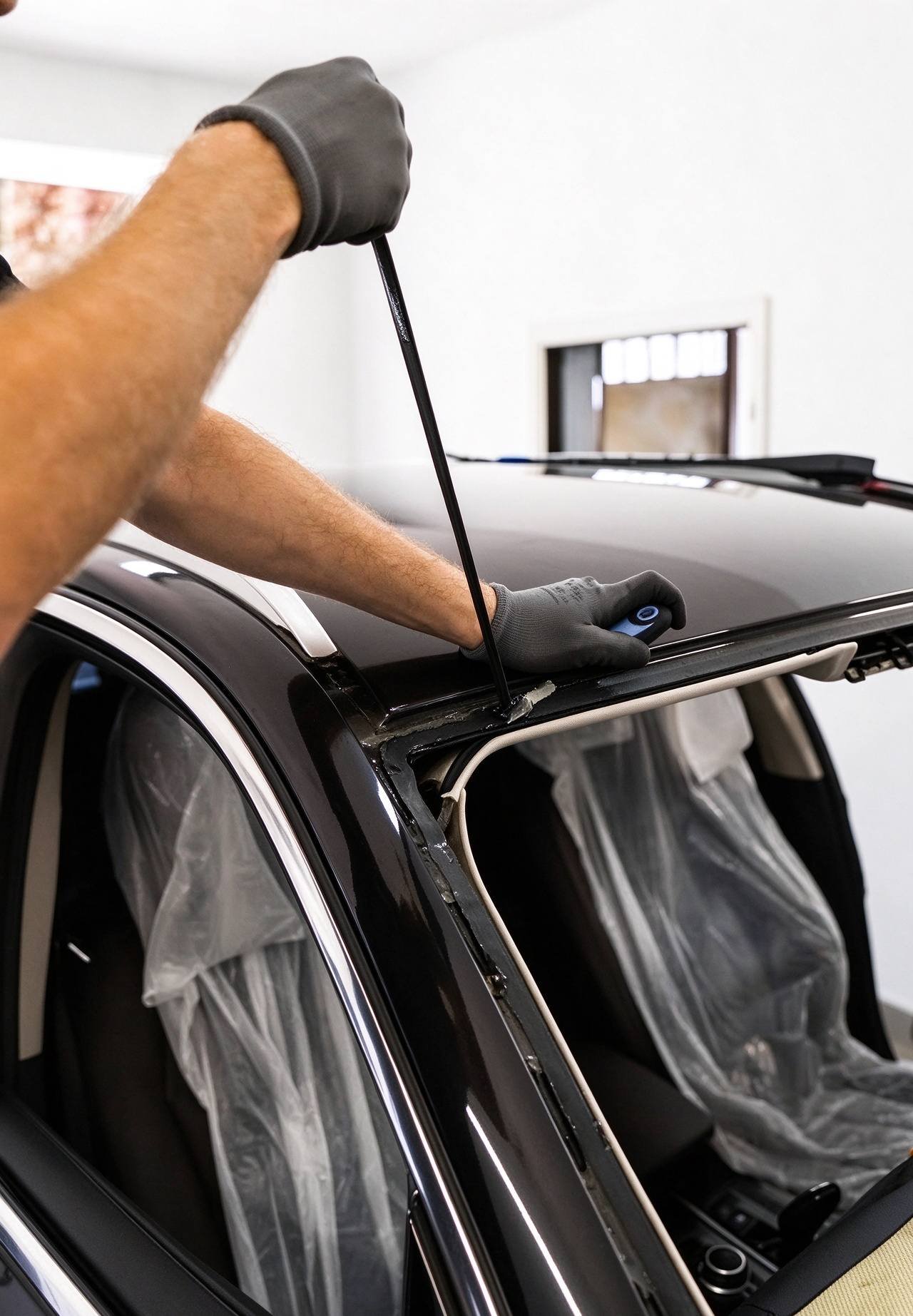
Figure 1: Vehicle windshield glass preparation and structural adhesive mounting in professional detailing bay.
The Fingernail Test: Distinguishing Surface Scratches from Dangerous Grooves
Before beginning any glass buffing operation, technicians must perform the standardized fingernail scratch test. Drag a clean fingernail perpendicular across the scratch path.
Surface Hairline Scratches (Polishable)
If your fingernail glides smoothly over the scratch without catching, the defect depth is under 0.05 mm (50 microns). These shallow wiper sweep arcs and mineral deposit stains respond perfectly to cerium oxide polish, vanishing completely within 15 minutes of rotary work.
Deep Structural Gouges (Unrepairable by Polishing)
If your fingernail audibly clicks or catches firmly inside the groove, the scratch exceeds 0.05 mm. Grinding down surrounding glass to eliminate a deep gouge removes too much silica thickness.
This aggressive local grinding creates an optical trough known as a concave lens blemish. As oncoming headlights strike this trough, light bends unpredictably, causing severe night glare, driver disorientation, and vehicle inspection failure.
Abrasive Media Comparison and Thermal Shock Prevention
Automotive glass differs drastically from automotive clearcoat paint. Selecting improper abrasives ruins windshield clarity irreversibly:
| Abrasive Media | Removal Mechanism | Optical Distortion Risk | Recommended Auto Glass Role |
|---|---|---|---|
| Cerium Oxide ($CeO_2$) Slurry | Chemical-Mechanical (CMP) | Extremely Low (With Wide Feathering) | Wiper Scratches & Water Spot Etching |
| Diamond Lapping Paste | Pure Mechanical Micro-Cutting | High (Aggressive Trenching) | Architectural Glass & Mineral Crystals |
| Aluminum Oxide ($Al_2O_3$) | Mechanical Gouging | Moderate to High Haze | Paint Clearcoat Compound (Avoid on Glass) |
| DIY Household Pastes (Toothpaste) | Hydrated Silica / Chalk | Zero Cut (Leaves Swirls) | Ineffective DIY Myth (Fails on Glass) |
Thermal Management: Preventing PVB Interlayer Delamination
Friction between a rotating felt pad and dry glass generates intense heat. If glass surface temperatures exceed 65°C (150°F), the central polyvinyl butyral (PVB) acoustic film boils, creating permanent milky cloudiness.
Uneven localized heating also triggers sudden thermal stress cracks across the windshield. Technicians must continually mist the work zone with distilled water, keeping the slurry wet and surface temperatures lukewarm to the touch.
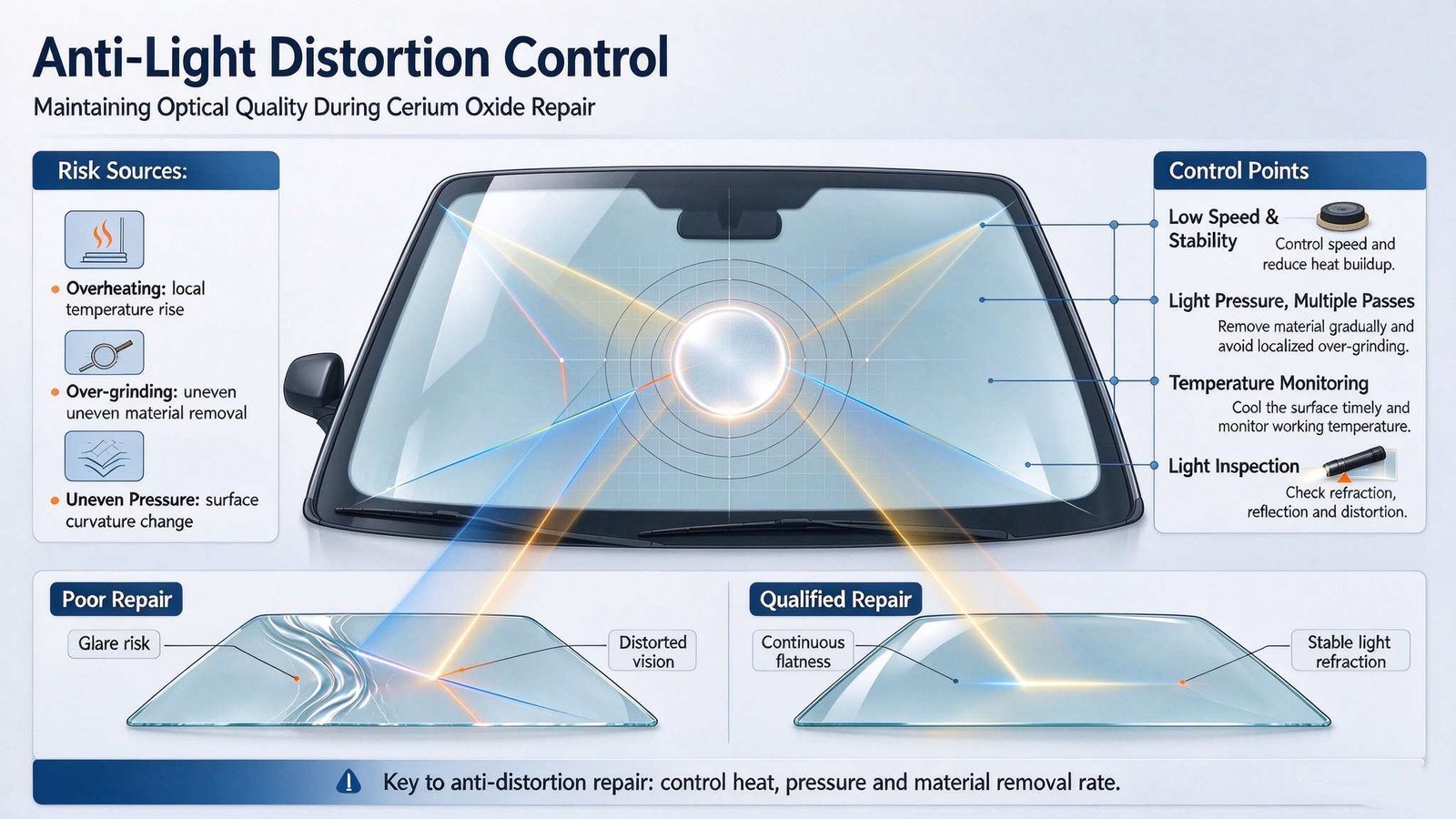
Figure 2: Verifying optical wave consistency across polished glass zones to eliminate glare and light distortion.
Standard Operating Procedure: Glass Polishing Workflow
Executing a defect-free glass restoration with cerium oxide polish requires adhering to this five-stage professional workshop SOP:
- Surface Decontamination and Masking: Wash the glass thoroughly with alcohol-based cleaner, clay bar embedded mineral fallout, and tape off all exterior rubber weatherstripping and painted wiper cowls with protective plastic film.
- Slurry Mixture Preparation: Mix high-grade 99% pure cerium oxide powder with distilled water in a clean container at a 1:1 weight ratio until it reaches the consistency of creamy milk.
- Rotary Buffer Calibration: Mount a hard compressed rayon felt pad onto a rotary polisher. Set machine speed between 1,200 RPM and 1,500 RPM. Apply a moderate bead of slurry directly onto the pad face.
- Overlapping Cross-Hatch Polishing: Guide the polisher across a 40 cm by 40 cm work section using overlapping 50% cross-hatch passes. Never dwell in one localized spot; feather movements outward to blend glass contours smoothly.
- Continuous Misting and Inspection: Mist the working glass area with distilled water every 45 seconds to maintain slurry hydration. Wipe away dried splatter with microfiber towels and inspect scratch elimination under high-intensity inspection lamps.
Typical Application Scenario: Severe Wiper Sweep Scratching and Optical Haze
Case Overview: Fleet Taxi Night Glare and Vehicle Safety Inspection Failure
Incident Profile: A hybrid taxi fleet vehicle failed annual commercial safety inspection due to excessive glass glare across the driver sightline. Worn wiper blades dragged sand particles across the windshield, cutting extensive circular sweep micro-grooves.
Diagnostic Evaluation: Technicians performed the fingernail test. While severe visual haze was present, the fingernail did not catch in the grooves, verifying defect depths remained well under 0.03 mm. Polishing was fully viable without creating optical wave distortion.
Corrective Engineering Action: The workshop executed a 35-minute cross-hatch polishing protocol using optical-grade cerium oxide slurry and compressed rayon pads at 1,300 RPM. All wiper arcs vanished completely, specular light transmission reached 99%, and the vehicle passed inspection without the expense of full windshield glass replacement.
Frequently Asked Questions: Windshield Glass Scratch Polishing
Can cerium oxide polish remove stone chips or deep glass cracks?
No. Cerium oxide slurry is engineered strictly for surface micro-abrasions and wiper sweep scratches under 0.05 mm in depth. Stone chips, bullseyes, and radial cracks penetrate deep into the outer silica layer, requiring a vacuum resin injection kit or full glass replacement detailed in our windshield repair kit guide.
Why does concentrating the polisher on one single spot create wavy distorted vision?
Dwelling in one localized spot grinds away glass thickness unevenly, carving a microscopic concave depression into the glass pane. This concave depression functions like an optical lens, bending passing light waves and creating funhouse-mirror visual distortion that causes driver dizziness.
What specific polishing pad material works best with cerium oxide slurry?
Always use hard, compressed rayon felt or tightly wound wool pads. Automotive foam pads are far too soft, absorbing liquid slurry deep into their cell structure while overheating rapidly. Rigid felt pads maintain uniform contact pressure, maximizing chemical planarization across the glass face.
Engineering Summary: Chemical Polishing Precision Saves Fleet Budgets
Restoring windshield transparency with high-grade cerium oxide polish offers immense cost savings over full glass replacement. By adhering to the fingernail depth threshold, feathering polisher strokes to prevent optical distortion, and managing surface thermal friction, auto glass workshops achieve OEM-level optical clarity safely.
ChemPU Auto Glass Engineering & Polishing Technology Team
Automotive Polyurethane Adhesives & Optical Polishing Systems
ChemPU manufactures certified direct glazing polyurethane adhesives, black glass primers, and glass restoration consumables under ISO 9001 and IATF 16949 standards. Our engineering team assists auto repairers and distributors worldwide with verified technical specifications and prompt consultation via WhatsApp (+86 15216655520).
Source Certified OEM Direct Glazing Polyurethane Adhesives
Partner with ChemPU, an ISO 9001 and IATF 16949 certified Chinese manufacturer. We provide high-modulus polyurethane direct glazing adhesives, black glass primers, and private label cartridges for international distributors and fleet repair networks.
Direct WhatsApp Technical Inquiry: +86 15216655520

