
Automotive glass technicians face severe risks when utilizing low-grade removal blades and manual caulking guns. Substandard cutout tools frequently slip. They scratch dashboard upholstery, cut heads-up display wiring, and gouge pinchweld paint. Poor equipment increases cycle times, tires technicians, and causes serious vehicle corrosion liabilities.
Equipping workshops with certified windshield replacement tools transforms repair efficiency and preserves factory body integrity. Modern tooling suites incorporate fiber cut-line systems and oscillating pneumatic knives. They also use high-thrust battery dispensers and calibrated dual-cup vacuum lifters.
This engineering guide evaluates professional auto glass installation hardware. We compare traditional pull knives against non-metallic fiber wire extraction systems. We also review high-ratio adhesive dispensing guns and vacuum handling standards. Auto glass shop owners will gain clear criteria to optimize their daily workshop toolkits.
Executive Summary: Essential Hardware for Modern Auto Glass Replacement
- Wire Extraction Evolution: Synthetic polyethylene fiber cut-lines replace braided steel wire. This eliminates metallic gouging on vehicle pinchweld paint and carbon fiber vehicle pillars.
- Dispensing Thrust Requirements: High-modulus polyurethane adhesives demand battery-powered or pneumatic auto glass caulking gun equipment delivering mechanical thrust exceeding 3,000 N.
- Vacuum Handling Safety: Handling heavy panoramic glass mandates industrial windshield suction lifter devices equipped with visual vacuum loss indicators and calibrated pump plungers.
- Pinchweld Preservation: Specialized pull knives and oscillating cut-out tools must feature adjustable depth stops to prevent cutting through the OEM 1mm polyurethane base cushion.
Glass Removal Systems: Traditional Cold Knives vs. Synthetic Wire Cutters
A professional windshield removal tool must slice through hardened polyurethane cleanly. It must never contact underlying steel pinchweld flanges or vehicle interior cabin trims.
Traditional Cold Knives and Pull Cutters
The classic cold knife windshield tool utilizes hardened carbon steel utility blades bent at right angles. Technicians exert manual pull force along perimeter channels to sever cured urethane beads.
Cold knives are inexpensive and portable, yet require significant technician muscle exertion. On vehicles with tight glass gaps, rigid steel blades frequently contact painted body flanges. This gouges through cathodic e-coat and initiates severe rust creeping.
Synthetic Fiber Wire Cut-Out Technology
Modern glass replacement relies on an advanced auto glass wire removal tool utilizing polyethylene fiber line. A technician feeds the flexible line through the urethane bead, securing it to an interior ratcheting winding reel.
As the mechanical winch spools the line, high tensile friction slices through the adhesive cleanly. This process eliminates metallic contact against painted pinchwelds. A single technician can dismount large windshields without assistance, preserving body coatings and interior headliners.
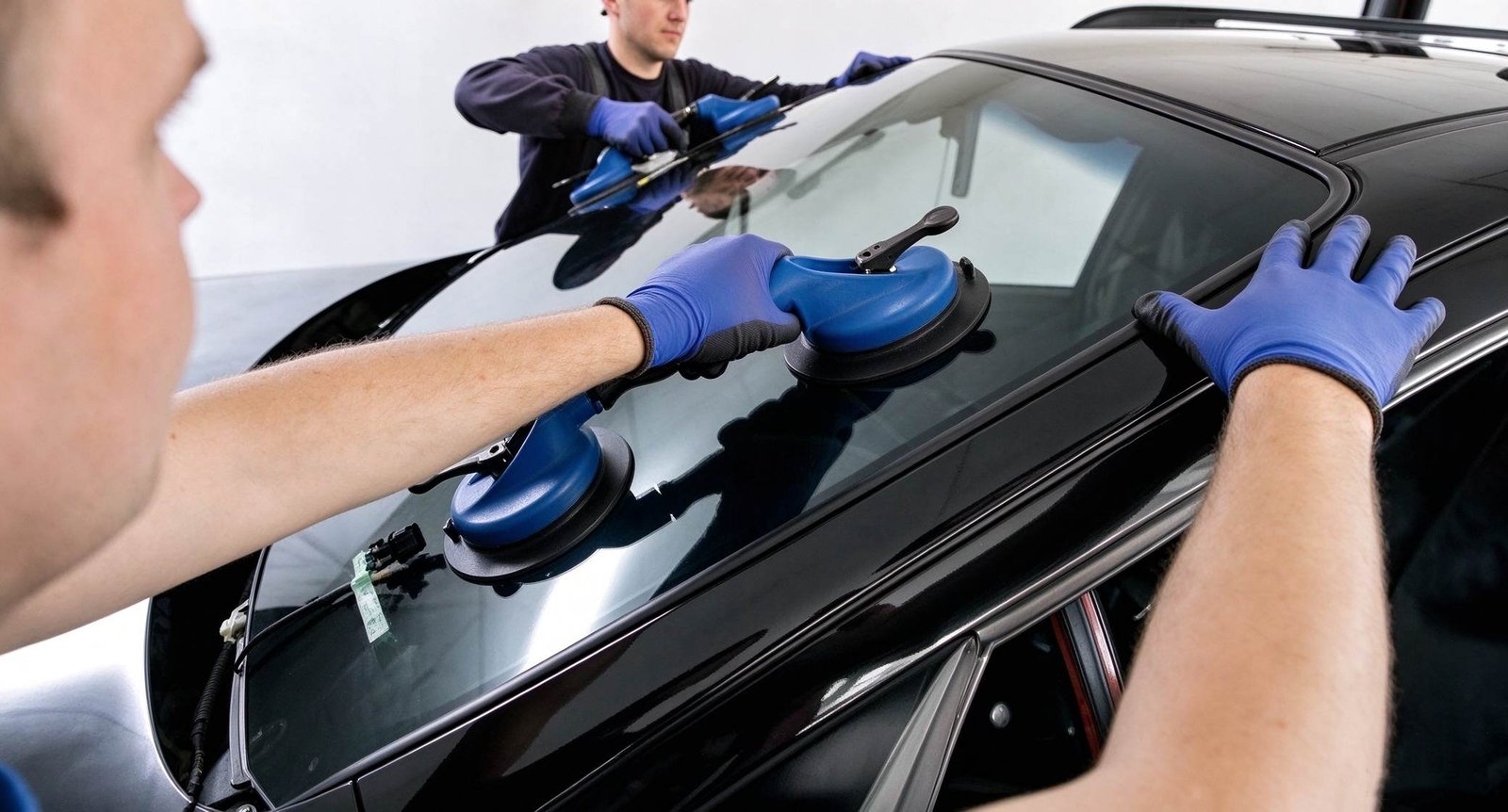
Tool Selection Matrix: Comparing Professional Windshield Equipment
Auto glass replacement centers must balance tooling investment against operator safety and installation throughput. The engineering table below details hardware capabilities.
| Equipment Category | Standard Tooling Option | Advanced Professional Option | Operational Impact |
|---|---|---|---|
| Glass Removal Systems | Manual Steel Cold Knife | Synthetic Fiber Line Winder | Zero pinchweld paint scratches |
| Adhesive Extrusion | 18:1 Manual Hand Gun | 18V Li-Ion Battery Gun (>3500N) | Continuous bead geometry, zero fatigue |
| Pinchweld Trimming | Standard Utility Razor | Offset Pinchweld Scraper | Guarantees uniform 1mm urethane bed |
| Glass Manipulation | Flip-Lever Plastic Suction Cup | Pump-Action Plunger Lifter | Visual warning for vacuum loss |
Typical Application Scenarios: Workshop Realities & Tooling Upgrades
Real-world fleet collision centers reveal distinct efficiency and safety gains when transitioning from primitive hand tools to engineered professional equipment.
Scenario A: Express Mobile Unit Transition to Fiber Wire Systems
A regional mobile glass replacement operation logged recurring customer complaints. These complaints cited scratched dashboard A-pillars and severed rain sensor wiring harness cables.
The management equipped all service vans with a synthetic line windshield cutout tool system. Eliminating vibrating power blades reduced interior trim damage claims to zero. It also accelerated single-technician removal times to under 12 minutes.
Scenario B: Commercial Bus Panoramic Glass Installation
A coach bus manufacturing line struggled with manual caulking guns. Extruding dense polyurethane across massive 2.5-meter windscreens caused severe hand fatigue. This fatigue resulted in wavy, inconsistent bead profiles with frequent air pocket voids.
Implementing industrial 18V battery-powered dispensing guns delivered steady, unbroken triangular bead heights. Paired with heavy-duty pump-action vacuum lifters, technicians positioned panoramic glass assemblies smoothly within open working times.
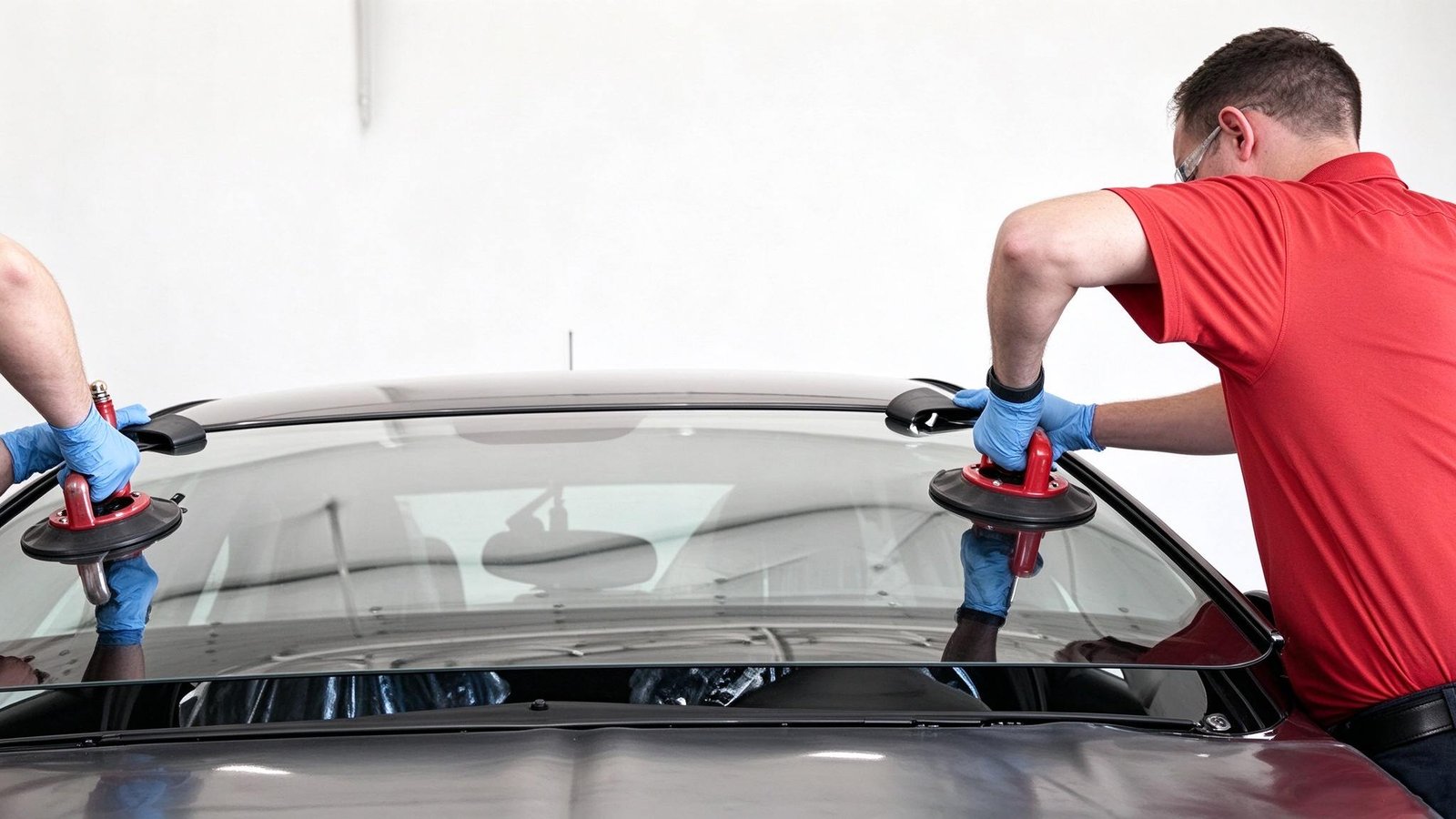
Standard Operating Procedure: Professional Tool Usage & Maintenance SOP
Disciplined tool maintenance guarantees workplace safety and consistent installation quality across replacement cycles.
Step 1: Fiber Cut-Out Rigging
Thread the synthetic cut line around the glass perimeter using an insulated piercing awl. Mount the suction winding unit to the interior glass surface. Ratchet the spool smoothly, keeping line tension parallel to the glass to prevent edge chipping.
Step 2: Calibrated V-Notch Dispensing
Use a pre-notched nozzle cut to a triangular profile matching OEM bead height. Set the electric dispenser feed rate to lay a continuous bead perpendicular to the glass flange without pausing.
Step 3: Vacuum Lifter Verification
Inspect suction rubber pads for dirt or silicone film before attachment. Depress the manual pump plunger until the red safety line disappears completely into the handle, confirming full vacuum holding capacity.
Engineer’s Technical Trade-Offs: Hardware Selection Boundaries
Selecting automotive glass tools requires balancing procurement costs, operational speed, and maintenance complexity.
- Fiber Line Consumable Costs: Synthetic cut lines eliminate paint damage. However, they represent an ongoing consumable cost per vehicle cutout compared to reusable steel blades.
- Battery Dispenser Weight: Heavy-duty electric caulking guns provide uniform extrusion. However, they weigh over 2.5 kg with battery packs, requiring balanced two-handed handling.
- Pneumatic Air Hose Constraints: Pneumatic cut-out knives offer high cutting power. However, trailing air hoses restrict mobility during roadside mobile glass installations.
Frequently Asked Questions: Auto Glass Installation Tooling
Why are synthetic fiber wire systems preferred over traditional steel cutout wire?
Synthetic fiber lines deliver high tensile cutting strength while remaining softer than vehicle steel and clear-coat paint. If the fiber line rubs against a vehicle A-pillar or pinchweld, it will not scratch cathodic coatings or damage interior dashboard leather, eliminating corrosion risks.
What thrust ratio is required for an auto glass caulking gun?
High-modulus polyurethane direct glazing adhesives feature dense paste viscosities. Manual hand dispensers must feature a mechanical advantage ratio of at least 18:1 or 26:1. For high-volume production, commercial battery-powered guns delivering over 3,000 N of thrust are recommended to avoid operator fatigue.
How often should vacuum suction cups be inspected and cleaned?
Technicians should clean suction rubber pads daily using mild soap and water or alcohol wipes to remove dust and oily residues. Pads exhibiting cracks, deep gouges, or hardened rubber rims must be replaced immediately to prevent sudden vacuum release during glass transport.
Engineering Summary: Elevating Quality Through Precision Tooling
Automotive glass replacement excellence depends equally on high-performance adhesives and professional installation hardware. Investing in synthetic cut-out systems, calibrated battery dispensers, and certified vacuum lifters protects vehicle structural coatings, accelerates workshop throughput, and safeguards technician safety.
Authored by ChemPU Automotive Application Engineering Team
Specializing in OEM direct-glazing polyurethane formulation, crash-retention validation per FMVSS 212 standards, and high-performance structural elastomeric bonding solutions for global automotive manufacturers.
Quality Certification: ISO 9001 / IATF 16949 Certified Adhesive Manufacturing
Source Professional Auto Glass Installation Tools & Adhesives
Partner with ChemPU, an ISO 9001 and IATF 16949 certified Chinese manufacturer. We supply electric caulking guns, specialized cut-out tools, vacuum suction lifters, and high-modulus polyurethane windshield adhesives for international auto glass distributors and fleet repair networks.
Direct WhatsApp Technical Inquiry: +86 15216655520

