
Automotive lightweighting has transformed modern vehicle design. Exterior bumpers, side cladding, rocker moldings, sensor brackets, and aerodynamic spoilers are manufactured from engineering thermoplastics. However, bonding structural adhesives or spraying paint onto these components frequently results in adhesive peeling and delamination.
The root cause is low surface energy. Polyolefin plastics like polypropylene and thermoplastic polyolefin resist wetting by liquid adhesives. Without proper surface activation, high-strength structural urethanes bead up on the surface, achieving zero chemical attachment.
Applying a specialized plastic adhesion promoter solves this fundamental thermodynamic barrier. This engineering guide examines the chemistry of chlorinated polyolefins, substrate surface energy ratings, and precise shop protocols for automotive plastic bonding.
Key Takeaways: Plastic Adhesion Promoter Chemistry & Application
- The Surface Energy Barrier: Polypropylene (PP) and Thermoplastic Polyolefin (TPO) exhibit low surface energies below 30 dynes/cm. Adhesion promoters raise active surface energy above 42 dynes/cm, enabling complete liquid wetting.
- Chlorinated Polyolefin (CPO) Mechanism: CPO molecules interdiffuse into the thermoplastic substrate. Functional maleic anhydride branches form covalent bonds with polar polyurethane and epoxy adhesives.
- Film Thickness Discipline: Over-applying promoter creates a weak, gummy boundary layer. Technicians must maintain a thin dry film thickness between 5 and 10 microns.
- Degreasing Priority: Plastic parts contain mold release agents and internal slip waxes. Thorough cleaning with specialized plastic solvent degreasers must precede mechanical scuffing.
Thermodynamics of Surface Energy: Why Plastics Resist Adhesion
Liquid adhesives must have a lower surface tension than the critical surface energy of the solid substrate to achieve spontaneous spreading and contact.
Automotive structural urethanes and epoxies possess liquid surface tensions ranging from 40 to 45 dynes/cm ($mN/m$). When dispensed onto high-energy metals like steel (over 1,000 dynes/cm), the adhesive wets out spontaneously.
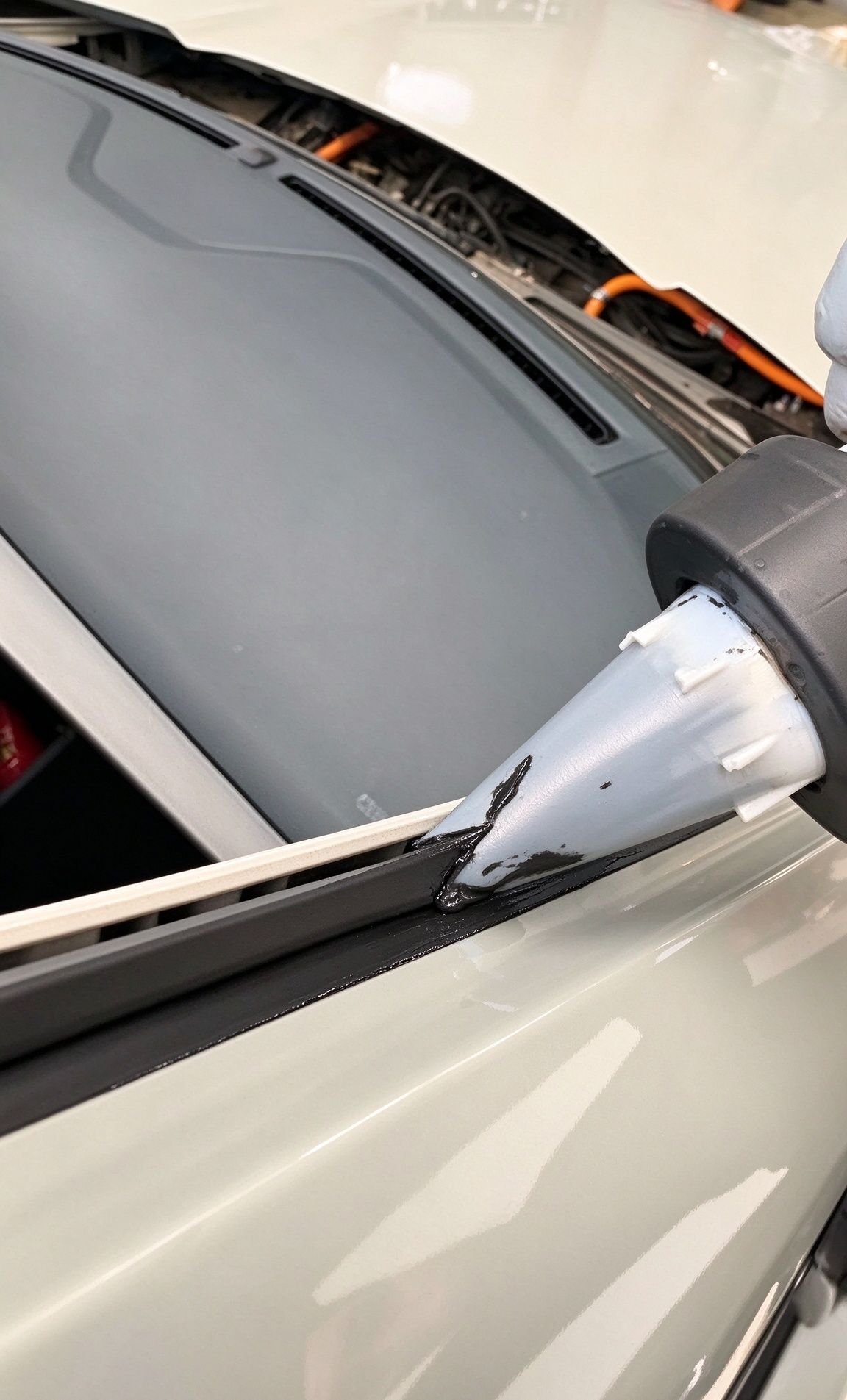
The Polyolefin Wetting Problem
Unmodified polypropylene (PP) and polyethylene (PE) lack polar molecular groups. Their critical surface energy measures a modest 28 to 31 dynes/cm. When liquid polyurethane hits raw polyolefin, it beads up into rounded droplets with high contact angles.
The adhesive cannot penetrate microscopic surface valleys. Applying a plastic adhesion promoter acts as a chemical bridge, raising the substrate surface energy so liquid polymers wet out completely.
Chlorinated Polyolefin (CPO) Chemistry: The Molecular Bridge
Modern automotive adhesion promoters rely primarily on chlorinated polyolefin (CPO) resins modified with maleic anhydride. This formulation combines two distinct molecular zones:
- Non-Polar Polyolefin Backbone: The aliphatic hydrocarbon chain mimics polypropylene. When applied in aromatic carrier solvents, it swells the plastic surface and interdiffuses into the semi-crystalline plastic matrix.
- Polar Chlorine and Anhydride Functional Groups: Electronegative chlorine atoms and maleic anhydride rings point outward. These polar sites form dipole-dipole interactions and covalent linkages with topcoats, primers, and polyurethane adhesives.
Maleic anhydride grafting provides reactive carboxyl sites. When technicians apply moisture-curing polyurethane or amine-cured structural epoxies, functional groups react directly with the grafted anhydride, establishing covalent cross-link networks across the interface.
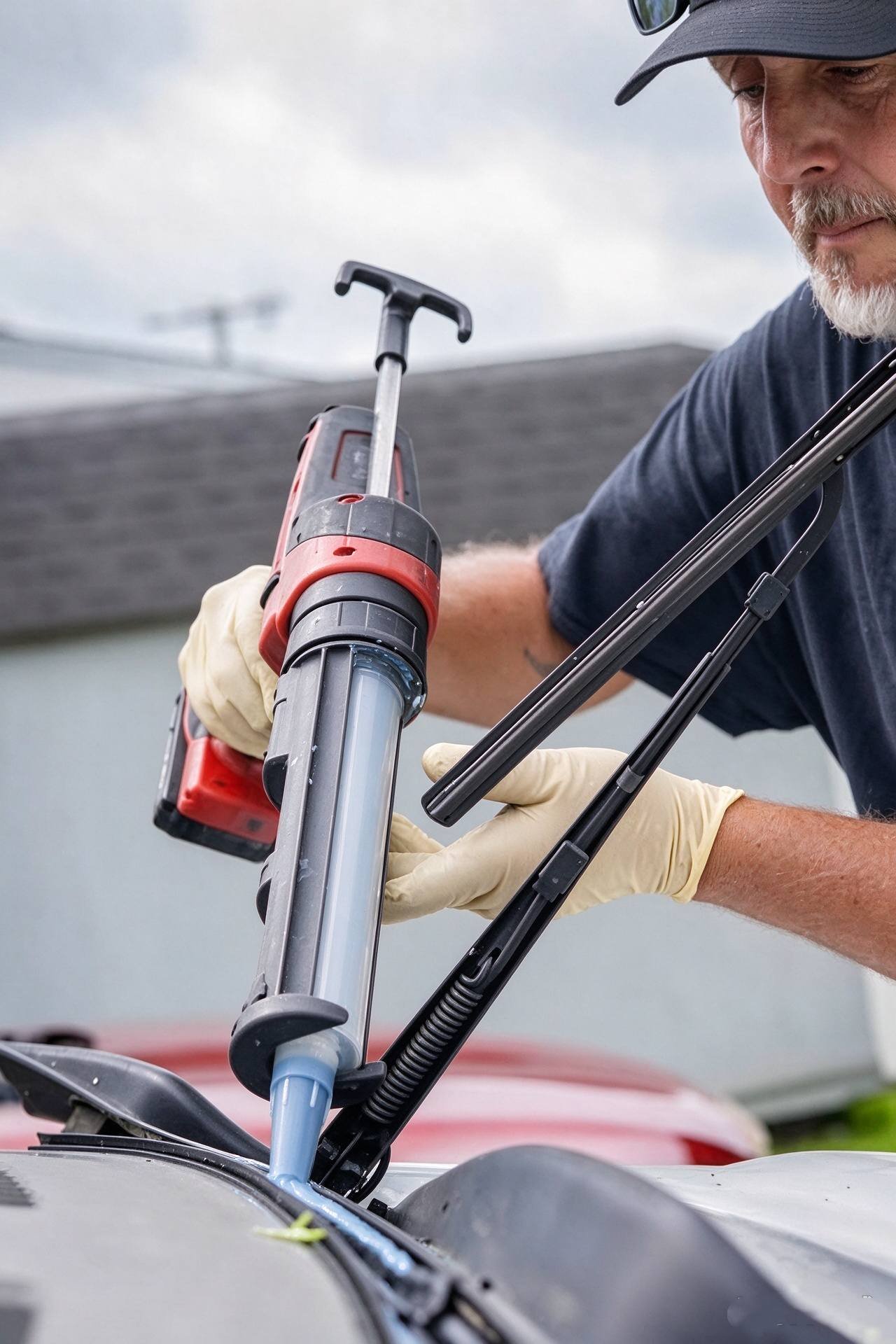
Interdiffusion and Physical Entanglement
The carrier solvent slightly softens the outer 2 to 3 microns of the plastic substrate. CPO polymer chains penetrate between the plastic molecules.
As carrier solvents flash off, the polymer chains entangle permanently. The interface transforms from a sharp physical boundary into a continuous chemical transition gradient. Compare this with metal primer systems in our automotive primer classification guide.
Substrate Shootout: Automotive Plastic Classification and Adhesion Performance
Different automotive plastics require distinct preparation methods based on their inherent surface chemistry:
| Plastic Substrate | Surface Energy | Automotive Components | Adhesion Promoter Required? | Bond Failure Without Promoter |
|---|---|---|---|---|
| PP / EPDM (TPO) | 28 – 30 dynes/cm | Bumpers, rocker panels, wheel flares | MANDATORY (CPO type) | 100% Adhesive Delamination |
| Pure Polypropylene (PP) | 29 – 31 dynes/cm | Interior trim, battery trays, splash shields | MANDATORY (CPO type) | 100% Adhesive Delamination |
| ABS (Acrylonitrile Butadiene) | 38 – 42 dynes/cm | Grilles, mirror housings, emblems | Recommended (Acrylic/Silane) | Moderate Cohesive Failure |
| Polycarbonate (PC) | 42 – 46 dynes/cm | Headlamp lenses, panoramic roof frames | Specialty (Stress-Crack Safe) | Mixed Interfacial Failure |
| SMC / Fiberglass (FRP) | 45 – 50 dynes/cm | Tailgates, hoods, truck bed panels | Optional (Scuff & Clean Only) | Substrate Fiber Tear Failure |
Applying a quality adhesion promoter ensures structural joint longevity across challenging plastics. For vehicle body bonding basics, check our polyurethane vs silicone vs butyl adhesive guide.
Standard Operating Procedure: Five Steps to Flawless Plastic Bonding
Professional collision technicians must follow a disciplined five-step preparation sequence on all exterior plastic trim:
Plastic Surface Pretreatment Protocol
- Substrate Identification: Check the molded recycling stamp on the reverse side of the component (for example, >PP/EPDM< or >TPO<) to verify polymer type.
- Solvent Degreasing: Clean the bond area with specialized plastic cleaner or isopropyl alcohol. This step removes mold release waxes and road oils before scuffing.
- Mechanical Abrasion: Scuff the bonding surface with a fine gray abrasive pad. Mechanical abrasion removes surface glaze and increases effective surface contact area.
- Thin Film Promoter Application: Apply a light, uniform coat of CPO adhesion promoter. Target a dry film thickness of 5 to 10 microns, avoiding puddling or heavy runs.
- Flash-Off Verification: Allow carrier solvents to flash off completely for 10 to 15 minutes. The primed surface must appear dull and feel tack-free before applying adhesives.
Flame Oxidation vs. Chemical CPO Primers
Automated automotive assembly plants often utilize open flame treatment or corona discharge. Passing a blue oxidizing flame briefly across polyolefin surfaces breaks carbon-hydrogen bonds, generating polar hydroxyl and carbonyl groups.
However, flame treatment proves unpredictable in collision repair shops. Excessive flame exposure easily warps thin plastic bumper fascia, while insufficient flame passes leave unactivated patches. Liquid chlorinated polyolefin promoters deliver consistent chemical interdiffusion without thermal deformation risks.
Typical Application Scenario: Commercial Fleet Bumper Tab Re-Bonding
Field Engineering Audit: Sensor Bracket Tab Separation
Operating Problem: A commercial van repair fleet experienced repeated ultrasonic parking sensor bracket failures. Replacement brackets bonded with two-component structural urethane snapped loose after two weeks of road vibration.
Root Cause Investigation: The front bumper was molded from TPO (>PP+EPDM-TD20<). Technicians scuffed the bracket area and applied structural adhesive directly onto bare plastic without chemical pretreatment. The adhesive separated cleanly from the bumper face, exhibiting 100% interfacial adhesive failure.
Resolution & Outcome: Technicians cleaned the area with plastic solvent degreaser and applied a 6-micron wet coat of CPO plastic adhesion promoter. After 10 minutes of flash-off, they applied structural polyurethane adhesive. Destructive lap shear testing per ASTM D1002 demonstrated cohesive substrate failure: the plastic bumper tore before the bondline separated.
Frequently Asked Questions: Plastic Adhesion Promoter Usage
What happens if I apply too much plastic adhesion promoter?
Over-applying promoter leaves a soft, rubbery film between the plastic and adhesive. Under mechanical load, this thick layer splits internally, resulting in cohesive failure of the promoter film rather than a strong structural bond.
Is adhesion promoter for plastic the same as plastic primer surfacer?
No. Adhesion promoter is a micro-thin chemical coupling agent (5 to 10 microns) that raises surface energy. Primer surfacer is a high-build coating (75 to 150 microns) formulated for filling scratches and sanding.
Can adhesion promoter be used on bare automotive metals?
No. Chlorinated polyolefins do not provide anti-corrosion passivation on steel or aluminum. Metals require specialized anti-rust epoxy or acid-etch primers specifically formulated for metallic substrates.
Engineering Conclusion: Science-Driven Surface Preparation
Automotive plastic bonding demands respect for substrate thermodynamics. By identifying plastic types, degreasing thoroughly, and applying a precision CPO plastic adhesion promoter, body repair technicians eliminate paint peeling and structural joint detachment.
Authored by ChemPU Automotive Application Engineering Team
Specializing in OEM direct-glazing polyurethane formulation, crash-retention validation per FMVSS 212 standards, and high-performance structural elastomeric bonding solutions for global automotive manufacturers.
Quality Certification: ISO 9001 / IATF 16949 Certified Adhesive Manufacturing
Source Certified OEM Direct Glazing Polyurethane Adhesives
Partner with ChemPU, an ISO 9001 and IATF 16949 certified Chinese manufacturer. We provide high-modulus polyurethane direct glazing adhesives, black glass primers, and private label cartridges for international distributors and fleet repair networks.
Direct WhatsApp Technical Inquiry: +86 15216655520

