
Automotive mechanics and glass technicians regularly encounter chemical misapplications in service bays. Selecting between a room-temperature vulcanizing rtv silicone gasket maker and an automotive polyurethane sealant requires understanding their divergent polymer backbones.
Using engine silicone on vehicle windshields invites catastrophic glass detachment during collisions. Conversely, substituting polyurethane on engine oil pans leads to chemical degradation from hot hydrocarbon lubricants. Establishing clear chemical boundaries protects mechanical powertrain reliability and passenger safety.
Key Takeaways: RTV Gasket Silicone vs. Polyurethane
- Thermal Extremes: RTV silicone withstands continuous operating temperatures up to 260°C (500°F), whereas automotive polyurethanes degrade above 90°C.
- Hydrocarbon Resistance: Silicone gasket formulations resist hot synthetic motor oils, transmission fluids, and glycol coolants without swelling.
- Mechanical Shear Strength: Polyurethanes deliver over 6.0 MPa shear strength for structural direct glazing, compared to merely 1.0 to 1.5 MPa for RTV silicones.
- Cross-Contamination Hazard: Airborne or wiped silicone oils irreversibly contaminate vehicle pinchwelds, completely blocking polyurethane molecular adhesion.
RTV Silicone Chemistry: Sensor-Safe Oxime vs. Acetoxy Systems
Room-temperature vulcanizing silicones cure upon reacting with atmospheric relative humidity. The underlying crosslinking chemistry determines their suitability across vehicle powertrain assemblies.
Acetoxy Cure Formulations and Electronic Corrosion
Traditional consumer silicones release acetic acid during curing, recognizable by a sharp vinegar odor. In automotive engine compartments, released acetic acid corrodes copper wiring, brass electrical terminals, and aluminum alloy housings.
Escaping acidic vapors also migrate past engine breathers into intake streams. These vapors deposit silicon dioxide crystals onto sensitive oxygen sensors and catalytic converter substrates, triggering check-engine warnings.
Sensor-Safe Neutral Oxime Gasket Formulations
Professional engine repair demands an advanced rtv silicone gasket maker formulated with neutral oxime or alkoxy cure chemistry. These non-acidic systems release methyl ethyl ketoxime (MEKO) or neutral alcohols during crosslinking.
Neutral oxime formulations are certified sensor-safe. They remain entirely non-corrosive to aluminum timing chain covers, stamped steel oil pans, and adjacent electronic harnesses.

Figure 1: High-modulus polyurethane direct glazing application, contrasting sharply with low-modulus engine silicone gasket makers.
Engineering Comparison: RTV Gasket Silicone vs. Automotive Polyurethane
The physical performance profile of flexible gasket silicones differs fundamentally from structural moisture-curing polyurethanes:
| Property Parameter | Neutral RTV Silicone Gasket Maker | Automotive Polyurethane Sealant | Operational Impact |
|---|---|---|---|
| Continuous Operating Temperature | -60°C to +260°C | -40°C to +90°C | Silicone survives engine heads & exhausts |
| Tensile Lap Shear Strength | 1.0 – 1.8 MPa | 4.5 – 8.0 MPa | PU provides vital crash structural rigidity |
| Engine Oil & Fluid Resistance | Excellent (Synthetic Oil, ATF) | Poor (Swelling & Softening) | Silicone prevents oil pan seepage |
| Tear Resistance & Modulus | Low Modulus (Elastic Gasket) | High Modulus (Rigid Bond) | PU resists vehicle chassis torsional twist |
| Paintability | Unpaintable (Repels Paint) | Paintable with Primers | Body seams require PU or MS polymers |
| FMVSS 212 Safety Compliance | Fails Crash Retention | Full Crash Compliance | Windshields strictly require polyurethane |
Critical Boundary: Why Silicone Gasket Makers Must Never Glaze Windshields
Some budget repair shops mistakenly apply gasket silicone around windshield perimeters to seal water leaks. This practice introduces severe safety hazards.
Inadequate Crash Retention Strength
Modern windshields provide up to 45% of cabin structural roof crush resistance under FMVSS 216 standards. Under federal motor vehicle safety standard FMVSS 212, direct glazing must retain the windshield during a 30 mph barrier crash to support passenger airbag deployment.
An rtv silicone gasket maker possesses low tensile modulus. Under dynamic airbag impact forces, silicone bonds tear instantly, ejecting the windscreen and compromising passenger survival.
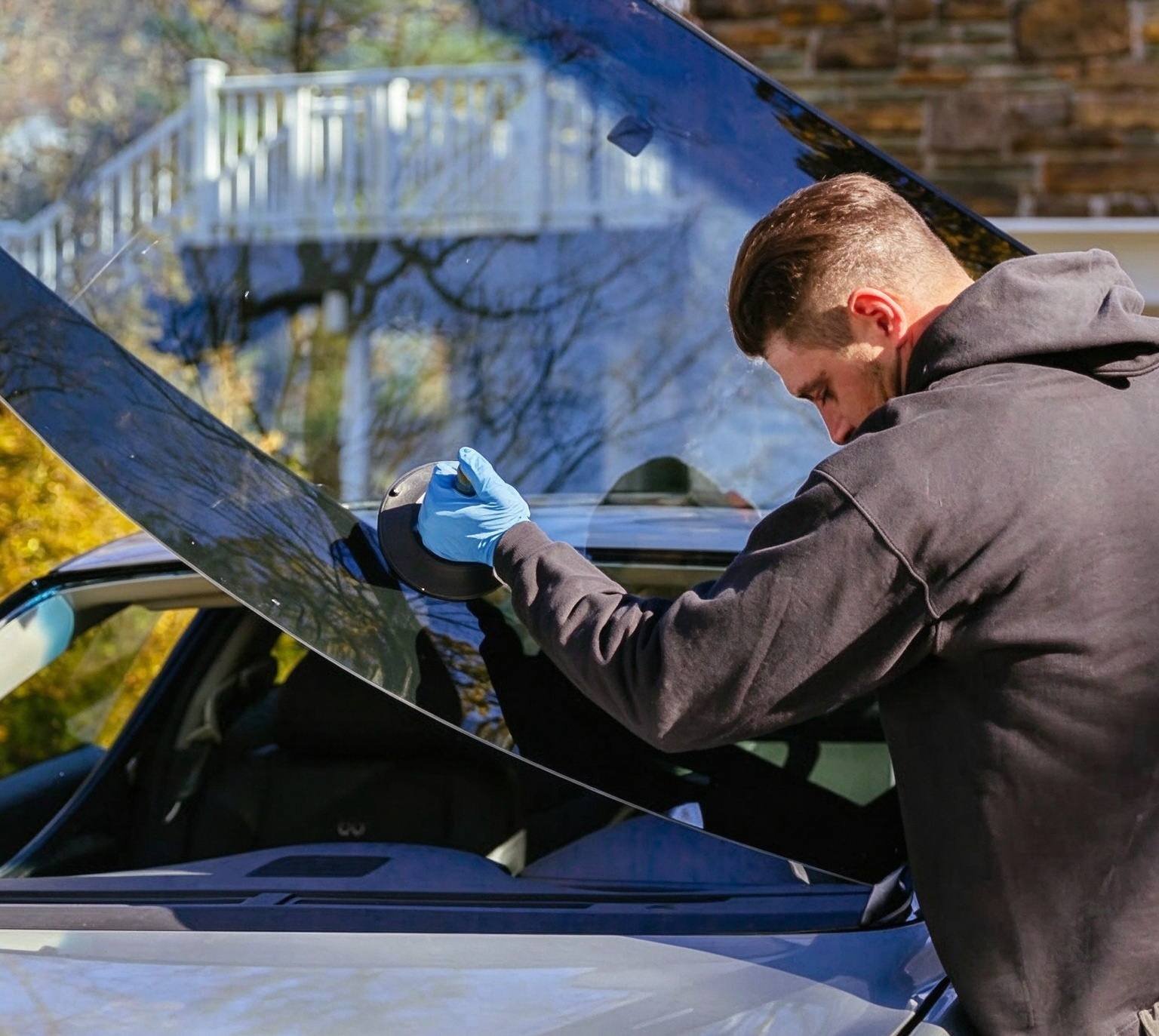
Figure 2: Precise windshield placement onto polyurethane adhesive, highlighting why cross-contamination from engine silicone causes bonding failure.
Irreversible Pinchweld Contamination
Polydimethylsiloxane oils present in silicone migrate deep into paint micropores and e-coat layers. Once deposited, these silicone molecules lower surface energy below 25 dynes/cm.
Even thorough alcohol wipes cannot dissolve polymerized silicone films. Subsequent installations of structural polyurethane windshield adhesive experience complete adhesive release, detailed in our polyurethane windshield adhesive guide.
Standard Operating Procedure: Flange Preparation and Engine Gasket Sealing
Reliable leak-free engine sealing requires disciplined surface preparation and controlled torque execution. Adhere to this professional sequence:
- Residue Scraping and Degreasing: Remove old baked gaskets using non-marring brass or plastic scrapers. Clean mating surfaces thoroughly with fast-evaporating solvent degreaser to eliminate petroleum films.
- Continuous Bead Extrusion: Extrude an uninterrupted 3 mm to 4 mm bead of neutral rtv silicone gasket maker around one mating surface. Circle all mounting bolt holes internally to isolate oil pathways.
- Finger-Tight Preliminary Assembly: Mate the components immediately while the silicone bead remains wet and tacky (within 10 minutes). Tighten flange bolts finger-tight until adhesive begins squeezing out uniformly.
- Two-Stage Torque Protocol: Allow the silicone to skin and partially cure for 60 minutes. Subsequently, torque fasteners to factory torque specifications. Allow a full 24-hour cure before refilling engine oil or pressurizing cooling systems.
Typical Application Scenario: Oil Pan Gasket Repair and Windshield Contamination
Case Overview: Catastrophic Windscreen Debonding Following Mechanical Shop Water Leak Repair
Incident Profile: A fleet delivery van experienced rainwater seepage across the upper windshield header. A general mechanical technician pumped high-temperature black gasket silicone into the gap to seal the leak. Three months later, a glass replacement shop attempted a complete windshield replacement. The newly installed glass detached completely from the header pinchweld within two weeks.
Root Cause Investigation: Chemical analysis confirmed failure at the primer-to-metal interface. Silicone oils from the earlier repair had migrated along the steel pinchweld flange. When the glass technician applied polyurethane primer, the silicone residue repelled the primer resins, preventing crosslinking. The polyurethane urethane bead cured against a microscopic silicone barrier without bonding.
Corrective Engineering Protocol: The body shop mechanically abraded the entire pinchweld header down to bare metal using 80-grit discs to remove silicone-infused e-coat. Technicians wiped the metal twice with specialized hydrocarbon solvents, applied a certified OEM two-part epoxy anti-corrosion primer, and reinstalled the windshield using high-modulus polyurethane adhesive.
Frequently Asked Questions: RTV Gasket Makers vs. Polyurethanes
What is the difference between black, blue, and red automotive silicone formulations?
Color classifications indicate specific chemical formulations. Black RTV silicone is oil-resistant and flexible, ideal for engine oil pans and differential covers. Blue RTV serves general-purpose sealing with moderate oil resistance. Red RTV contains iron oxide pigments, providing intermittent thermal resistance up to 343°C (650°F) for exhaust manifolds and turbocharger flanges.
Can you use polyurethane sealants to seal engine valve covers or oil pans?
No. Standard automotive polyurethanes soften and swell when exposed to continuous hot motor oil above 90°C (194°F). Engine valve covers and oil pans regularly reach operating temperatures of 110°C to 130°C. High-performance neutral RTV silicone remains essential for surviving continuous engine oil contact and thermal cycling.
How do you completely remove silicone contamination from a car body pinchweld?
Solvents alone cannot dissolve silicone molecules embedded in paint micropores. Technicians must mechanically grind the contaminated metal flange down to bright steel using an 80-grit abrasive disc. Wipe the bare substrate thoroughly with mineral spirits or specialized silicone removers before reapplying automotive epoxy primer and polyurethane adhesive.
Engineering Summary: Chemical Selection Dictates Mechanical Safety
Automotive chemical sealants are engineered for distinct operating environments. Applying an oxime rtv silicone gasket maker ensures leak-free sealing across high-temperature engine assemblies without damaging sensitive oxygen sensors. Meanwhile, structural polyurethane adhesives remain mandatory for windshield retention and vehicle chassis rigidity. Respecting these polymer boundaries guarantees superior vehicle durability and crash performance.
ChemPU Automotive Chemical Engineering Division
Polyurethane & Silicone Sealant Applications Specialist
ChemPU manufactures certified direct glazing polyurethane adhesives and industrial silicone sealants under ISO 9001 and IATF 16949 quality systems. Our application laboratories support commercial fleets, automotive assembly lines, and global distributors with verified technical data sheets and responsive engineering consultation via WhatsApp (+86 15216655520).
Source Certified OEM Direct Glazing Polyurethane Adhesives
Partner with ChemPU, an ISO 9001 and IATF 16949 certified Chinese manufacturer. We provide high-modulus polyurethane direct glazing adhesives, black glass primers, and private label cartridges for international distributors and fleet repair networks.
Direct WhatsApp Technical Inquiry: +86 15216655520

