
Automotive collision repair technicians continually evaluate whether to weld replacement body components or install them using a modern panel bonding adhesive. Traditional squeeze-type resistance spot welding (STRSW) and MIG welding introduce intense thermal energy into advanced vehicle steels. High heat destroys corrosion-resistant e-coat layers and degrades ultra-high-strength steel (UHSS) crystalline structures.
Consequently, automotive original equipment manufacturers (OEMs) increasingly mandate structural bonding for non-structural and semi-structural sheet metal replacement. Understanding the mechanical boundaries, thermal limits, and joint failure modes between chemical bonding and thermal welding allows collision shops to preserve structural passenger safety.
Key Takeaways: Adhesive Bonding vs. Thermal Welding
- Heat Protection: Panel bonding eliminates welding heat distortion, preserving OEM metallurgical properties in boron and martensitic steels.
- Continuous Stress Distribution: Adhesive bonds distribute dynamic mechanical loads along the entire mating flange rather than concentrating stress at individual weld nuggets.
- Built-In Corrosion Sealing: The continuous adhesive line seals sheet metal interfaces against moisture, eliminating galvanic corrosion in mixed aluminum-steel assemblies.
- OEM Repair Boundaries: Bond-only procedures apply strictly to non-structural panels (door skins, roof skins, quarter panels) unless mechanical fasteners or spot-weld bonding are explicitly specified.
Mechanical and Metallurgical Comparison: Point Load vs. Surface Bond
The fundamental distinction between welding and adhesive fastening lies in how force transfers across vehicle joints during operation. Resistance spot welding creates localized molten nuggets spaced roughly 25 mm to 40 mm apart along the flange.
Stress Concentrations in Spot Welds
During road vibrations and chassis torsional twist, mechanical stresses concentrate at the microscopic perimeter of each weld nugget. Cyclic fatigue frequently initiates micro-cracking adjacent to heat-affected zones (HAZ). Additionally, welding vaporizes inner zinc galvanizing layers, leaving bare interior crevices vulnerable to road salt ingress.
Continuous Load Transfer with Panel Bonding Adhesive
In contrast, applying a two-part structural panel bonding adhesive forms an uninterrupted polymer film across 100% of the flange overlap. This continuous seam increases torsional body stiffness by 15% to 25% over spot welding alone.
Modern high-performance adhesives combine toughened epoxy or acrylic chemistries with elastomeric core-shell rubber particles. These micro-structures absorb impact energy and arrest crack propagation during collisions. High-strength formulations deliver outstanding shear performance exceeding 30 MPa, documented in our high strength automotive adhesive engineering data.
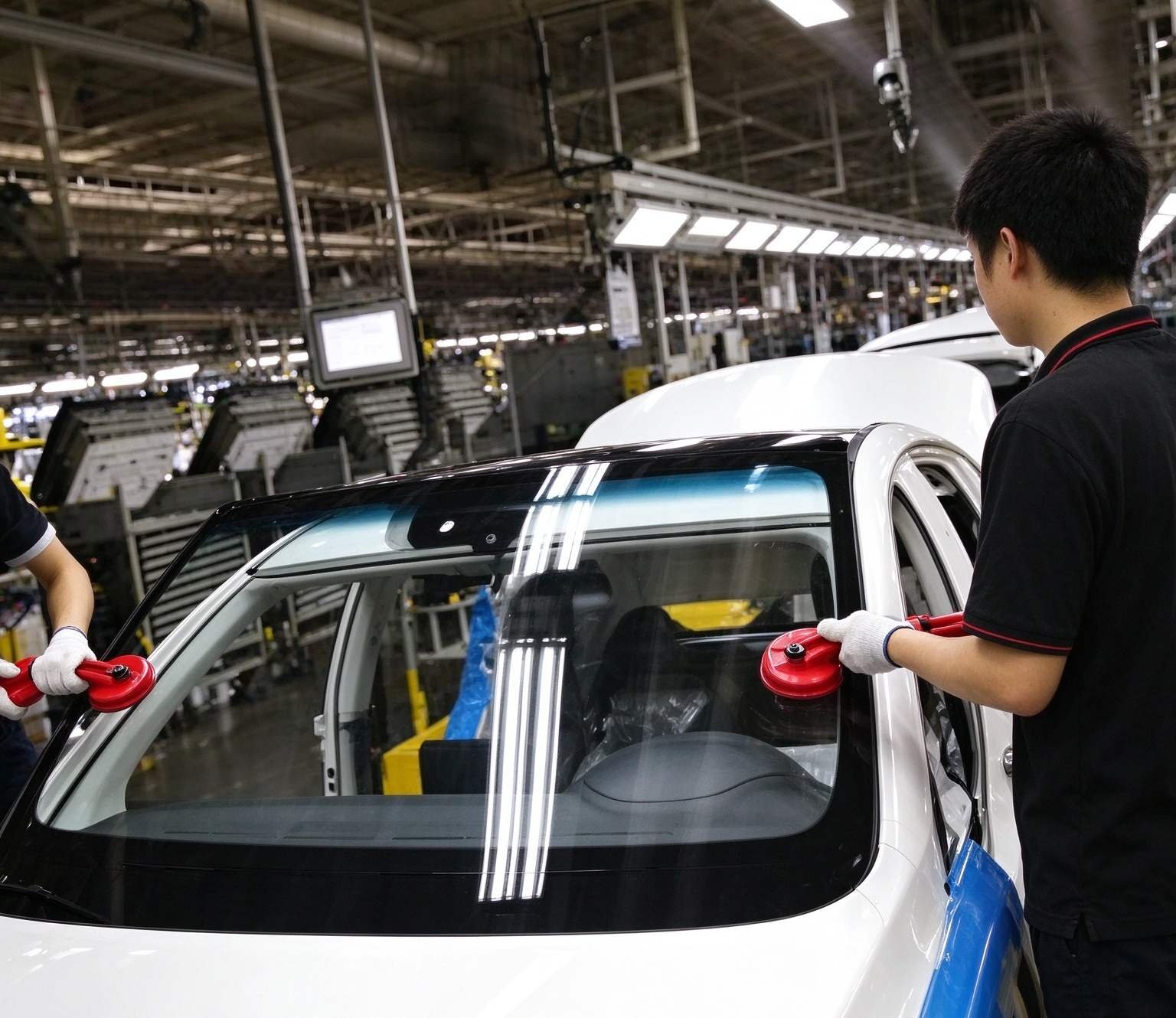
Figure 1: Structural alignment and vehicle panel installation in a certified automotive assembly environment.
Performance Benchmark Matrix: Panel Bonding vs. Spot Welding
The following laboratory and workshop metrics evaluate two-part structural epoxy bonding against conventional resistance spot welding:
| Performance Parameter | Two-Part Epoxy Panel Bond | Resistance Spot Welding | Collision Impact Factor |
|---|---|---|---|
| Thermal Distortion | Zero (Cold Chemical Cure) | High (Localized 1,500°C Arc) | Prevents exterior skin warping & filler use |
| Galvanized Coating Integrity | 100% Preserved | Burned Away at Nuggets | Eliminates internal hem flange corrosion |
| Dissimilar Metal Joining | Excellent (Steel to Aluminum) | Impossible with STRSW | Enables lightweight multi-material chassis repairs |
| Lap Shear Strength (ASTM D1002) | 18 – 28 MPa | 20 – 30 MPa (Per Nugget) | Comparable ultimate holding power |
| Peel Resistance | Moderate (Requires Bead Control) | High (Mechanical Nugget) | Why structural pillars require rivets/welds |
| Acoustic NVH Dampening | Superior Vibration Absorption | Rigid Acoustic Bridge | Reduces cabin road resonance |
OEM Repair Disciplines: When to Bond, Weld, or Weld-Bond
Automotive body structures are divided into crash-critical structural elements and cosmetic outer closures. Technicians must never substitute adhesive bonding on structural pillars without OEM authorization.
Approved Non-Structural Bond-Only Applications
Most vehicle manufacturers endorse cold adhesive bonding for non-structural body skins. Common bond-only components include door skins, roof panels, box sides on pickup trucks, and outer quarter panel wheelhouse arches. In these locations, peeling forces remain minimal, and acoustic dampening provides significant customer benefits.
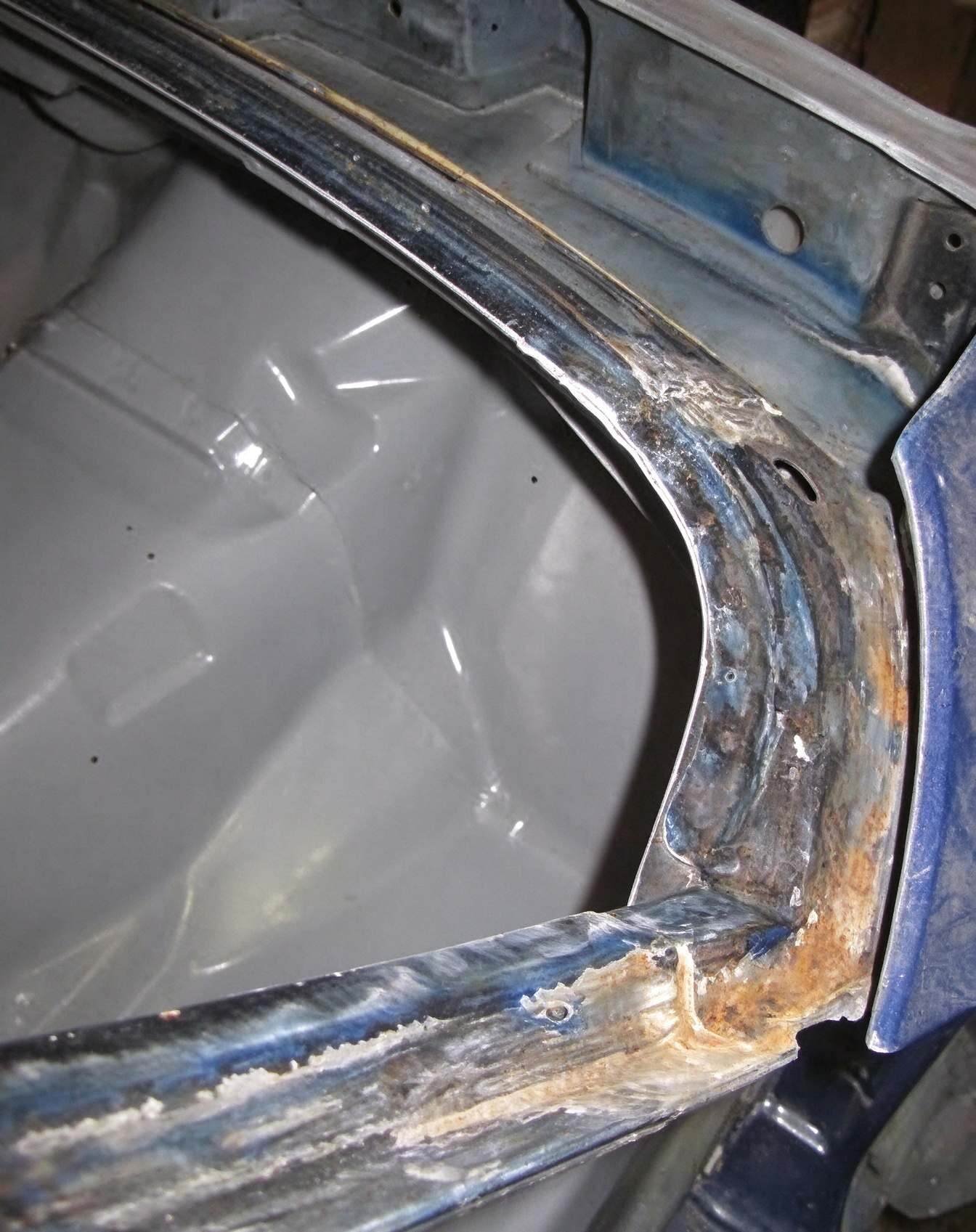
Figure 2: Surface mechanical preparation and old adhesive removal on a vehicle frame flange prior to panel bonding.
Hybrid Weld-Bonding and Rivet-Bonding for Structural Areas
When replacing rocker panels, A-pillars, or rear rail assemblies, manufacturers specify hybrid joining. Weld-bonding combines a structural panel bonding adhesive with resistance spot welding directly through the wet adhesive layer.
Similarly, rivet-bonding pairs high-strength solid or self-piercing blind rivets with adhesive. The mechanical fasteners provide intense peel resistance during crash intrusion, while the adhesive delivers uniform shear strength and lifelong environmental sealing.
Standard Operating Procedure: Flange Preparation and Clamping Protocol
Achieving certified OEM bond strength requires strict adherence to surface cleanliness and clamping pressure. Follow this four-step field procedure:
- Surface Stripping and Conditioning: Strip existing paint, old adhesives, and e-coat down to bare metal using clean 80-grit abrasive discs. Blow clean with oil-free compressed air and degrease with an approved solvent wipe.
- Corrosion Protection Priming: Dispense a continuous thin layer of two-part epoxy panel bond directly onto the bare mating surfaces. Work the material into microscopic metal scratches using a clean spreader to guarantee total corrosion passivity.
- Bead Dispensing and Glass Spacer Beads: Apply an uninterrupted 6 mm to 8 mm adhesive bead along the center of the mating flange. Premium panel bonders contain calibrated glass spacer beads (0.25 mm diameter) to prevent over-clamping.
- Clamping and Tooling: Position the replacement panel within the adhesive open time (typically 60 to 90 minutes at 21°C). Position locking C-clamps every 100 mm to 150 mm. Tool squeezed-out adhesive along seams or wipe clean for subsequent automotive seam sealing.
Typical Application Scenario: Quarter Panel Structural Replacement and Failure Analysis
Case Overview: Premature Seam Separation on Replacement Pickup Bed Side
Incident Profile: A fleet collision repair facility replaced an outer steel quarter panel on a commercial utility truck. Within six months of rough gravel-road service, the rear vertical seam separated. Moisture infiltrated the cargo area, causing severe corrosion along the inner wheel arch.
Root Cause Investigation: Laboratory examination revealed technicians committed two procedural violations. First, technicians applied excessive locking clamp torque without using calibrated spacer bead formulations, squeezing nearly all adhesive out of the joint (starved bondline under 0.05 mm). Second, technicians bonded over untreated galvanized sheet metal without mechanical 80-grit scuffing, resulting in adhesive debonding under torsional chassis vibration.
Corrective Engineering Protocol: The repair facility updated standard operating procedures. Technicians adopted calibrated panel bonding adhesive containing precision 10-mil glass beads to guarantee uniform film thickness. Flange clamping torque was standardized, and mandatory mechanical metal keying eliminated bondline starvation.
Frequently Asked Questions: Panel Bonding Adhesive vs. Welding
Can you weld directly through wet panel bonding adhesive?
Yes, provided the OEM procedure specifies weld-bonding and the adhesive formulation is weld-through rated. Resistance spot welding (STRSW) displaces the liquid epoxy between electrode tips, forming a sound weld nugget while the surrounding uncured adhesive seals the joint. Technicians must perform spot welding within the working time before initial gelation.
Can structural adhesives replace factory welds on frame rails or pillars?
No. Cold panel bonding alone is never permitted on structural crumple zones, front frame rails, center B-pillars, or suspension mounting points. These high-stress locations experience massive peel and cleavage forces during collisions. Technicians must strictly follow OEM collision repair guidelines mandating factory weld patterns or engineered insert sleeves.
How long does two-part structural epoxy take to cure before removing clamps?
At a standardized shop temperature of 21°C (70°F), two-part structural epoxies achieve handling strength in approximately 4 hours, allowing clamp removal. Complete chemical crosslinking requires 24 hours. Collision facilities can accelerate curing by applying infrared heat lamps at 60°C (140°F) for 45 minutes, dramatically shortening cycle times.
Engineering Summary: Maximizing Collision Repair Structural Integrity
Modern automotive repair requires a balanced approach between chemical bonding and metallurgical welding. Using a certified panel bonding adhesive on outer closures prevents heat damage, stops corrosion, and restores factory structural rigidity. Collision repairers who respect OEM application boundaries and execute disciplined surface preparation deliver factory-grade crashworthiness.
ChemPU Automotive Structural Bonding Division
Epoxy & Polyurethane Structural Applications Specialist
ChemPU manufactures high-performance polyurethane direct glazing sealants and structural two-part epoxy bonding systems under IATF 16949 certification. Our engineering laboratory supports collision repairers, commercial body builders, and private label distributors worldwide with verified mechanical data and direct technical consultation via WhatsApp (+86 15216655520).
Source Certified OEM Direct Glazing Polyurethane Adhesives
Partner with ChemPU, an ISO 9001 and IATF 16949 certified Chinese manufacturer. We provide high-modulus polyurethane direct glazing adhesives, black glass primers, and private label cartridges for international distributors and fleet repair networks.
Direct WhatsApp Technical Inquiry: +86 15216655520

