
Collision repair technicians and body shop estimators regularly handle both sheet metal joint sealing and stationary glass replacement. Because both products frequently dispense as thick black pastes from aluminum cartridges, confusion persists on shop floors. Comparing automotive seam sealer vs windshield urethane reveals fundamental chemical and mechanical divides that dictate vehicle structural safety.
While standard automotive seam sealers protect overlap sheet metal joints from moisture ingress, certified structural urethane vs seam sealer materials provide life-saving crash restraint. Substituting cosmetic seam sealers for structural windshield bonding violates federal crash safety standards.
This standard engineering guide delivers an exhaustive technical breakdown of polymer chemistry, tensile lap shear strength, elongation physics, and paintability. Collision repair professionals, insurance adjusters, and fleet maintenance technicians will master clear shop protocols to prevent catastrophic structural bonding failures.
Executive Summary: Polymer Chemistry & Structural Divides
- Tensile Lap Shear Disparity: Windshield urethane delivers 5.0 to 8.0 MPa lap shear strength to withstand airbag explosions; seam sealers provide only 1.0 to 2.5 MPa, designed strictly for cosmetic waterproofing.
- Chemical Polymer Families: Windshield adhesives use high-crosslink aromatic isocyanate polyurethanes; seam sealers predominantly utilize flexible SMP/MS polymers or modified polyurethanes engineered for immediate over-paintability.
- Paintability Inversion: Seam sealers are formulated to accept automotive basecoats and clearcoats within 30 minutes; windshield polyurethanes reject paint and must never be topcoated along the bonding face.
- Zero Substitution Rule: Never use automotive seam sealer to bond windshield glass; in frontal collisions, the bond shears instantly, causing glass ejection and passenger airbag collapse.
Polymer Chemistry: Structural Polyurethane vs. Flexible Joint Sealers
When analyzing the difference between seam sealer and urethane, engineers evaluate molecular cross-link density rather than outward paste appearance.
Windshield Urethane: High-Modulus Structural Networks
Direct glazing windshield adhesives are formulated from prepolymerized diphenylmethane diisocyanate (MDI) blended with polyether polyols and reinforcing carbon black.
Upon reacting with atmospheric moisture, isocyanate groups cross-link into a rigid, highly crystalline polyurea/polyurethane elastomeric matrix. This dense polymer architecture provides immense tensile strength (over 7.0 MPa) and high shear modulus (G ≥ 2.0 MPa).
Seam Sealers: Low-Modulus Stress-Relieving Formulations
Automotive seam sealers are primarily engineered from silane-modified polymers (SMP / MS polymer) or flexible, plasticizer-rich polyurethane hybrids.
Their chemical formulation prioritizes maximum elongation (often 400% to 600%) and low modulus. This allows the cured bead to stretch continuously as welded body panels flex over road bumps, preventing micro-tears in painted seams without imposing rigid structural restraint.
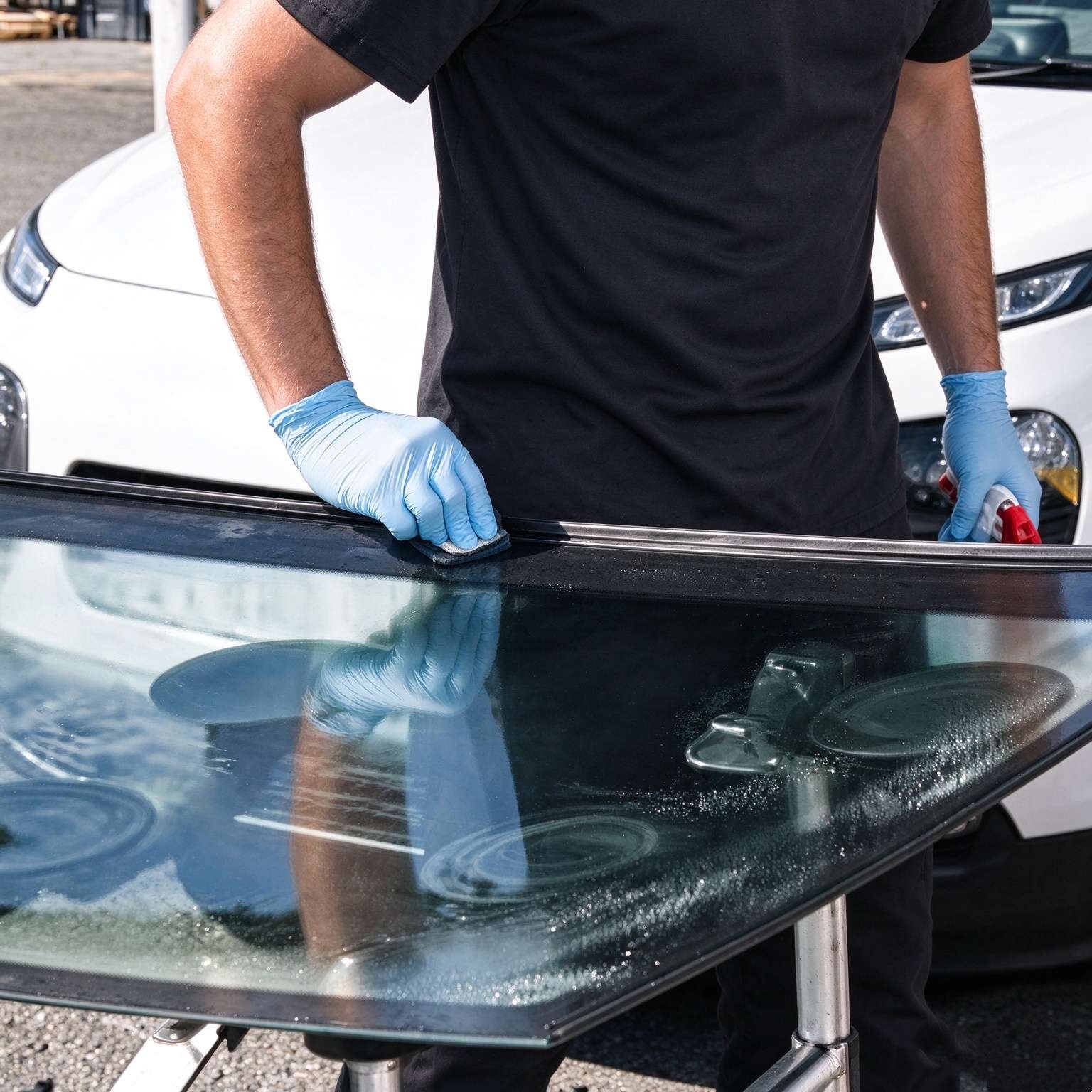
Material Property Matrix: Direct Glazing Urethane vs. Seam Sealer
The comparative engineering matrix below demonstrates why these two chemical formulations serve entirely different functional domains in collision repair.
| Performance Metric | Direct Glazing Windshield Urethane | Body Shop Seam Sealer (SMP / PU) | Engineering Consequence |
|---|---|---|---|
| Tensile Lap Shear Strength | 5.0 to 8.5 MPa | 1.0 to 2.5 MPa | Urethane provides essential crash restraint under FMVSS 212 |
| Tensile Elongation at Break | 300% to 450% | 450% to 700% | Seam sealer stretches dynamically with flexed sheet metal |
| Immediate Paintability | Strictly Prohibited | Wet-on-Wet or 30-min Paintable | Paint solvents severely inhibit polyurethane cross-linking |
| Primary Functional Role | Structural Airbag Support & Roof Stiffening | Environmental Corrosion & Water Sealing | Zero interchangeable overlap in certified collision repairs |
Typical Application Scenarios: Field Failures & Workshop Realities
Examining real collision shop scenarios illustrates the critical importance of material differentiation.
Scenario A: Catastrophic Windshield Blowout from Seam Sealer Misuse
An untrained body technician running out of direct glazing adhesive grabbed an aluminum cartridge of sprayable MS polymer seam sealer to install a replacement windshield.
Two months later, the vehicle struck a guardrail at 40 km/h. When the passenger airbag deployed upward, the low-shear seam sealer peeled completely away from the glass frit. The windshield flew outward onto the hood, collapsing the airbag cushion and causing severe passenger head trauma. Forensic liability investigators cited gross negligence.
Scenario B: Paint Peeling from Applying Paint over Windshield Urethane
During roof section repairs, a painter attempted to smooth the pinchweld joint by smearing structural glass urethane over spot-welded seams, immediately spraying 2K clearcoat over the wet bead.
Within three weeks, aromatic isocyanates off-gassed carbon dioxide through the curing paint film, creating thousands of microscopic paint blisters. The paint film cracked and peeled in sheets, requiring complete mechanical stripping and repainting with proper sprayable body shop seam sealer guide protocols.
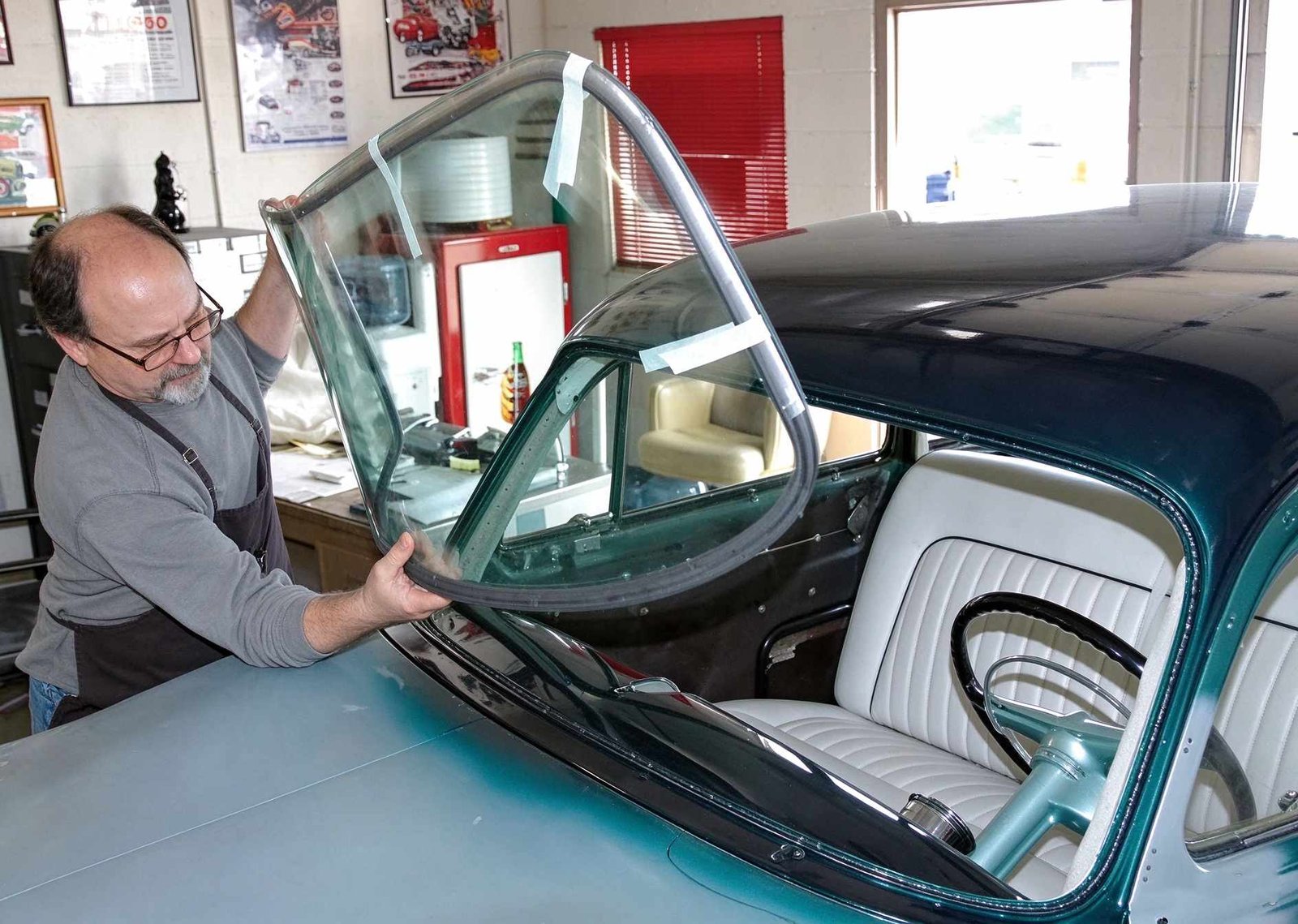
Standard Operating Procedure: Five-Stage Body Shop Separation SOP
Executing this standardized procedure guarantees complete separation of sealing duties, ensuring perfect paint finishes and FMVSS crash compliance.
Step 1: Sheet Metal Seam Preparation and Corrosion Priming
Clean all welded overlapping sheet metal seams, wheel tubs, and floor pans with wax and grease remover. Apply an approved epoxy or 2K urethane primer over bare metal before sealing to establish complete corrosion defense.
Step 2: Dedicated Seam Sealer Extrusion and Tooling
Extrude specialized SMP or brushable automotive seam sealer along joint overlaps using flat nozzles or nylon texture brushes. Tool the bead to replicate factory OEM ribbon, brushed, or spray-textured appearances.
Step 3: Topcoat Painting and Full Bake Cycle
Apply automotive basecoats and clearcoats directly over the seam sealer according to technical data sheet flash windows. Complete booth baking cycles (typically 60°C for 30 minutes) prior to glass installation.
Step 4: Pinchweld Trimming and Primer Activation
Trim existing glass urethane down to an even 1mm to 2mm bed. Never allow body seam sealers to encroach into the glass bonding track. Clean the glass ceramic frit and apply black direct-glazing primer.
Step 5: High-Modulus Urethane Dispensing and Decking
Extrude a continuous triangular V-notch bead of certified direct glazing structural polyurethane adhesive. Deck the windshield glass within open time limits and strictly observe mandatory Safe Drive-Away Times.
Engineer’s Technical Trade-Offs: Chemical Boundaries in Collision Repair
Professional collision repairers must understand the distinct operational limits governing both chemical categories.
- Inadequate Shear Strength in Seam Sealers: Even high-end 2K epoxy seam sealers lack the controlled dynamic shear modulus required to support passenger airbag deployment forces.
- Paint Solvent Inhibition in Windshield Urethanes: Spraying solvent-borne paints over curing windshield urethane traps xylene and butyl acetate, permanently degrading polymer cross-linking.
- UV Degradation Resistance: Windshield urethanes contain dense carbon black to resist direct solar UV through glass frit; seam sealers rely on topcoat paint layers to prevent solar chalking.
Frequently Asked Questions: Seam Sealer vs. Windshield Urethane
Can you ever use automotive seam sealer to install a windshield?
No. Never use automotive seam sealer as a windshield adhesive. Seam sealers provide low tensile lap shear strength (1.0 to 2.5 MPa) engineered purely for cosmetic joint waterproofing. In a frontal crash, the adhesive bead will tear instantly, ejecting the windshield glass and causing the passenger airbag to collapse completely.
Can windshield urethane be used to seal sheet metal body seams?
While windshield urethane bonds strongly to e-coated steel, it makes a poor seam sealer. Windshield urethane cannot be easily tooled or painted; automotive basecoats blister and peel when applied over polyurethane. Additionally, structural urethane is excessively rigid, which can transfer stress and crack adjacent sheet metal joints.
Why can seam sealers be painted immediately while windshield adhesives cannot?
Seam sealers formulated from silane-modified polymers (SMP) cure without off-gassing and provide low surface tension compatible with automotive paint resins. In contrast, moisture-curing polyurethane windshield adhesives release microscopic carbon dioxide gas during curing and require atmospheric humidity, which paint layers block.
Engineering Summary: Distinct Roles for Flawless Repairs and Safety
Automotive seam sealers and structural windshield urethanes are engineered for completely different physical domains. Seam sealers excel in flexible joint corrosion defense and seamless paintability, while high-modulus polyurethane adhesives guarantee vehicle structural stiffness and crash survivability. Respecting these chemical boundaries protects shop liability and ensures total passenger safety.
Authored by ChemPU Automotive Application Engineering Team
Specializing in OEM direct-glazing polyurethane formulation, crash-retention validation per FMVSS 212 standards, and high-performance structural elastomeric bonding solutions for global automotive manufacturers.
Quality Certification: ISO 9001 / IATF 16949 Certified Adhesive Manufacturing
Source Certified OEM Direct Glazing Urethanes & MS Seam Sealers
Partner with ChemPU, an ISO 9001 and IATF 16949 certified Chinese manufacturer. We supply certified high-modulus polyurethane windshield adhesives, sprayable MS seam sealers, and private label cartridges for collision centers and global distributors.
Direct WhatsApp Technical Inquiry: +86 15216655520

