
Automotive glass technicians and fleet operators frequently encounter wiper arcs, mineral etching, and fine grit abrasions across windshield glass. Blinding headlight glare and wiper chatter severely degrade nighttime driving visibility. When evaluating professional windshield scratch removal, technicians must distinguish between polishable superficial haze and structurally compromised glass.
Deploying industrial cerium oxide windshield polishing compounds relies on chemical-mechanical planarization (CMP). Cerium oxide chemically hydrolyzes silica surface networks, polishing out micro-scratches without creating dangerous optical distortion.
This standard engineering guide details the science of glass abrasive polishing. We define fingernail scratch depth thresholds, chemical hydrolysis mechanisms, rotary polisher thermal management, and critical ceramic coating preparation. Auto glass specialists, detailing professionals, and collision estimators will learn precise protocols to restore optical clarity safely.
Executive Summary: Glass Polishing Physics & Feasibility Rules
- The Fingernail Scratch Boundary: Scratches deep enough to catch a fingernail exceed 0.05mm in depth; polishing them out removes excessive glass mass, causing severe optical distortion and lens effects.
- Chemical-Mechanical Planarization: Rare-earth cerium oxide (CeO2) does not merely grind glass; it chemically breaks hydrated silicon-oxygen bonds while mechanical felt pads shear away softened microscopic peaks.
- Critical Thermal Limit (< 65°C): Overheating laminated glass with dry rotary pads causes PVB interlayer boiling, bubbling, or sudden thermal fracture.
- ADAS Camera Zone Prohibition: Never polish glass directly in front of forward-facing ADAS cameras; microscopic refractive changes disrupt optical sensor calibration and emergency braking algorithms.
Polishing Chemistry: Mechanochemical Planarization with Cerium Oxide
When executing auto glass polishing, standard automotive paint compounds fail completely. Understanding silica molecular cleavage explains why cerium oxide remains unique.
Chemical Hydrolysis of Soda-Lime Silica Networks
Automotive laminated windshields consist of soda-lime silicate glass. Standard aluminum oxide abrasives merely fracture brittle glass microscopically, leaving a hazy satin finish.
Cerium oxide (CeO2) functions via chemical-mechanical planarization. In the presence of water, cerium ions chemically react with surface silica, converting hard silicon dioxide into a hydrated, softened silicon hydroxide gel layer.
Mechanical Shear and Slurry Dynamics
As rotary felt pads sweep across the surface, mechanical friction shears away the chemically softened microscopic peaks. This simultaneous chemical reaction and mechanical shear produces an optically pure, mirror-like finish without coarse scratches.
Maintaining a creamy slurry consistency is critical. If slurry dries out, cerium particles agglomerate into hard clumps, gouging deep secondary swirl marks across the glass.
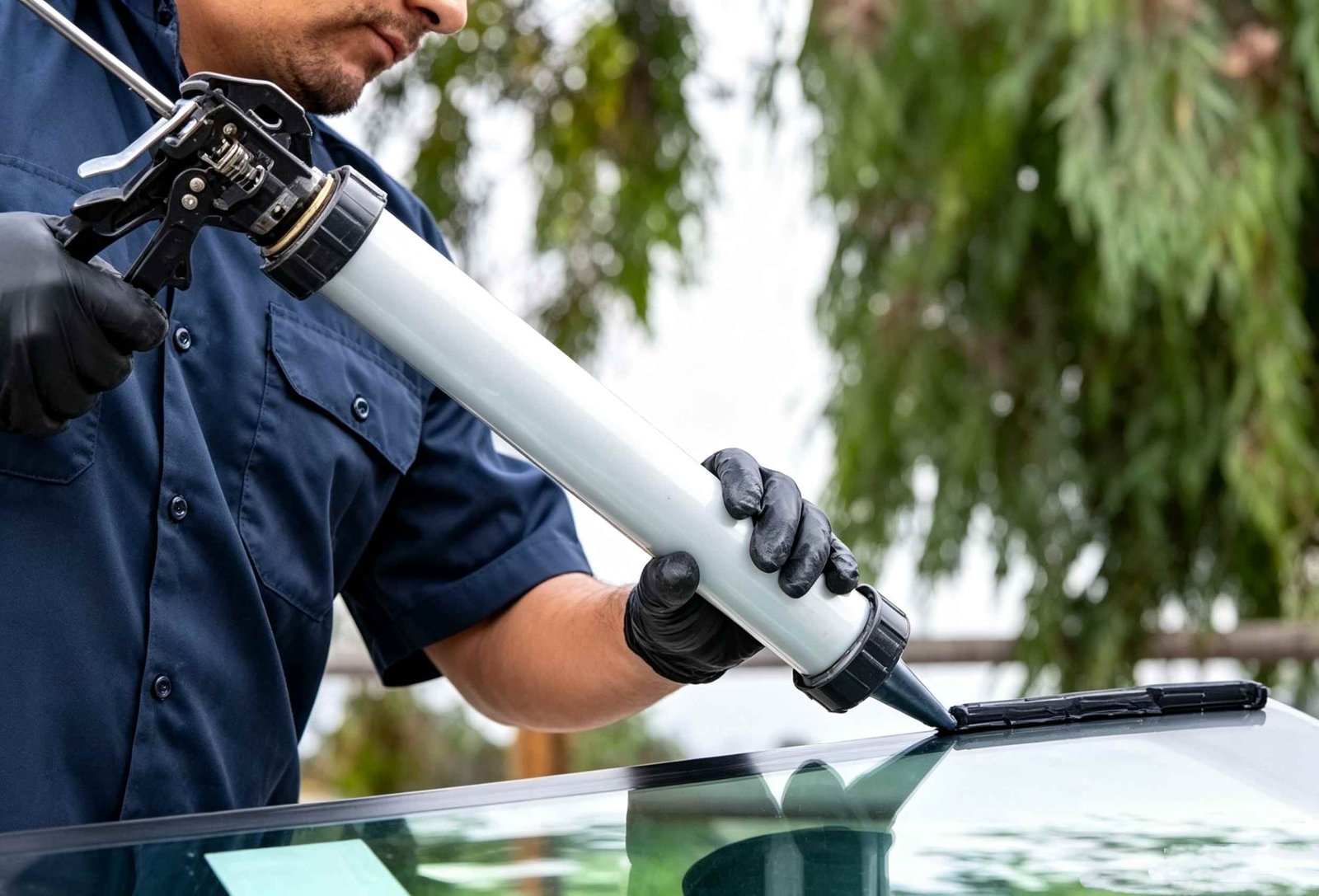
Scratch Severity Matrix: Feasibility, Depth Thresholds, and Action Plans
The diagnostic matrix below outlines engineering boundaries for repairing damaged automotive glass surfaces.
| Scratch Category | Estimated Depth | Fingernail Test Response | Recommended Engineering Action |
|---|---|---|---|
| Superficial Wiper Haze | < 0.005 mm | Glides smoothly; zero catch | Cerium oxide rotary polish (15 to 20 min) |
| Moderate Mineral Etching | 0.005 to 0.02 mm | Faint dragging sensation | Rayon pad + CeO2 compound compounding |
| Deep Ice Scraper Gouges | 0.02 to 0.05 mm | Definite fingernail catch | Dry abrasive discs; High optical distortion risk |
| Severe Stone Abrasion | > 0.05 mm | Severe audible click/catch | Full windshield replacement mandatory |
Typical Application Scenarios: Workshop Realities & Optical Distortion
Examining real-world restoration challenges illustrates why technicians must respect glass removal thresholds.
Scenario A: Heavy Wiper Arc Haze on Municipal Ambulance Fleet
An emergency ambulance fleet reported severe glare during night driving. Worn-out wiper rubber inserts had exposed bare metal claws, engraving wide superficial arcs across the windshields.
Fingernail inspection revealed zero catching. Technicians deployed rotary polishers with rayon pads and high-grade cerium oxide glass polish slurry. By misting water continuously and polishing at 1200 RPM, the workshop restored 100% optical clarity across six vehicles, saving thousands in replacement glass costs.
Scenario B: Severe Optical Distortion from Aggressive Localized Polishing
A detailing shop attempted to remove a single deep scratch in the driver’s viewing area using aggressive silicon carbide sanding discs followed by heavy rotary compounding.
While the scratch disappeared, grinding created a 0.08mm dish-shaped depression in the glass. When driving, the curved glass acted as a concave lens, distorting road lines and causing severe driver nausea. The shop was forced to replace the windshield with a structural polyurethane installation.
Standard Operating Procedure: Five-Stage Glass Polishing SOP
Executing this five-stage protocol restores optical transparency while eliminating the danger of glass thermal breakage.
Step 1: Thorough Glass Decontamination and Masking
Wash the windshield thoroughly with automotive glass cleaner, followed by a detailing clay bar treatment to remove road grime and embedded grit. Mask rubber windshield mouldings, wiper cowl plastics, and adjacent painted panels with heavy protective plastic sheeting.
Step 2: Cerium Oxide Slurry Mixing
Mix high-purity optical grade cerium oxide powder with distilled water in a clean container at a 1:1 ratio by volume. The resulting slurry should have the consistency of heavy pancake cream.
Step 3: Rotary Machine Speed and Pad Priming
Mount a compressed pure rayon or hard felt polishing pad onto a rotary buffer. Prime the pad surface evenly with slurry. Set machine speed between 1000 and 1500 RPM; never use high speeds above 2000 RPM.
Step 4: Cross-Hatch Polishing and Thermal Monitoring
Work in a defined 40cm × 40cm section using overlapping horizontal and vertical cross-hatch passes. Apply moderate, steady downward pressure of 4 to 5 kg. Mist the working zone lightly with distilled water whenever the slurry begins to dry out.
Monitor surface heat continuously with an infrared thermometer. If surface temperature reaches 60°C (140°F), stop immediately and allow the glass to cool naturally.
Step 5: Inspection and Hydrophobic Coating Preparation
Wipe away dried slurry residue with damp microfiber towels and inspect the glass under a high-intensity inspection light. Thoroughly degrease with pure isopropanol before applying hydrophobic ceramic glass coatings.
Engineer’s Technical Trade-Offs: Boundaries of Glass Polishing
Professional auto glass technicians must understand where polishing provides economic value and where replacement is non-negotiable.
- ADAS Sensor Calibration Hazards: Never polish glass in the camera viewing trapezoid; altering glass refractive index creates optical errors that blind autonomous emergency braking systems.
- Labor Economics vs. Replacement Cost: Polishing heavy deep scratches across a large windshield takes 3 to 4 hours of intensive labor, frequently exceeding the wholesale cost of a brand-new replacement windshield.
- Interlayer Thermal Boiling: Exceeding 70°C during polishing permanently boils the poly-vinyl-butyral (PVB) interlayer, producing milky internal cloudiness that cannot be repaired.
Frequently Asked Questions: Windshield Scratch Removal
Can toothpaste or baking soda really remove scratches from a windshield?
No. Household toothpaste and baking soda lack the chemical hardness and reactivity required to polish automotive soda-lime glass. Glass has a Mohs hardness of 5.5 to 6.0, whereas toothpaste abrasives measure only 2.0 to 3.0. Toothpaste can clean surface dirt but cannot remove wiper scratches or restore optical clarity.
How can you tell if a windshield scratch is too deep to polish?
Perform the standard fingernail test. Run your fingernail gently across the scratch perpendicular to the groove. If your nail catches or clicks into the gouge, the scratch exceeds 0.05mm in depth. Attempting to polish out deep scratches removes too much glass material, creating severe optical distortion that causes eye fatigue.
Why does cerium oxide polish require continuous water spraying?
Water is essential for two reasons: chemical reaction and thermal control. Cerium oxide requires water to chemically hydrolyze surface silica bonds into soft silicate gel. Additionally, water lubricates the pad and cools the glass; if the slurry dries out, frictional heat will quickly overheat the PVB plastic interlayer or crack the glass.
Engineering Summary: Optical Clarity and Intelligent Replacement Decisions
Windshield scratch removal is an exacting engineering discipline that combines mechanochemical planarization with rigorous thermal discipline. By respecting fingernail depth boundaries, avoiding ADAS sensor corridors, and deploying cerium oxide slurries correctly, automotive professionals eliminate dangerous night glare and maintain superior visual safety.
Authored by ChemPU Automotive Application Engineering Team
Specializing in OEM direct-glazing polyurethane formulation, crash-retention validation per FMVSS 212 standards, and high-performance structural elastomeric bonding solutions for global automotive manufacturers.
Quality Certification: ISO 9001 / IATF 16949 Certified Adhesive Manufacturing
Source Certified OEM Direct Glazing Adhesives & Glass Cleaners
Partner with ChemPU, an ISO 9001 and IATF 16949 certified Chinese manufacturer. We provide high-performance polyurethane windshield adhesives, glass primers, and private label cartridges for international distributors and fleet repair networks.
Direct WhatsApp Technical Inquiry: +86 15216655520

