
Automotive safety engineers and certified glass technicians know that a windshield is far more than a transparent wind barrier. During severe frontal collisions and vehicle rollovers, structural glass acts as a vital safety restraint component. Understanding fmvss 212 and fmvss 216 standards reveals why adhesive bead integrity directly determines vehicle crash survival.
Federal Motor Vehicle Safety Standards establish stringent legal benchmarks for passenger vehicles. While fmvss 212 windshield retention mandates that glass remains secured during barrier impacts, fmvss 216 roof crush resistance relies on structural glass bonding to prevent cabin roof collapse.
This standard engineering guide delivers an exhaustive technical breakdown of structural polyurethane adhesive crash dynamics. We examine upward passenger airbag deployment blast pressures, load-bearing roof transfer paths, and lap shear strength metrics. Collision repair specialists and auto glass professionals will master compliance rules that prevent catastrophic adhesive failure.
Executive Summary: Crash Standards & Adhesive Load Physics
- FMVSS 212 Retention Mandate: At 48 km/h (30 mph) rigid barrier impacts, passenger cars must retain at least 75% of the windshield perimeter; vehicles without active passenger restraints require 50% retention.
- FMVSS 216 Roof Strength Contribution: The bonded windshield assembly provides up to 30% of total unibody roof crush resistance in vehicle rollovers, preventing cabin intrusion.
- Airbag Backboard Dynamic Blast: Passenger airbags deploy upward at over 300 km/h, exerting severe outward hydraulic pressure against the glass; adhesive debonding leads to passenger ejection.
- Chemical Lap Shear Requirement: Structural polyurethane adhesives must deliver lap shear strength exceeding 5.0 MPa to absorb dynamic collision shock loads.
Crash Engineering: FMVSS 212 Windshield Retention & Airbag Dynamics
When evaluating windshield urethane crash safety, installers must look beyond simple water sealing. The cured adhesive bead acts as an active structural restraint mechanism.
The Passenger Airbag Deployment Vector
Unlike driver airbags that deploy outward directly from the steering wheel, front passenger airbags fire upward against the interior windshield surface. The angled laminated glass acts as a deflection backboard.
Within 30 to 45 milliseconds of collision detection, the airbag inflates at speeds exceeding 300 km/h. This high-speed explosion exerts thousands of Newtons of outward mechanical force directly onto the windshield adhesive joint.
Catastrophic Consequences of Adhesive Debonding
If technicians cut corners by using expired urethane, omitting glass primer, or driving before the Safe Drive-Away Time (SDAT), the adhesive joint fails under blast pressure.
The windshield ejects completely outward toward the hood. Without a solid glass backboard, the inflating airbag expands out the front aperture, leaving the unbelted passenger to strike the steel dashboard or eject from the vehicle.
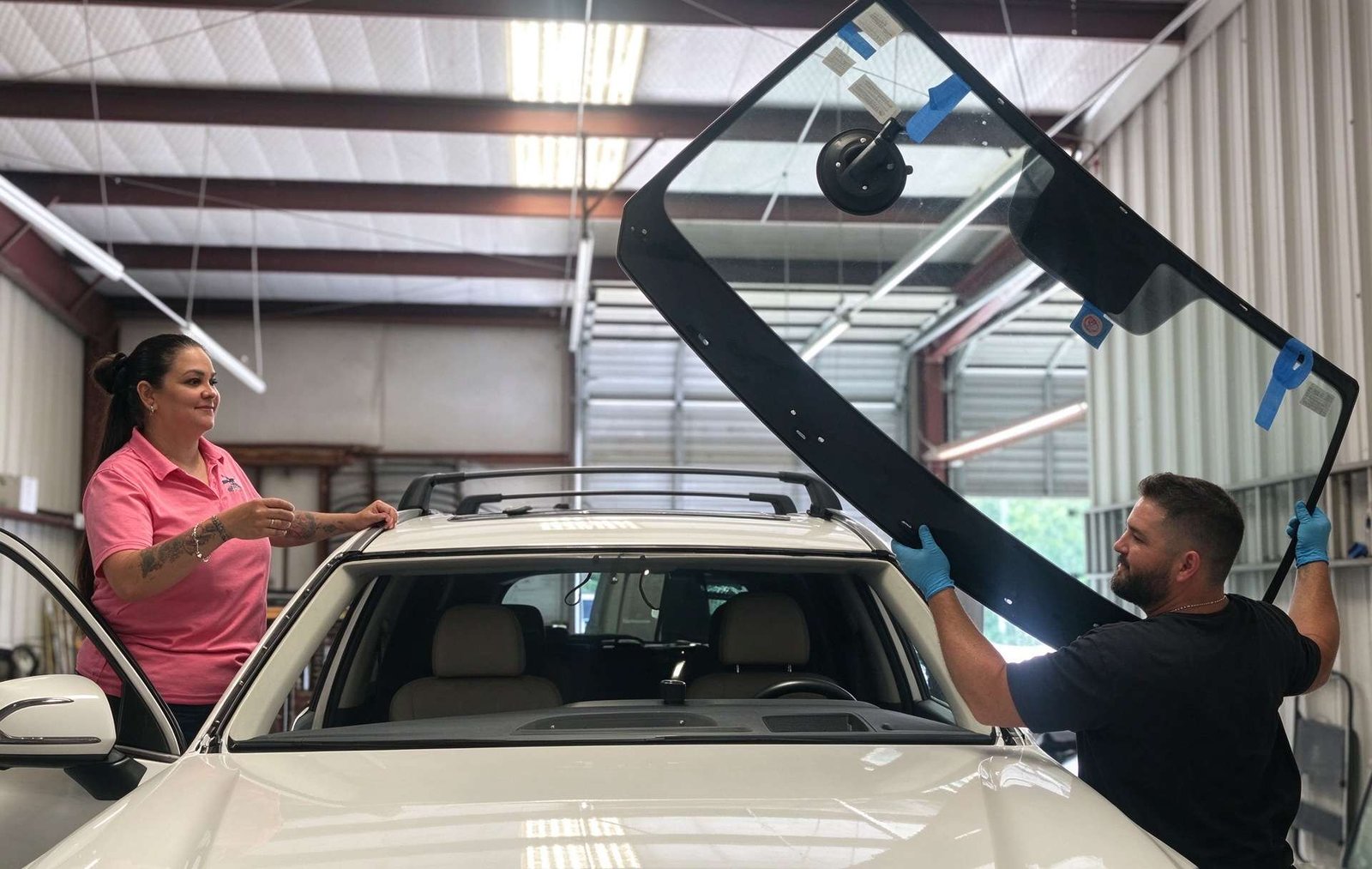
Regulatory Safety Matrix: Federal Motor Vehicle Safety Standards
The technical matrix below outlines the performance mandates established by federal automotive safety regulations.
| Standard Code | Crash Test Protocol | Adhesive Mechanical Role | Minimum Passing Threshold |
|---|---|---|---|
| FMVSS 212 | 30 mph (48 km/h) frontal rigid barrier impact | Airbag deflection & occupant containment | ≥ 75% perimeter retained (active belts) |
| FMVSS 216a | Quasi-static platen crush on roof corner | Shear stiffening & A-pillar buckling prevention | Withstand 3.0× unloaded vehicle weight |
| FMVSS 208 | Occupant crash protection sled testing | Airbag reaction timing & cushion positioning | Head Injury Criterion (HIC) < 700 |
| AGRSS / ANSI 003 | Aftermarket auto glass replacement standard | SOP adherence, primer usage, SDAT release | 100% OEM equivalent structural performance |
Typical Application Scenarios: Rollover Realities & Inadequate Urethane
Examining real-world crash forensics demonstrates how adhesive selection dictates passenger cabin survival during vehicle rollovers.
Scenario A: SUV Rollover Roof Integrity Preserved by Structural Urethane
A commercial SUV carrying technical personnel rolled twice down an embankment at 70 km/h. Crash investigators noted that the roof pillars remained intact, preserving vital cabin survival space.
The vehicle’s windshield had been replaced using certified OEM-grade high-modulus polyurethane adhesive. Despite fractured glass plies, the structural urethane bead remained 100% bonded to the pinchweld, absorbing vertical roof crush forces and preventing A-pillar collapse under FMVSS 216 load criteria.
Scenario B: Catastrophic Windshield Ejection from Premature Vehicle Release
A sedan was released to a customer 30 minutes after glass replacement, despite using a standard 1K polyurethane requiring a 2-hour Safe Drive-Away Time.
Ten minutes down the highway, the vehicle suffered a frontal impact at 45 km/h. When the passenger airbag fired, the uncured urethane bead sheared completely off the pinchweld. The windshield blew outward onto the hood, rendering the passenger airbag useless and resulting in severe occupant head trauma. Forensic analysis cited gross violation of FMVSS 212 protocols.
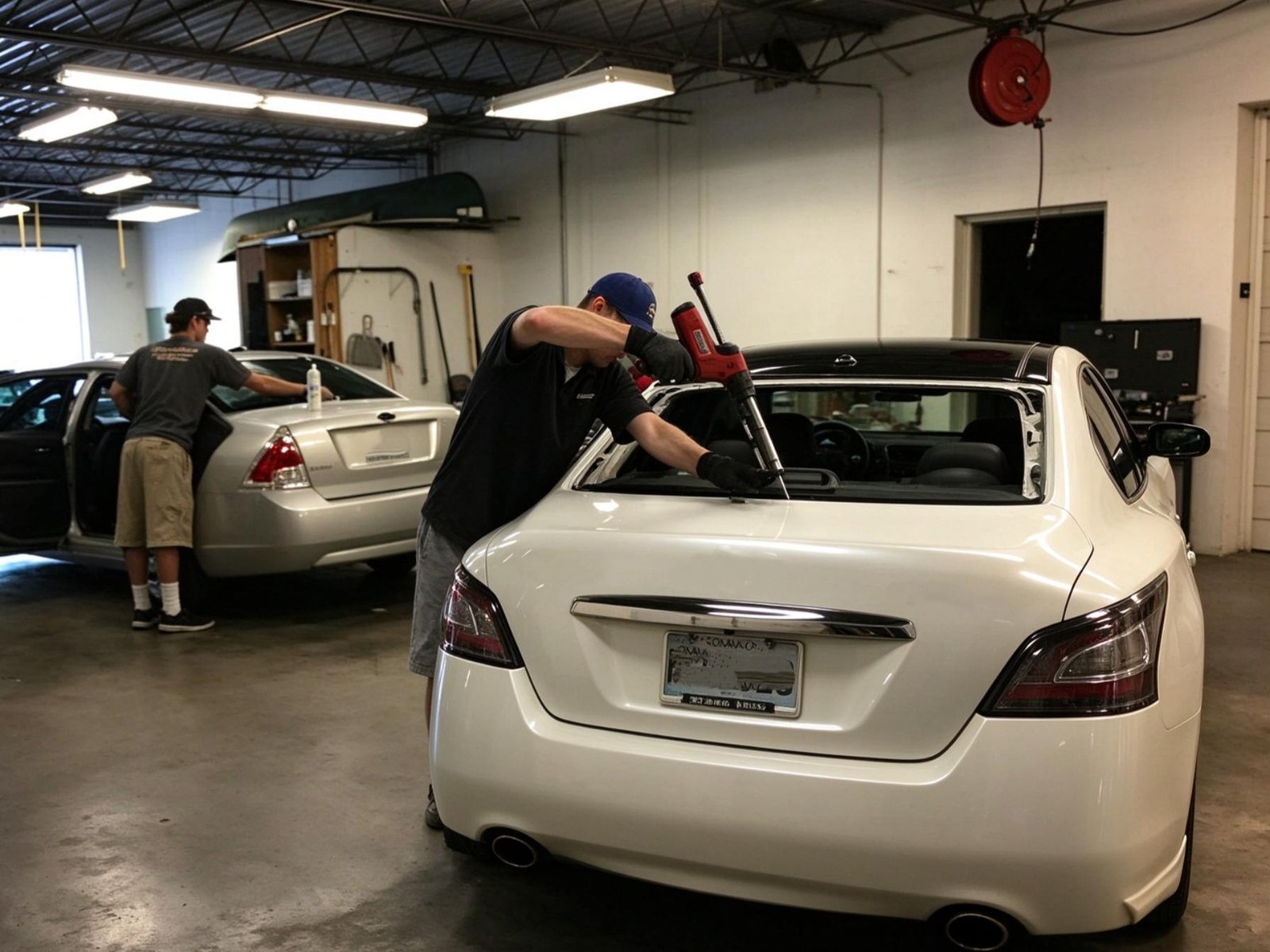
Standard Operating Procedure: Five-Stage FMVSS Compliance SOP
Executing this standardized procedure guarantees full compliance with federal crash standards and manufacturer liability requirements.
Step 1: Pinchweld Trimming and Primer Application
Trim the existing urethane bed smoothly down to an even 1mm to 2mm base. Never scrape down to bare metal unless treating rust. Treat all bare metal nicks with an approved pinchweld primer to prevent subterranean corrosion.
Step 2: Glass Frit Degreasing and Black Primer Activation
Clean the ceramic frit perimeter with pure isopropanol. Apply a continuous band of black auto glass primer using a single-motion felt applicator. Allow five to ten minutes for the primer to flash off into a dry, deep matte finish.
Step 3: Triangular V-Notch Bead Extrusion
Cut the applicator nozzle with a triangular V-notch matching factory roofline height (typically 12mm to 14mm tall). Extrude a continuous, uniform urethane bead at a 90-degree angle, eliminating air pockets and gaps.
Step 4: Synchronized Glass Decking and Paddle Compression
Set the glass into the aperture within the adhesive open time (typically under 10 minutes). Compress the glass evenly until the triangular bead flattens into a consistent 4mm to 5mm structural bond line.
Step 5: Safe Drive-Away Time (SDAT) Verification and Hand-off
Check ambient workshop temperature and relative humidity against the adhesive manufacturer’s SDAT matrix. Record the certified release time on the vehicle work order and strictly prohibit customer departure before that exact timestamp.
Engineer’s Technical Trade-Offs: Boundaries of Structural Urethane
Professional auto glass technicians must understand where adhesive chemistry impacts structural performance.
- High Modulus vs. Standard Urethane: Modern vehicles with lightweight high-strength steel require high-modulus (HM) adhesives; using low-modulus urethane increases unibody flex and causes glass stress cracks.
- Cold Weather Curing Inversion: Standard 1K polyurethanes require atmospheric moisture to cure; in winter environments below 5°C, SDAT times extend from 1 hour to over 12 hours unless heated 2K boosters are used.
- Non-Conductive Isolation for EVs: Electric vehicles and cars with in-glass antennas require non-conductive (NC) urethanes with volume resistivity exceeding 1010 Ω·cm to prevent battery ground loops and sensor interference.
Frequently Asked Questions: FMVSS Windshield Standards
What is the difference between FMVSS 212 and FMVSS 216?
FMVSS 212 governs windshield retention during frontal barrier crashes, requiring that the glass remains bonded to support the passenger airbag and prevent occupant ejection. FMVSS 216 regulates vehicle roof crush resistance during rollovers, evaluating how the bonded windshield reinforces A-pillars to preserve cabin survival space.
Why is Safe Drive-Away Time (SDAT) considered a legal safety standard?
SDAT represents the exact time required for polyurethane adhesive to achieve the minimum lap shear strength (typically 1.0 to 1.5 MPa) necessary to meet FMVSS 212 crash requirements. Releasing a vehicle before its verified SDAT means that in an accident, the windshield could eject, disabling the passenger airbag and exposing the installer to severe legal liability.
How much of a vehicle’s roof strength comes from the bonded windshield?
In modern unibody passenger vehicles, the direct-glazed windshield contributes approximately 25% to 30% of total structural roof crush resistance. During a rollover, the laminated glass acts as a shear web, preventing the steel A-pillars and roof headers from buckling inward into passenger space.
Engineering Summary: Legal Compliance and Life-Saving Adhesive Performance
Automotive glass replacement is fundamentally a life-safety procedure governed by rigorous federal crash regulations. By strictly adhering to FMVSS 212 and FMVSS 216 mandates, deploying certified OEM-grade polyurethane adhesives, and observing mandatory Safe Drive-Away Times, auto glass professionals ensure that every windshield fulfills its life-saving role as a structural barrier.
Authored by ChemPU Automotive Application Engineering Team
Specializing in OEM direct-glazing polyurethane formulation, crash-retention validation per FMVSS 212 standards, and high-performance structural elastomeric bonding solutions for global automotive manufacturers.
Quality Certification: ISO 9001 / IATF 16949 Certified Adhesive Manufacturing
Source Certified OEM Direct Glazing Adhesives & Fast-Cure Polyurethanes
Partner with ChemPU, an ISO 9001 and IATF 16949 certified Chinese manufacturer. We provide high-modulus polyurethane windshield adhesives compliant with FMVSS 212/216 crash standards, glass primers, and private label cartridges for international distributors and fleet repair networks.
Direct WhatsApp Technical Inquiry: +86 15216655520

