
Automotive repair forums and untrained mechanics frequently debate adhesive selection for automotive glass. Because silicone sealants provide excellent domestic waterproofing and weather resistance, some mistakenly assume they are suitable for windshield replacement. This catastrophic misconception leads to deadly structural failures during high-speed frontal collisions and rollover accidents.
Evaluating silicone vs polyurethane windshield adhesive requires examining vehicle crash engineering. Modern direct glazing utilizes automotive windshields as critical structural unibody shear walls, requiring high-modulus polyurethane adhesives to satisfy FMVSS 212 barrier crash standards.
This technical engineering whitepaper delivers an exhaustive chemical and mechanical comparison between elastomeric silicones and direct glazing polyurethanes. We analyze tensile lap shear strength, passenger airbag deployment dynamics, roof crush load transfer under FMVSS 216, and paint adhesion compatibility. Fleet maintenance directors and auto body repairers will gain certified technical proof why silicone must never be used for structural vehicle glass bonding.
Executive Summary: Structural Polyurethane vs. Silicone Boundaries
- The 500% Shear Strength Divide: Direct glazing polyurethane delivers 5.5 MPa to 7.5 MPa tensile lap shear strength, compared to merely 1.0 MPa to 1.5 MPa for high-grade silicones.
- Airbag Backboard Reaction Forces: Passenger-side airbags deploy at 320 km/h directly against the inner windshield face, exerting over 2,500 N of explosive force that instantly shears silicone bonds.
- FMVSS 216 Roof Crush Integrity: Structural polyurethane transfers torsional loads across vehicle A-pillars, providing up to 45% of total cabin crush resistance during rollover collisions.
- Silicone Oil Paint Contamination: Siloxane plasticizers migrate across automotive clearcoats, causing permanent adhesion failure for subsequent urethane repairs and paint shop fish-eye defects.
Crash Mechanics: The Windshield as a Critical Unibody Safety Component
To comprehend why silicone fails on windshields, engineers must analyze the dynamic mechanical forces acting upon automotive glass during collisions. A windshield is an engineered safety barrier rather than a cosmetic window.
FMVSS 212 Windshield Retention Requirements
Federal Motor Vehicle Safety Standard (FMVSS) 212 mandates that during a 48 km/h barrier crash, at least 75% of the windshield perimeter must remain solidly bonded to the pinchweld. This retention prevents occupant ejection.
Silicone adhesives lack the molecular cohesive density required to pass this dynamic barrier test. Under collision deceleration, the momentum of vehicle occupants striking the glass easily overcomes silicone peel resistance.
Airbag Deflection and Backboard Reaction Forces
In modern vehicles, the passenger-side front airbag deploys upward from the dashboard, bouncing off the windshield inside surface toward the passenger. The glass acts as a structural reaction backboard.
This deployment exerts extreme instantaneous tensile outward force against the adhesive bond line. While polyurethane windshield adhesive strength easily absorbs this dynamic shock, silicone tears cohesively, causing the windshield to blow out and the airbag to collapse uselessly outside the vehicle.
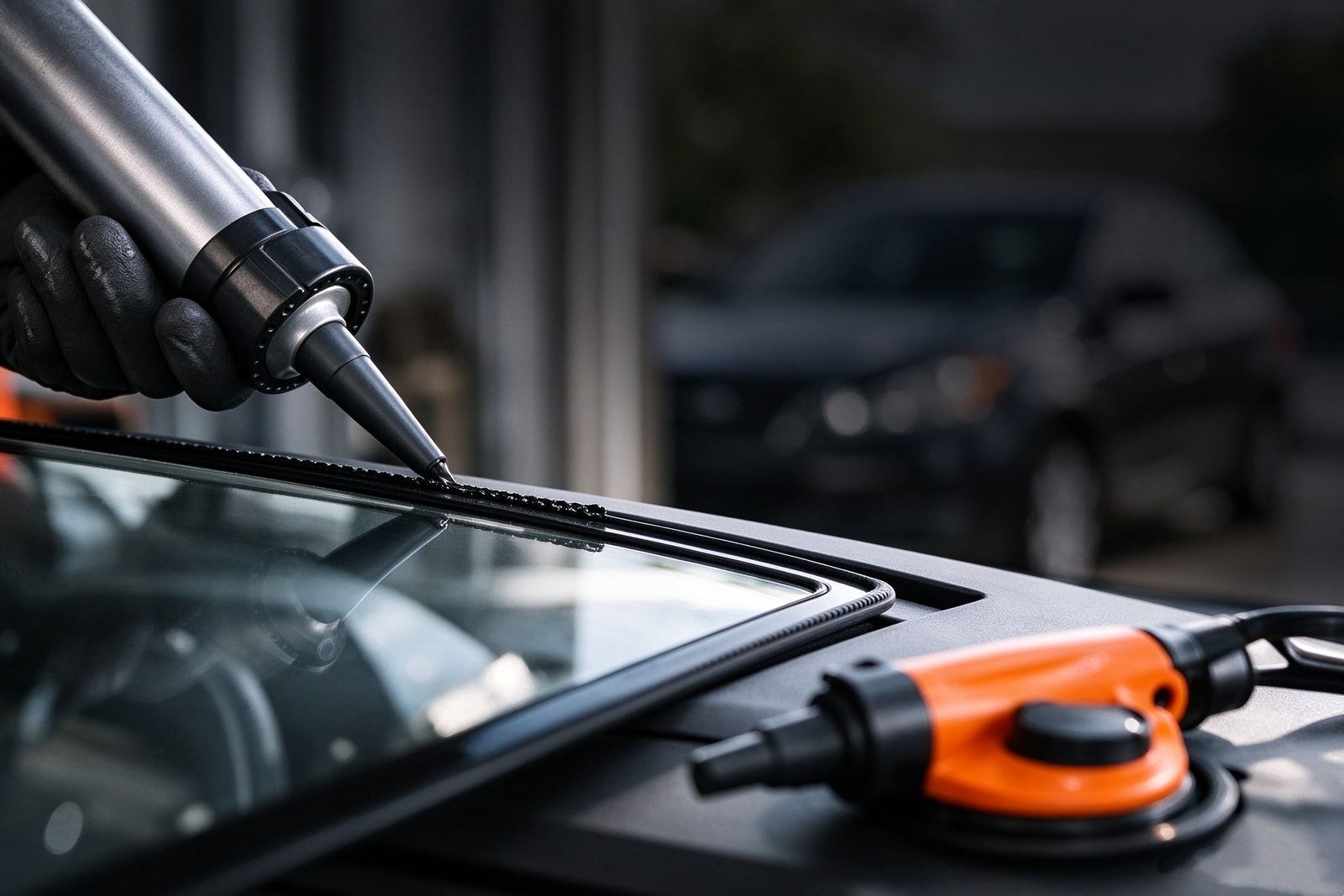
Engineering Comparison: Mechanical & Chemical Divergence Matrix
The empirical testing matrix below details the mechanical and chemical property divergence between polyurethane vs silicone auto glass adhesives.
| Engineering Parameter | Direct Glazing Polyurethane (OEM) | Commercial Grade Silicone Sealant | Automotive Safety Relevance |
|---|---|---|---|
| Tensile Lap Shear Strength | 5.5 MPa to 7.5 MPa | 1.0 MPa to 1.8 MPa | Withstands airbag impact & roof crush |
| Tensile Strength at Break | 8.0 MPa to 11.0 MPa | 1.5 MPa to 2.5 MPa | Prevents tear under high-G crash forces |
| Shore A Hardness | 55 to 65 Shore A | 25 to 35 Shore A | Transfers torsional stiffness to unibody |
| Crash Standard Compliance | FMVSS 212 & FMVSS 216 Certified | Zero Crash Compliance (Fails) | Mandatory legal roadworthy requirement |
| Paint Shop Compatibility | Over-paintable (Body shop safe) | Severe Fish-Eye Contamination | Prevents paint peeling on adjacent panels |
Typical Application Scenarios: Workshop Realities & The Cost of Misapplication
Examining real workshop scenarios demonstrates the operational and financial liabilities of using non-structural adhesives for direct glazing.
Scenario A: Remediation of Silicone Contamination in Collision Shop
A customer brought an SUV to a body shop after an unscrupulous glass mobile service glued the windshield using clear bathroom silicone. The windshield began whistling within a month.
To restore certified crash safety, technicians had to extract the glass. Because cured silicone releases migrating siloxane oils, fresh polyurethane cannot adhere to contaminated pinchweld paint. The body shop spent eight labor hours stripping the entire pinchweld down to bare steel, re-applying epoxy primer, and re-glazing with certified auto glass structural adhesive.
Scenario B: Fleet Rollover Catastrophe and Legal Liability
A commercial delivery van suffered a highway rollover accident. An internal investigation revealed that the windshield had been replaced using generic silicone sealant to save material costs.
When the vehicle rolled, the silicone bond sheared immediately, allowing the cabin roof to collapse completely into the driver space. The fleet operator faced massive legal liabilities for operating non-compliant vehicles that violated federal motor vehicle safety standards.
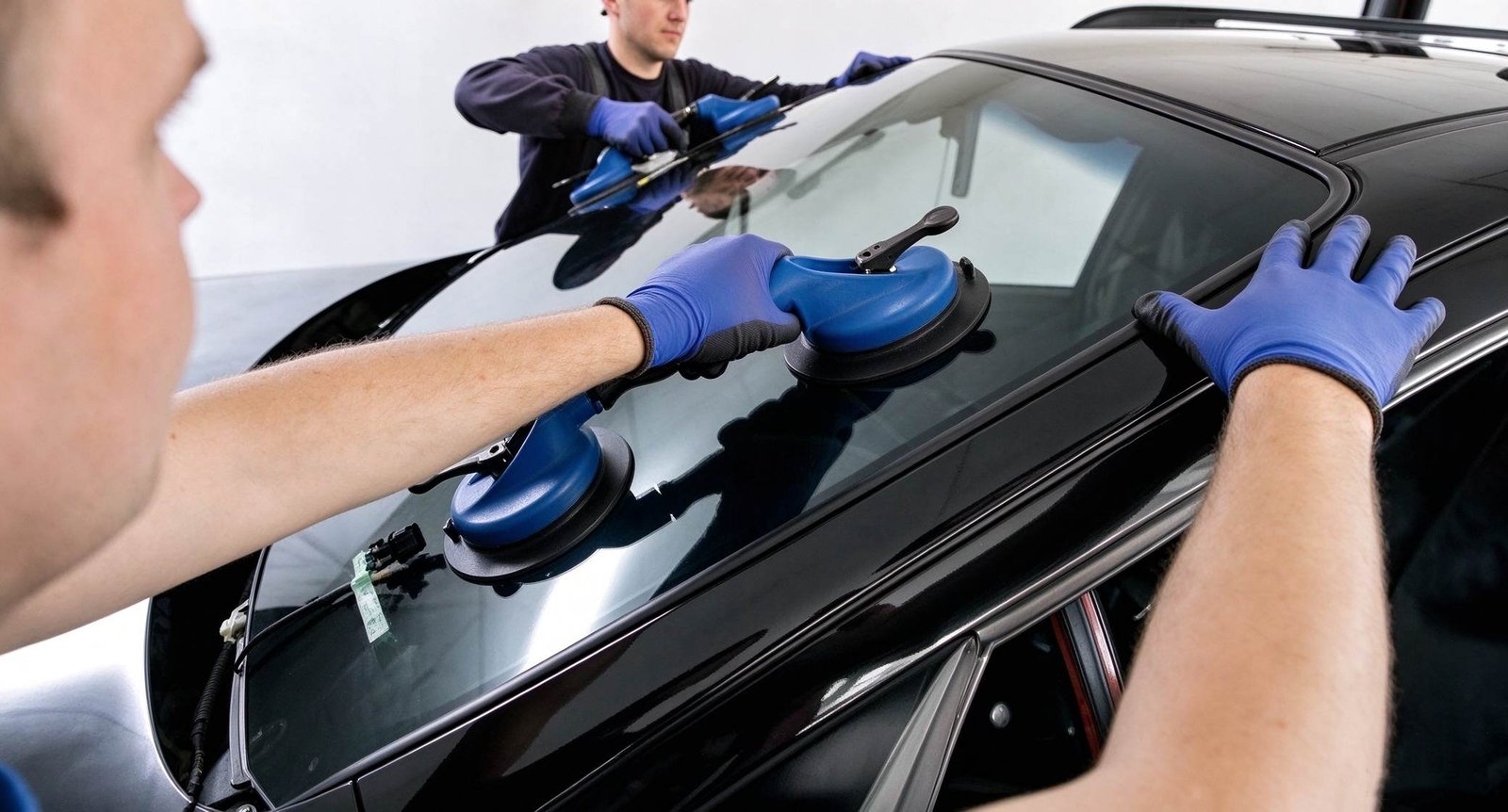
Standard Operating Procedure: Structural Direct Glazing Compliance Protocol
Adhering to this four-stage engineering sequence ensures every glass replacement satisfies OEM crash retention criteria.
Step 1: Substrate Chemical Audit and Cleaning
Inspect the vehicle aperture for any previous silicone contamination. If silicone residues exist, mechanically grind the surface to bare steel. Clean all glass ceramic frit surfaces with an approved isopropanol solvent using the two-cloth method.
Step 2: Reactive Black Primer Application
Shake the black glass primer for 30 seconds. Apply a uniform, opaque coat across the ceramic frit perimeter. Allow 10 minutes of flash-off time. This primer promotes molecular adhesion and shields the urethane from solar UV degradation.
Step 3: Triangular V-Notch Bead Dispensing
Cut the dispensing tip with a calibrated triangular V-notch (9mm base width by 13mm apex height). Extrude a continuous bead of certified direct glazing polyurethane, avoiding butt joints along vertical A-pillars.
Step 4: Decking and SDAT Enforcement
Set the replacement windshield within the adhesive open time (typically 10 to 15 minutes). Compress the glass uniformly to achieve a final 5mm bead bed. Enforce the certified Safe Drive-Away Time before returning the vehicle to service.
Engineer’s Technical Trade-Offs: When Silicone Is Acceptable vs. Prohibited
Professional application engineers must delineate where each polymer family functions effectively.
- Structural Glass Glazing (Strictly Prohibited): Silicone must never be used to bond front windshields, rear backlites, or stationary quarter glass on modern passenger unibody vehicles.
- Auxiliary Cosmetic Weatherproofing (Permitted): Specialty flowable silicone is acceptable for sealing non-structural rubber gaskets on vintage classic cars and sealing exterior sunroof frame perimeter gaps.
- High-Temperature Sensor Bonding (Permitted): Neutral-cure specialty silicones are approved for potting rain-light optical sensors on glass faces, where operating temperatures exceed 100°C.
Frequently Asked Questions: Structural Automotive Glass Bonding
Why is silicone considered dangerous for windshield replacement?
Silicone has a tensile shear strength of only 1.0 to 1.8 MPa, which is far too weak to support passenger airbag deployment or resist roof crush during rollover collisions. Polyurethane provides 5.5 to 7.5 MPa of shear strength, fulfilling federal crash safety standards.
Can polyurethane adhesive stick to a pinchweld that was previously contaminated with silicone?
No. Silicone leaves microscopic siloxane oil residues that penetrate paint pores. Polyurethane will fail to bond to silicone-contaminated surfaces, leading to adhesive failure. The contaminated pinchweld must be mechanically ground to bare metal and re-primed.
Does direct glazing polyurethane require a special black primer?
Yes. While some products claim primerless bonding, OEM engineering standards always mandate applying a certified black glass primer. The primer promotes chemical cross-linking and blocks ultraviolet solar radiation from degrading the polyurethane bond line.
Engineering Summary: Uncompromising Safety in Adhesive Selection
Automotive glass replacement is a critical life safety procedure. Substituting commercial silicone for direct glazing polyurethane compromises passenger compartment crash survivability, violates federal safety laws, and creates immense legal liability. Ensuring structural compliance demands certified OEM-grade polyurethane systems on every installation.
Authored by ChemPU Automotive Application Engineering Team
Specializing in OEM direct-glazing polyurethane formulation, crash-retention validation per FMVSS 212 standards, and high-performance structural elastomeric bonding solutions for global automotive manufacturers.
Quality Certification: ISO 9001 / IATF 16949 Certified Adhesive Manufacturing
Source Certified OEM Direct Glazing Polyurethane Adhesives
Partner with ChemPU, an ISO 9001 and IATF 16949 certified Chinese manufacturer. We provide high-modulus polyurethane direct glazing adhesives, crash-tested black primers, and private label cartridges for international distributors and fleet repair networks.
Direct WhatsApp Technical Inquiry: +86 15216655520

