
Automotive technicians and DIY vehicle owners often face confusion when selecting glass sealants. When water seeps past windshield mouldings, many reach instinctively for standard hardware store clear silicone. Others mistakenly believe that high-strength direct glazing polyurethane is the only product suitable for any glass-related repair.
Using a dedicated flowable silicone windshield sealant solves cosmetic moisture issues without requiring complete glass removal. Flowable silicone utilizes capillary action to wick into hairline fractures, establishing a flexible waterproof barrier against rain.
This technical engineering guide clarifies the distinct performance boundaries between flowable silicone and structural polyurethane. We detail capillary flow mechanics, tensile strength thresholds under FMVSS 212 crash standards, and paint contamination risks. Auto glass repair technicians and fleet maintenance managers will learn when to deploy flowable silicone and when structural polyurethane is legally mandatory.
Executive Summary: Flowable Silicone vs. Polyurethane Selection Rules
- Cosmetic vs. Structural Mandate: Flowable silicone is strictly an unpressurized cosmetic waterproofing sealant; it possesses zero structural crash retention capability and must never replace polyurethane in full glass installations.
- Capillary Action Mechanics: Formulated with ultra-low viscosity, flowable silicone for windshield applications flows deep into sub-millimeter voids without requiring external pump pressure.
- Paint Shop Fish-Eye Hazard: Cured and uncured silicone releases migrating siloxane oils that bond to vehicle clearcoat, causing severe fish-eye cratering during auto body repainting.
- UV Stability Superiority: High-grade silicone elastomers feature inorganic silicon-oxygen backbones, resisting ultraviolet solar degradation far longer than unprimed polyurethanes.
Capillary Action Chemistry: How Flowable Silicone Wicks into Micro-Fissures
Standard paste sealants bridge across narrow crevices, leaving hidden moisture tunnels underneath. Applying flowable silicone sealant relies on surface tension physics to penetrate sub-millimeter leak channels.
Low Surface Tension and Capillary Draw
Flowable silicone sealants are engineered with short polydimethylsiloxane polymer chains. This chemical structure reduces liquid viscosity to less than 20,000 centipoise, compared to over 800,000 centipoise for structural urethane.
When dispensed along the upper edge of an exterior rubber gasket, capillary forces draw the liquid adhesive inward. The liquid flows horizontally and downward into invisible micro-cracks before moisture curing.
Oxime vs. Acetoxy Curing Profiles
Automotive-grade flowable silicones utilize neutral-cure oxime or alkoxy chemistry. They release neutral volatile compounds during cross-linking, protecting adjacent metal pinchwelds from corrosion.
In contrast, cheap hardware store silicones release acetic acid (vinegar odor). Applying acetoxy silicone against vehicle pinchwelds aggressively attacks bare steel, triggering severe corrosion underneath the paint.
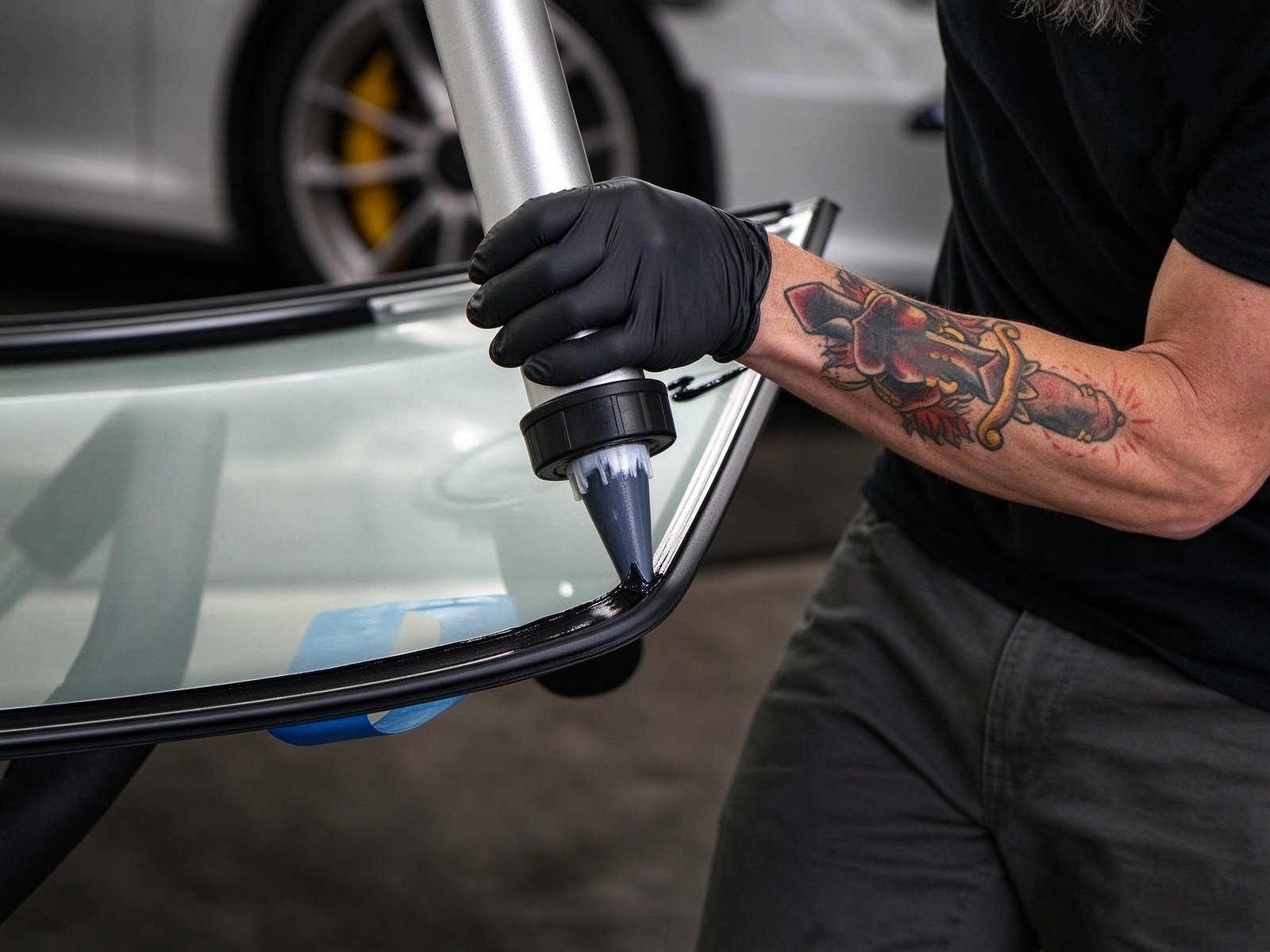
Engineering Comparison: Flowable Silicone vs. Structural Polyurethane
Understanding the physical property divergence between silicone vs polyurethane windshield chemistries prevents fatal installation errors.
| Performance Property | Flowable Silicone Windshield Sealant | Direct Glazing Polyurethane |
|---|---|---|
| Primary Engineering Purpose | Cosmetic Water & Air Leak Sealing | FMVSS 212/216 Structural Bonding |
| Tensile Shear Strength | 1.0 MPa to 1.8 MPa (Low) | 5.5 MPa to 7.5 MPa (High Structural) |
| Extruded Viscosity | Pourable Liquid (15,000 – 25,000 cPs) | Thixotropic Non-Sag Paste (>800,000 cPs) |
| UV Resistance (Direct Sunlight) | Exceptional (Si-O Inorganic Backbone) | Requires Black Ceramic Frit or Primer |
| Paint Compatibility | Non-Paintable; Siloxane Contamination | Paintable after skinning (Body Seam Approved) |
Typical Application Scenarios: Workshop Realities & Material Selection
Examining common auto repair scenarios demonstrates where flowable silicone provides ideal remediation and where its use creates liability.
Scenario A: Sealing Weatherstrip Leaks on Vintage Restorations
A classic car restoration shop encountered minor water dripping past an original rubber gasket windshield. Extracting the vintage curved glass carried severe breakage risks.
The technician lifted the exterior rubber lip slightly, cleaned out dirt, and injected clear silicone windshield sealant. The fluid flowed along the channel, cured into a transparent elastomeric barrier, and halted the leak permanently without glass removal.
Scenario B: The Fatal Error of Full Windshield Silicone Glazing
An unqualified repair shop replaced a fleet truck windshield using clear silicone instead of automotive polyurethane. Three months later, the vehicle experienced a frontal collision.
The passenger airbag deployed violently against the windshield. Lacking the 6.0 MPa shear strength of direct glazing polyurethane, the silicone bond ruptured completely. The windshield flew out of the aperture, leaving the airbag unsupported and exposing the passenger to severe injury.
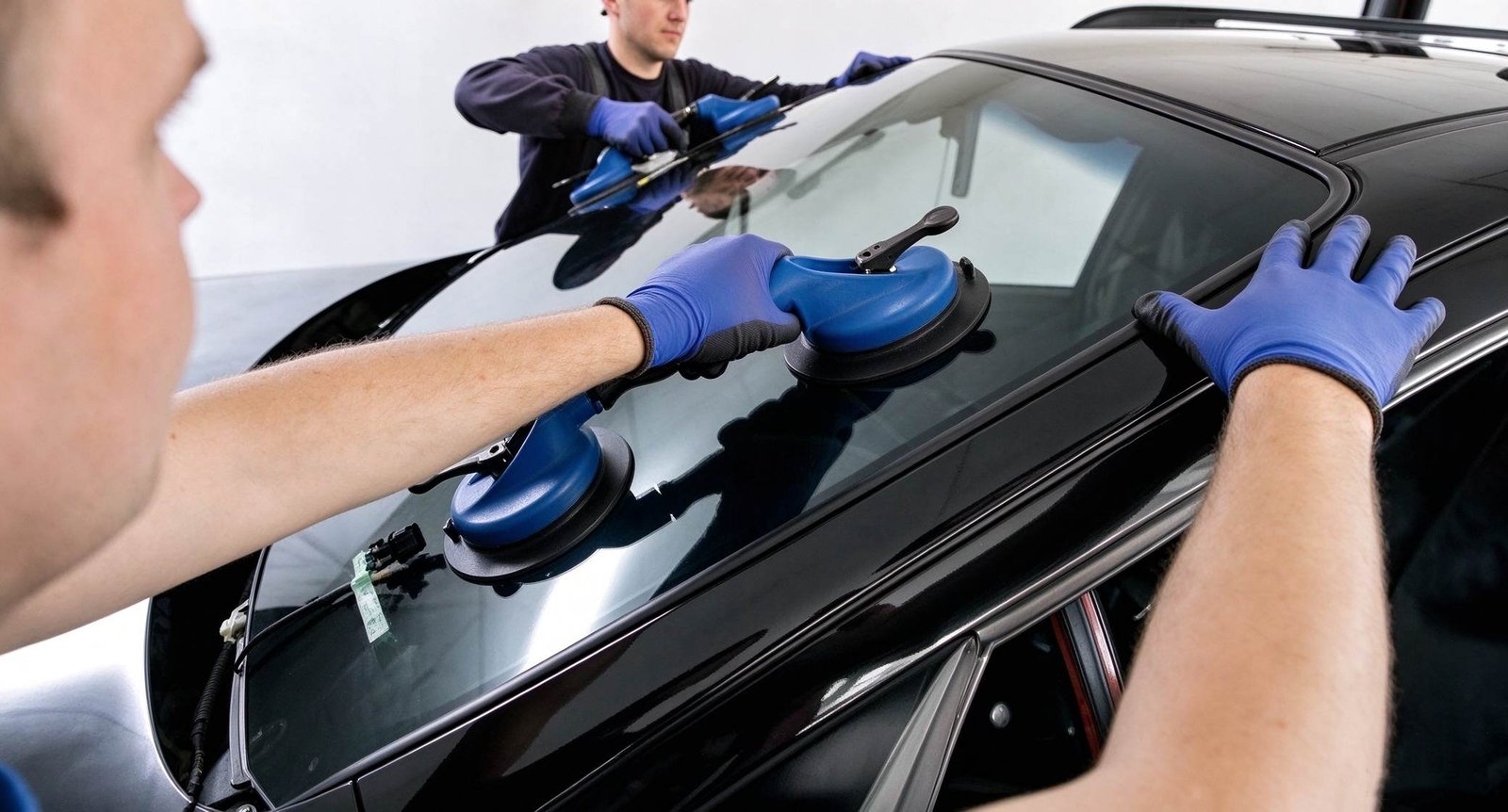
Standard Operating Procedure: Deploying Flowable Silicone for Hairline Leaks
Following this five-step repair sequence ensures maximum capillary penetration while avoiding paint finish contamination.
Step 1: Thorough Substrate Degreasing
Clean the glass and adjacent rubber moulding using pure isopropyl alcohol and a lint-free towel. Remove all road grime, tree sap, and wax residues. Ensure the channel is completely dry before application.
Step 2: Masking Adjacent Paintwork
Apply automotive masking tape along the painted A-pillars and roofline, leaving only a 2mm gap adjacent to the glass. This prevents stray silicone oils from contaminating vehicle clearcoat.
Step 3: Precision Flow Dispensing
Snip the nozzle tip to a tiny 1.5mm opening. Apply a steady bead of windshield silicone sealant directly into the void between the glass edge and rubber trim. Allow gravity and capillary suction to pull the sealant inward.
Step 4: Wipe Away Excess Immediately
Wipe away any excess silicone pooling on outer surfaces immediately using a dry microfiber cloth. Do not tool the bead with soapy fingers, as moisture disrupts capillary wicking.
Step 5: Moisture Curing Time
Allow the silicone to cure undisturbed for at least one hour before vehicle operation. Full chemical cross-linking completes within 24 hours under normal atmospheric humidity.
Engineer’s Technical Trade-Offs: Practical Boundaries of Flowable Silicone
Technicians must understand the engineering trade-offs when selecting between flowable silicone and structural adhesives.
- Capillary Penetration vs. Sag Resistance: Ultra-low viscosity enables deep void penetration, but increases runoff risk on steep vertical A-pillars if applied too quickly.
- Silicone Barrier Permanence: Once silicone bonds to a pinchweld, future polyurethane adhesives will not adhere unless the substrate is mechanically stripped to bare steel.
- Clearcoat Repainting Impact: Body shops must isolate silicone repair tools, as microscopic airborne siloxanes ruin fresh paint booths.
Frequently Asked Questions: Flowable Silicone Windshield Sealants
Can flowable silicone be used to install an entire replacement windshield?
No. Flowable silicone lacks the high tensile shear strength (5.5 to 7.5 MPa) required to retain automotive windshields during rollover accidents and passenger airbag deployment. Installing windshields with silicone violates FMVSS 212 and FMVSS 216 crash standards.
How does flowable silicone differ from regular household clear silicone?
Flowable silicone features a much lower viscosity that flows freely like thick syrup, allowing it to penetrate micro-cracks via capillary action. Standard household silicone is a thick paste that stays where applied, failing to fill deep hairline voids.
Will flowable silicone ruin future body shop repainting?
Yes, if applied carelessly. Silicone oils migrate across automotive clearcoats and resist standard degreasers. When repainted, contaminated areas cause severe fish-eye cratering, requiring extensive sanding and specialized silicone-removing solvent washes.
Engineering Summary: Deploying the Right Chemistry for Automotive Glass
Automotive glass sealing demands precise chemical categorization. Flowable silicone provides an invaluable, cost-effective tool for remediating non-structural hairline leaks and vintage rubber weatherstrips. For complete glass replacements and structural unibody bonding, certified direct glazing polyurethane remains the non-negotiable OEM standard.
Authored by ChemPU Automotive Application Engineering Team
Specializing in OEM direct-glazing polyurethane formulation, crash-retention validation per FMVSS 212 standards, and high-performance structural elastomeric bonding solutions for global automotive manufacturers.
Quality Certification: ISO 9001 / IATF 16949 Certified Adhesive Manufacturing
Source Professional Auto Glass Silicones & Polyurethane Adhesives
Partner with ChemPU, an ISO 9001 and IATF 16949 certified Chinese manufacturer. We provide high-modulus polyurethane direct glazing adhesives, flowable silicone repair sealants, and private label cartridges for international distributors and fleet repair networks.
Direct WhatsApp Technical Inquiry: +86 15216655520

