
Forensic investigations into adhesive joint failures reveal that over 85% of windshield detachments originate from improper surface preparation rather than defective polyurethane chemistry. Auto glass technicians frequently face catastrophic adhesive release along pinchwelds when skipping specialized chemical pretreatments. Neglecting substrate priming compromises passenger compartment rollover safety and causes severe cabin water intrusion.
Applying certified auto glass primer creates an essential molecular bridge between inorganic vitreous glass and organic polyurethane prepolymers. Silane coupling agents and reactive isocyanates inside the liquid primer bond to microscopic silica hydroxyl groups, resisting severe environmental weathering.
This technical guide examines direct glazing surface preparation chemistry. We contrast clear glass activators against black poly-isocyanate primers and detail pinchweld corrosion passivating protocols. Auto glass shop technicians and collision center managers will gain actionable surface preparation procedures to ensure compliant structural glass bonding.
Executive Summary: Key Takeaways on Auto Glass Primers & Surface Preparation
- Molecular Coupling Dynamics: Specialized glass primer for windshield assemblies utilizes organofunctional silanes, converting inorganic glass surface hydroxyls into durable organic covalent bonds.
- The “Primerless” Risk: True structural direct glazing always demands chemical priming; marketing terms like “primerless-to-glass” apply solely to factory-virgin ceramic frits tested in pristine assembly plants.
- Pinchweld Corrosion Passivation: Bare metal scratches on vehicle pinchwelds require anti-corrosive pinchweld primer to halt rust creeping beneath the polyurethane bead.
- Flash-Off Window Discipline: Insufficient flash-off time traps evaporating solvents under the urethane bead, causing severe adhesive blistering and complete bond release.
Surface Chemistry: How Silanes and Isocyanate Primers Prevent Adhesive Release
Windshield primer functions as an active chemical cross-linker rather than a simple cosmetic paint. It creates covalent bonds between polar glass silanol groups and polyurethane polymer backbones.
Organosilane Coupling Kinetics on Glass Surfaces
Automotive glass consists of inorganic silicon dioxide networks containing surface silanol groups (Si-OH). Direct glazing polyurethanes possess non-polar organic backbones that naturally repel untreated silica.
Applying an auto glass adhesion promoter deposits bifunctional organosilane molecules. The alkoxy groups hydrolyze and condense onto surface silanols, forming rigid siloxane bridges (Si-O-Si). The organic functional tail copolymerizes into the wet polyurethane bead, yielding unbreakable interfacial adhesion.
Carbon Black UV Blocking in Polyurethane Glass Primers
While clear activators clean and functionalize glass substrates, opaque black primer windshield compounds contain high concentrations of carbon black pigments. This opaque barrier prevents destructive solar ultraviolet radiation from penetrating ceramic frit micropores.
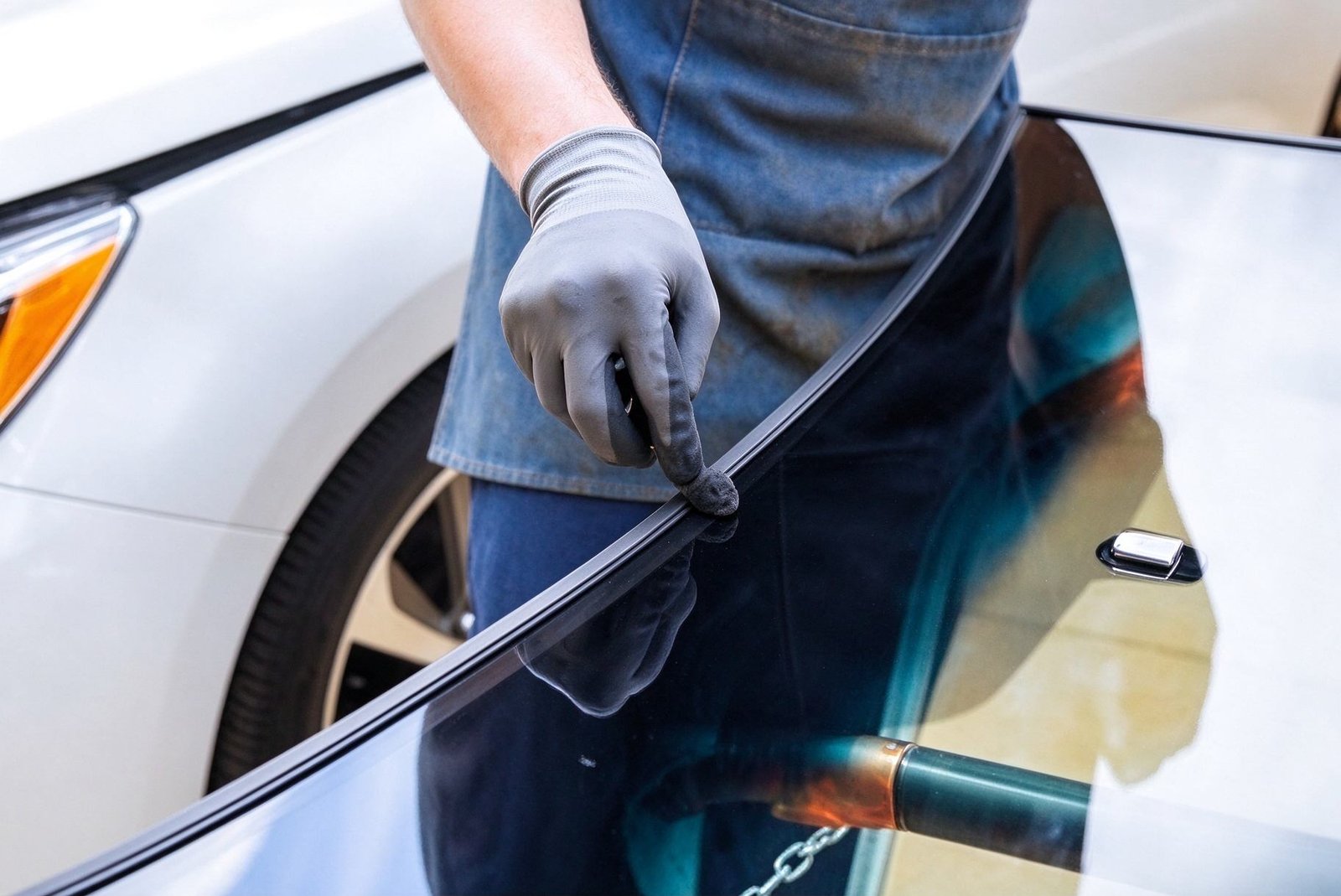
Product Comparison: Clear Activators vs. Black Primers vs. Pinchweld Primers
Auto glass technicians encounter multiple chemical bottles inside replacement kits. Applying the wrong chemical compound causes interfacial bond failure.
| Chemical Formulation | Clear Glass Activator | Black All-in-One Glass Primer | Anti-Corrosion Pinchweld Primer |
|---|---|---|---|
| Active Chemistry | Silane Solution in Alcohol | Poly-isocyanate & Carbon Black | Epoxy / Zinc Phosphate Resins |
| Primary Target Substrate | Float Glass & Intact Frit | Ceramic Frit & E-coat Pinchweld | Bare Steel & Scratched Pinchweld |
| Flash-Off Drying Time | 3 to 5 Minutes | 8 to 15 Minutes | 15 to 30 Minutes |
| UV Resistance Shielding | None (Transparent) | 100% UV-A / UV-B Blocking | High (Corrosion Barrier) |
| Cohesive Failure Rate | Requires Tested Compatibility | 100% Cohesive Polyurethane Failure | Prevents Substrate Oxidation |
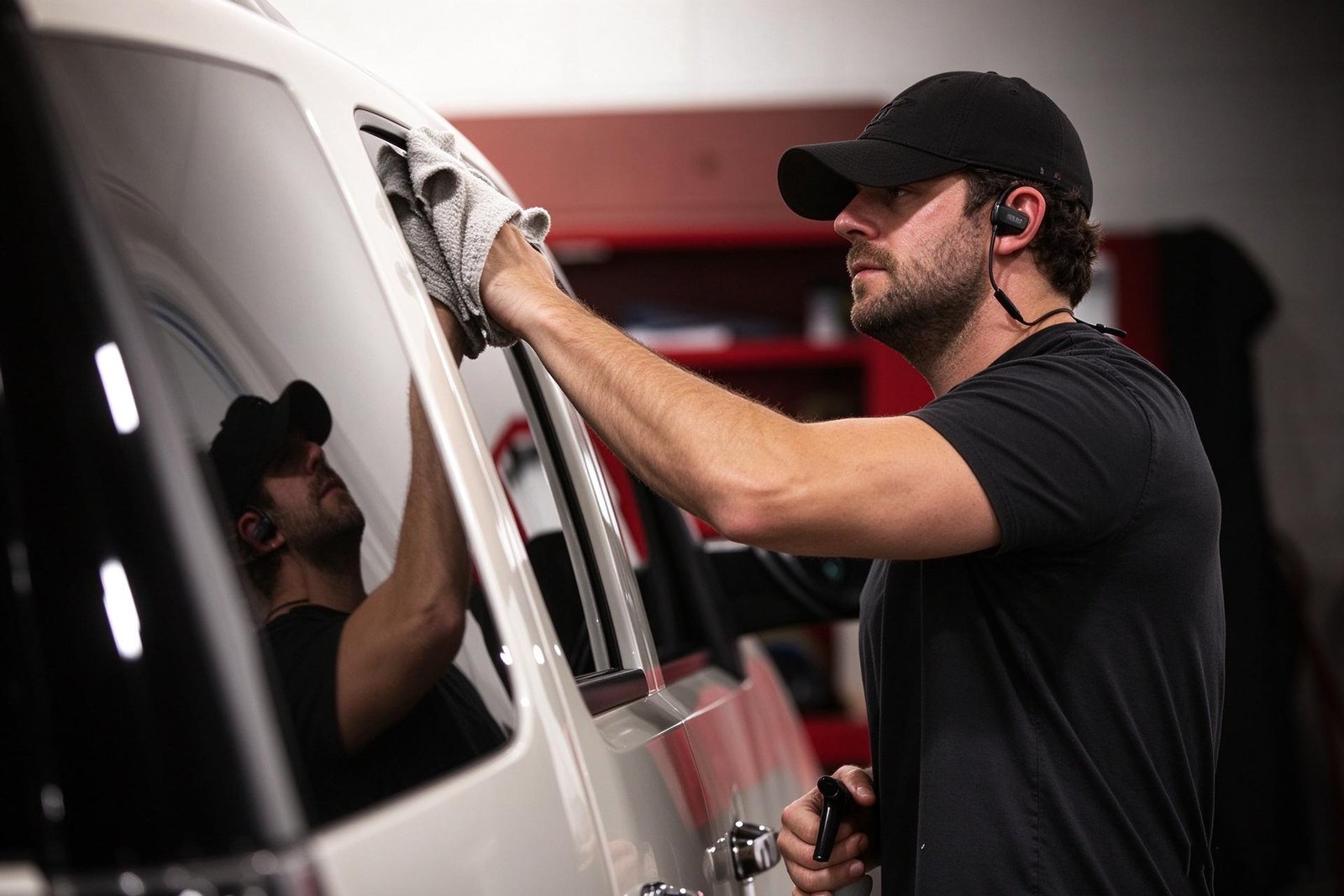
Typical Application Scenarios: Workshop Realities & Failure Analysis
Analyzing real-world field failures reveals how small shortcuts during chemical application produce severe structural liabilities.
Scenario A: Premature Adhesive Release from Insufficient Flash-Off
An express glass installation shop rushed an aftermarket windshield replacement, setting the glass only 60 seconds after applying black glass primer.
The rapid application trapped volatile solvent vapor beneath the dense polyurethane bead. The trapped solvents formed microscopic blister cavities at the bond line. When the customer drove on the highway two days later, cabin air pressure lifted the upper glass edge, resulting in complete adhesive release.
Scenario B: Pinchweld Rust Creeping Beneath Fleet Delivery Vans
During cold cutout knife operations on a commercial delivery van, an installer scratched through the OEM cathodic e-coat, exposing bare steel. The installer failed to apply pinchweld primer over the scratches before extruding fresh urethane.
Road salt and rainwater seeped through exterior cowl trim, oxidizing the unprotected bare steel. Rust expanded beneath the adhesive bead over eight months, forcing the polyurethane away from the pinchweld and flooding vehicle floorboards.
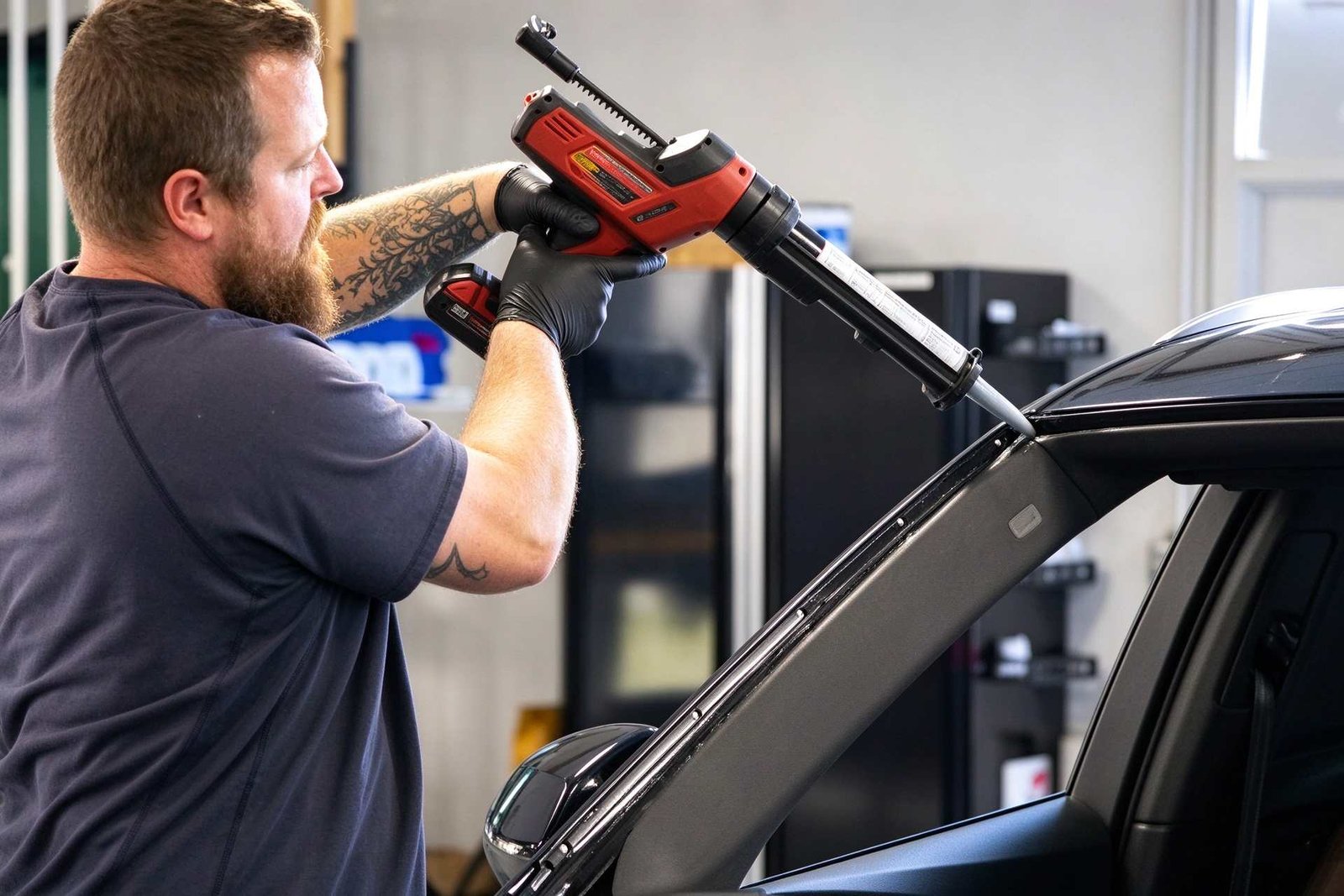
Standard Operating Procedure: Surface Preparation & Primer Application
Disciplined execution of chemical cleaning protocols eliminates adhesive bonding failures. Installers must follow this five-step sequence on every installation.
Step 1: Two-Cloth Solvent Degreasing
Saturate a clean lint-free cloth with an isopropanol-based cleaner. Wipe the glass ceramic frit firmly in one direction. Immediately follow with a clean, dry microfiber cloth to lift dissolved oils before the solvent evaporates.
Step 2: Primer Bottle Agitation
Carbon black pigments settle during transit. Shake the primer aluminum bottle vigorously for at least 30 seconds until the internal steel mixing ball rattles freely.
Step 3: Single-Pass Applicator Coating
Dip a clean, single-use wool dauber into the primer bottle. Apply a continuous, uniform film along the ceramic frit in a single fluid stroke. Never scrub the applicator back and forth, as this creates uneven ridges and micro-foaming.
Step 4: Mandatory Flash-Off Window Verification
Allow the primer to flash off for 10 minutes at 23°C (or 15 minutes below 10°C). The surface must transition from a glossy wet sheen to a completely uniform matte black finish before adhesive application.
Engineer’s Technical Trade-Offs: Chemical Boundaries of Primers
Formulating surface primers involves balancing chemical reactivity against shelf stability and application ergonomics.
- Severe Moisture Sensitivity: Primers contain highly reactive poly-isocyanates that cross-link instantly with atmospheric humidity. Once opened, primer bottles must be discarded after 24 to 48 hours to prevent gelling.
- Excess Thickness Embrittlement: Applying multiple heavy coats of primer creates an excessively thick film (exceeding 25 microns). When stressed, thick primer layers fracture internally, causing adhesive release.
- Hazardous Shipping Classification: High-purity solvent carriers classify liquid primers as UN 1133 / UN 1993 Class 3 flammable liquids, increasing international maritime shipping tariffs for overseas distributors.
Frequently Asked Questions: Auto Glass Primers and Activators
Can technicians apply polyurethane windshield adhesive without black glass primer?
Technicians should never omit black glass primer on replacement auto glass. While certain polyurethanes market “primerless” capabilities, this claim applies strictly to factory-clean frit bands under clean room conditions. In repair shops, glass carries airborne silicone contamination and frit micropores that transmit destructive UV rays, causing catastrophic bond release without primer.
What happens if the primer is not allowed to flash off completely before dispensing urethane?
Applying urethane over wet primer traps evaporating carrier solvents beneath the dense adhesive bead. These trapped solvents create micro-blisters and interfere with polyurethane cross-linking, causing complete interfacial adhesion failure under crash loads.
Can black glass primer be applied over bare metal scratches on the pinchweld?
Black glass primer provides moderate corrosion inhibition on small pinchweld nicks up to 5 mm wide. For extensive bare metal areas or deep cutout scratches, technicians must apply a dedicated two-part etch or epoxy pinchweld anti-corrosion primer to halt rust expansion.
Engineering Summary: The Foundation of Structural Glass Bonding
Direct glazing structural reliability is decided at the chemical preparation interface. By utilizing certified silane glass primers, respecting flash-off drying windows, and passivating metal pinchwelds, repair facilities ensure 100% cohesive bonding and passenger safety under the most demanding crash conditions.
Authored by ChemPU Automotive Application Engineering Team
Specializing in OEM direct-glazing polyurethane formulation, crash-retention validation per FMVSS 212 standards, and high-performance structural elastomeric bonding solutions for global automotive manufacturers.
Quality Certification: ISO 9001 / IATF 16949 Certified Adhesive Manufacturing
Source Certified OEM Auto Glass Primers & Adhesives
Partner with ChemPU, an ISO 9001 and IATF 16949 certified Chinese adhesive manufacturer. We supply black glass primers, pinchweld anti-corrosion coatings, and high-modulus polyurethane adhesives in aluminum bottles, cartridges, and complete replacement kits for global distributors.
Direct WhatsApp Technical Inquiry: +86 15216655520

