
Automotive glass replacement networks experience severe seasonal failure spikes during extreme winter freezes and midsummer heatwaves. Mobile technicians often struggle with stiff, unextrudable adhesive cartridges at freezing temperatures or premature bead skinning during humid summer afternoons. Misjudging environmental cure variables risks adhesive joint failure, severe cabin water intrusion, and compromised passenger crash protection.
Evaluating temperature effects on windshield urethane curing requires an understanding of chemical kinetics and atmospheric psychrometrics. One-component (1K) direct glazing polyurethanes do not dry through solvent evaporation; they polymerize through diffusion-driven reactions with ambient moisture vapor.
This engineering guide examines molecular polymerization across extreme seasonal temperature and humidity ranges. We detail open time contraction in summer, curing retardation in winter, and specific workshop heating protocols. Auto glass technicians and fleet maintenance managers will gain actionable procedures to maintain consistent Safe Drive-Away Times (SDAT) throughout the year.
Executive Summary: Seasonal Curing Physics & Application Guidelines
- Absolute Humidity vs. Relative Humidity: Polyurethane cross-linking speed depends on absolute water vapor mass per cubic meter of air, explaining why cold winter air at 60% RH cures adhesive slower than hot summer air at 40% RH.
- Winter Reaction Retardation: In windshield urethane curing in cold weather below 5°C, chemical addition rates drop exponentially, tripling standard drive-away times unless pre-warmed cartridges and cabin heating are utilized.
- Summer Open Time Contraction: During humid summer days above 30°C and 70% RH, adhesive open working time shrinks to under 8 minutes, demanding rapid glass placement before superficial skinning occurs.
- Pinchweld Thermal Mass: Cold steel pinchwelds act as massive heat sinks, rapidly cooling extruded warm adhesive beads and arresting molecular bonding at the primer interface.
Chemical Kinetics: How Ambient Temperature and Water Vapor Govern Cross-Linking
Auto glass adhesive cure temperature directly controls the Arrhenius reaction rate of isocyanate addition. Environmental moisture initiates the formation of urea cross-links, releasing microscopic carbon dioxide gas during polymerization.
The Chemistry of Moisture Diffusion
Standard 1K polyurethanes contain aromatic prepolymers terminated with reactive methylene diphenyl diisocyanate (MDI) groups. Water molecules from ambient air diffuse into the extruded bead, reacting with isocyanates to form unstable carbamic acid.
This intermediate decarboxylates into an amine, which immediately attacks an adjacent isocyanate group to create a stable, elastic polyurea network. Because water must physically diffuse through the solidifying polymer matrix, cure progress proceeds inward at roughly 3 mm to 4 mm per 24 hours under standard room conditions.
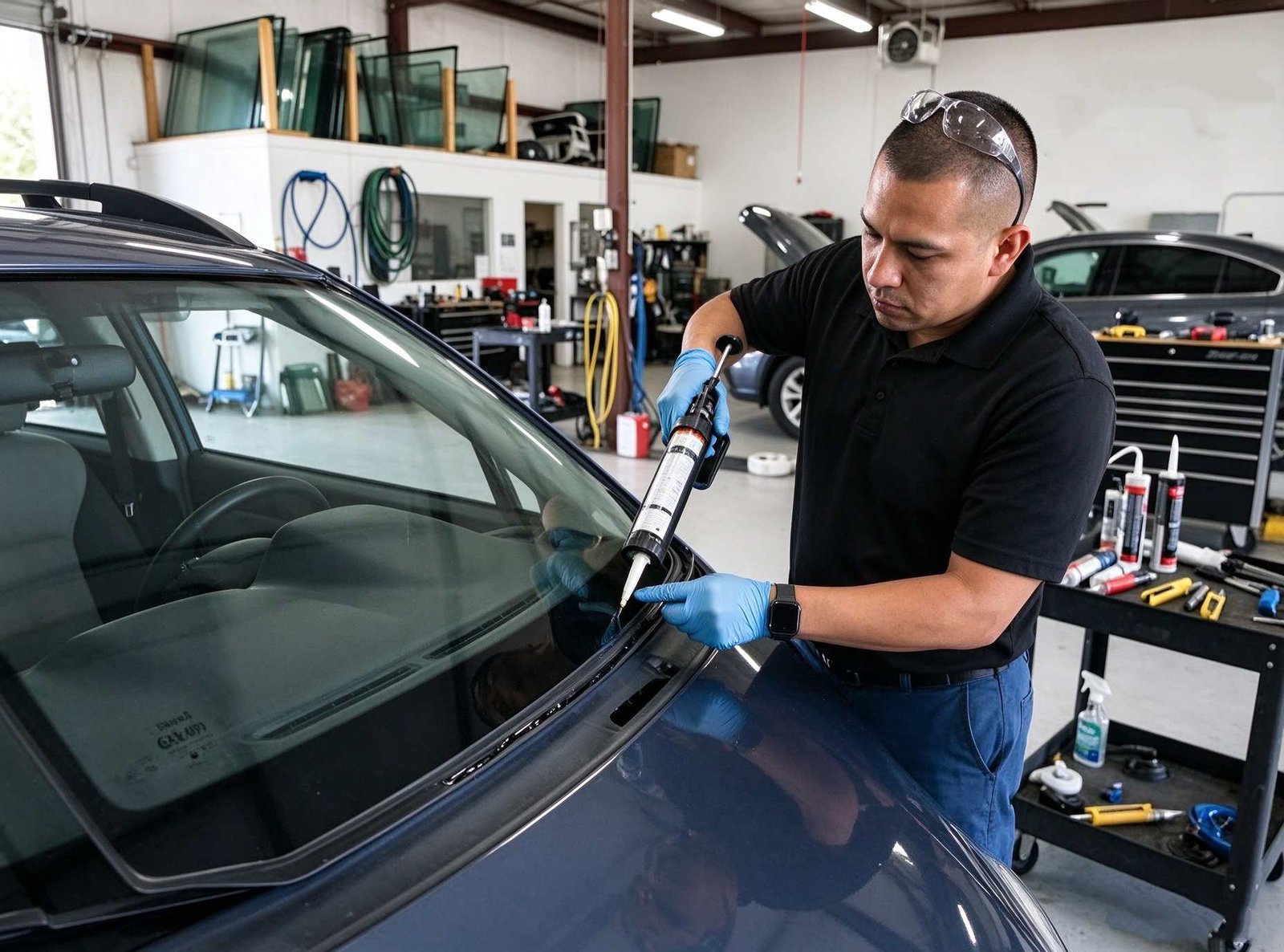
Seasonal Comparison Matrix: Winter Freezing vs. Summer Heatwaves
Auto glass replacement operations face contrasting failure modes across seasons. The matrix below contrasts operational and chemical parameters across seasonal extremes.
| Operational Parameter | Winter Environment (< 5°C) | Standard Lab (23°C / 50% RH) | Summer Extreme (> 32°C / > 70% RH) |
|---|---|---|---|
| Adhesive Paste Viscosity | Extremely High (Hard Extrusion) | Smooth, Thixotropic Paste | Lower Viscosity (Risk of Slump) |
| Open Working Time | Extended (25 to 40 min) | Standard (12 to 18 min) | Contracted (5 to 8 min) |
| Safe Drive-Away Time (SDAT) | 4 to 8 Hours (Delayed) | 1 to 2 Hours | 30 to 45 Minutes |
| Primary Failure Risk | Cold Pinchweld Adhesion Release | Zero Operational Risk | Skinning Before Glass Decking |
| Substrate Moisture Hazard | Microscopic Frost / Condensation | Clean, Dry Surface | Sweat / High Humidity Film |
Summer Application Hazards: The Skinning Trap
During windshield urethane summer application, high temperatures paired with elevated relative humidity accelerate surface tack-free formation. When open time drops below 8 minutes, laying the adhesive bead around a wide commercial windshield requires rapid pacing.
If the start of the bead forms a microscopic skin before the glass is set, pressing the glass fails to wet the polymer chains into the ceramic frit. This creates a hidden dry joint that leaks water during the first car wash or detaches during road vibration.
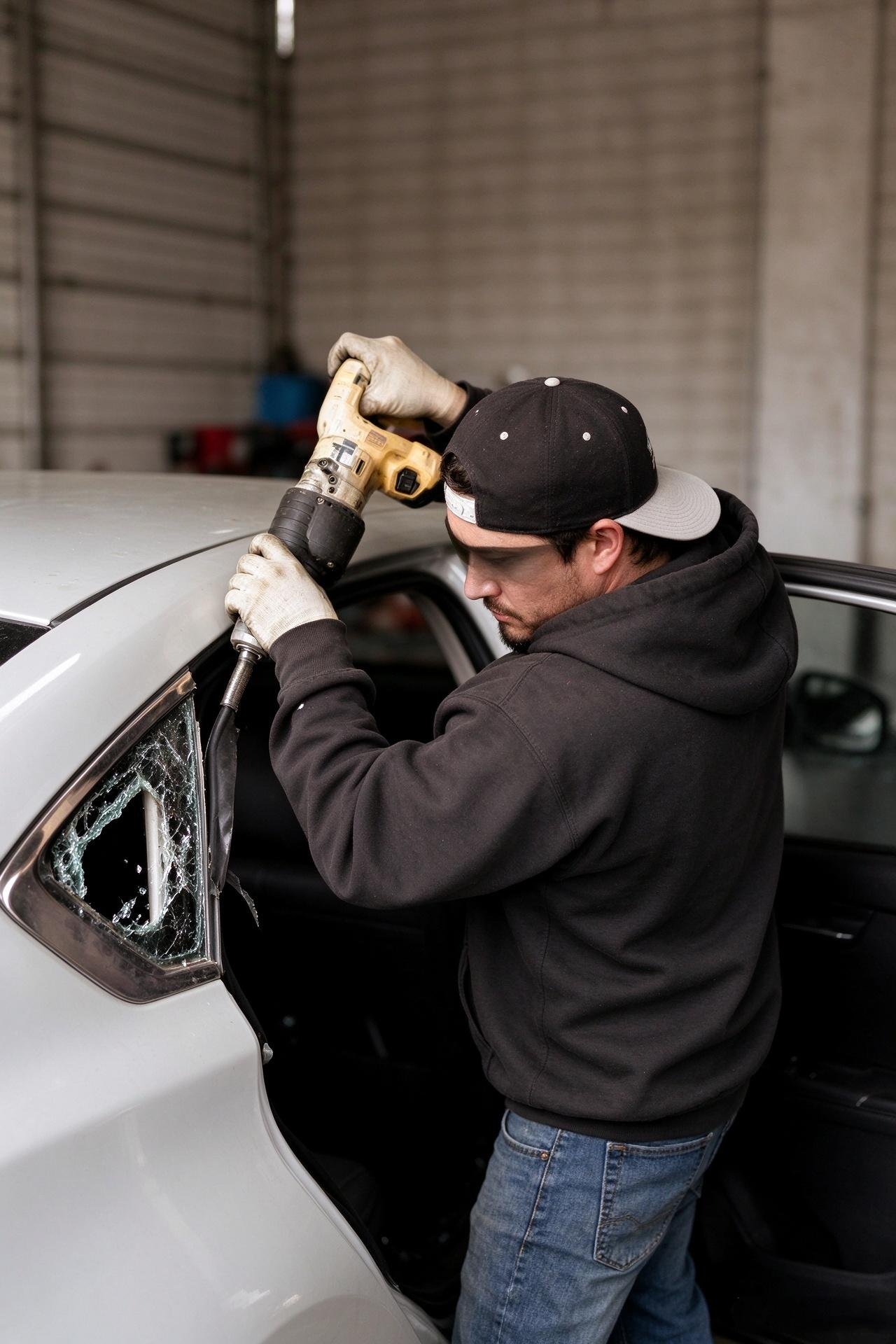
Typical Application Scenarios: Workshop Realities Across Extreme Climates
Field auto glass operations demonstrate distinct operational failure modes when seasonal temperature swings are managed without disciplined shop protocols.
Scenario A: Winter Mobile Service Failure on Commercial Fleet Trucks
A mobile auto glass van replaced a cracked windshield on a heavy-duty freight truck parked outdoors at -2°C. The technician warmed the polyurethane cartridges inside the van cab, extruding a smooth triangular bead.
However, the truck’s bare steel pinchweld remained below freezing. The sub-zero pinchweld instantly chilled the extruded urethane, arresting polymer cross-linking at the bond interface. When the truck drove over highway expansion joints 3 hours later, cabin air pressure forced the top windshield edge outward, creating an open air leak.
Scenario B: Midsummer Coastal Humidity and Adhesive Bead Skinning
A coastal repair shop was replacing panoramic glass on an SUV during midsummer conditions of 34°C and 85% relative humidity. A solo technician took 12 minutes to dispense adhesive, answer a phone call, and carry the glass to the vehicle.
By the time the glass made contact, the initial bead segment had skinned over completely. The glass failed to achieve cohesive wet-out on the driver side A-pillar. Two weeks later, pressure washing forced water through the dry contact seam, drenching dashboard electronics.
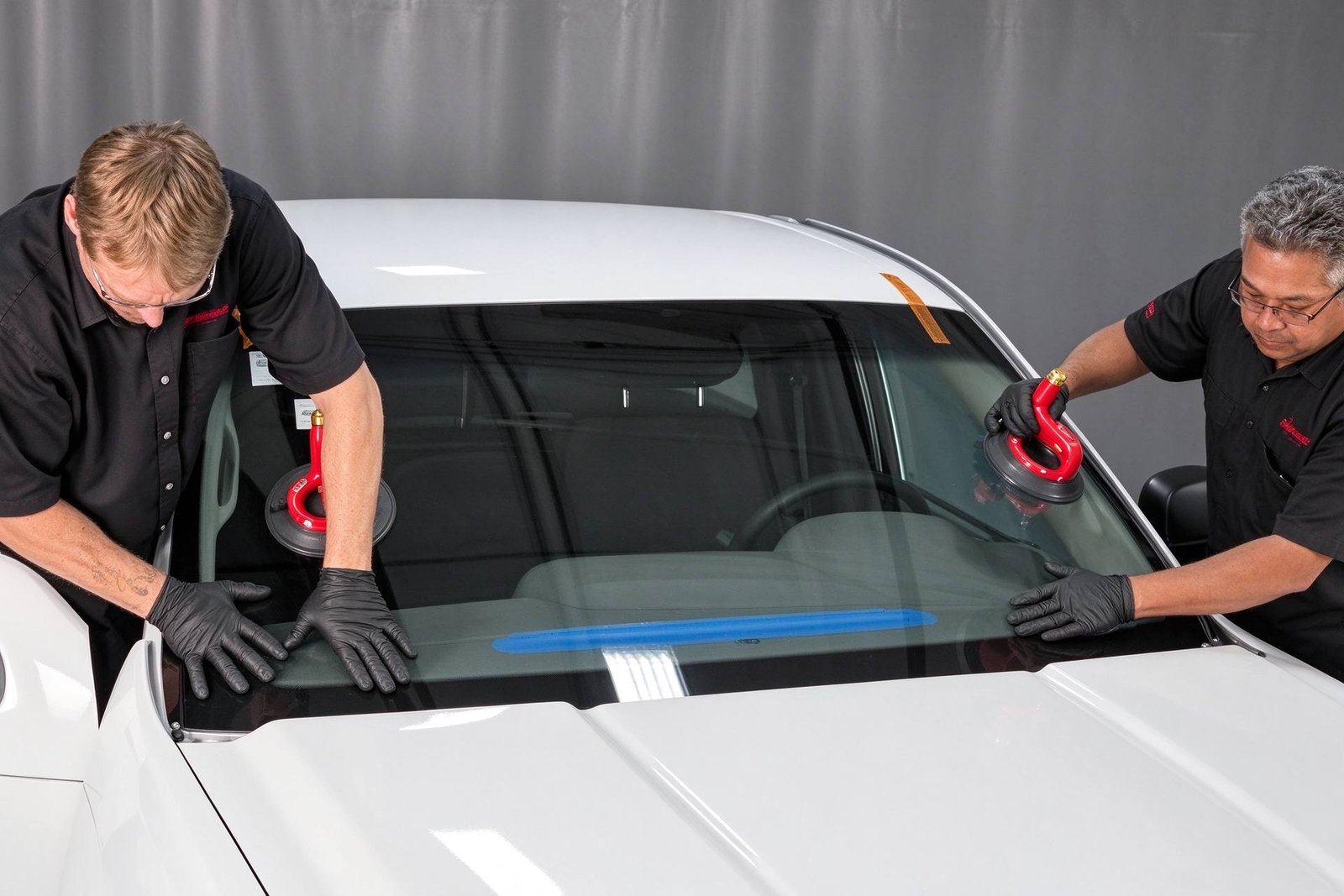
Standard Operating Procedure: Seasonal Environmental Control Protocols
Professional auto glass technicians implement standardized environmental countermeasures to guarantee reliable bonding throughout seasonal shifts.
Winter Protocol: Thermal Pre-Conditioning SOP
- Cartridge Warming: Store adhesive cartridges inside a thermostatic warming box maintained at 40°C to 50°C for at least one hour before dispensing to optimize flow viscosity.
- Cabin Defroster Run: Run the vehicle engine and interior heater at maximum defrost for 15 minutes before glass installation. This warms the metal pinchweld flange above 15°C, preventing thermal shock.
- Frost Removal Verification: Clean the ceramic frit with alcohol-based cleaners and verify the complete absence of microscopic ice crystals before primer application.
Summer Protocol: Working Time Preservation SOP
- Direct Sunlight Avoidance: Never install windshields in direct midday sunlight. Solar radiation elevates black ceramic frit temperatures above 60°C, causing instant skinning.
- Two-Technician Setting: Employ two installers for large windscreens to mount and align glass within 5 minutes of initial adhesive bead extrusion.
- Immediate Tape Anchoring: Apply retention tape immediately across top windshield corners to prevent hydrostatic air pressure from displacing green-state beads.
Engineer’s Technical Trade-Offs: Choosing All-Weather vs. Climate-Specific Adhesives
Chemical formulators design adhesives tailored to specific climatic envelopes. Fleet managers and distributors must balance versatility against specialized performance.
- All-Weather Adhesives: Provide wide operational latitude (-10°C to 40°C) using latent chemical catalysts, but carry higher unit raw material costs for wholesale distributors.
- Standard 2-Hour Formulations: Economical for controlled indoor collision repair facilities, but become unviable for outdoor mobile glass repair during winter months.
- Fast-Cure 30-Minute Systems: Outstanding for high-turnaround urban express fleets, but present severe skinning risks when applied by solo technicians on hot summer days.
Frequently Asked Questions: Temperature and Humidity in Auto Glazing
What is the minimum safe temperature for applying 1K polyurethane windshield adhesive?
Standard 1K polyurethanes require a minimum ambient and substrate temperature of 5°C. At temperatures below this threshold, moisture diffusion rates drop severely and polymerization stalls. Formulations certified for cold-weather application incorporate specialized accelerators, permitting installation down to -10°C provided the pinchweld is free of ice and condensation.
Why does high humidity shorten open working time during summer?
Polyurethane prepolymers react directly with atmospheric water molecules. Under elevated relative humidity (above 70%), abundant water vapor at the bead interface initiates instantaneous surface polymerization. This rapid reaction skins the outer polymer layer in less than 8 minutes, requiring prompt glass decking to avoid adhesion failure.
Can a heat gun be used to accelerate windshield urethane curing in winter?
Direct heat guns should never be used on curing polyurethane beads. Concentrated, dry heat causes rapid surface crusting while trapping unreacted isocyanate paste inside. Furthermore, excessive localized heat creates extreme thermal stresses in automotive laminated glass, leading to sudden windshield cracking.
Engineering Summary: Mastering Year-Round Windshield Bonding Reliability
Consistent auto glass bonding across winter freezes and summer heatwaves demands strict environmental awareness. By adapting adhesive selection, substrate pre-heating, and setting speed to seasonal psychrometric conditions, repair networks eliminate bonding liabilities and safeguard vehicle occupants year-round.
Authored by ChemPU Automotive Application Engineering Team
Specializing in OEM direct-glazing polyurethane formulation, crash-retention validation per FMVSS 212 standards, and high-performance structural elastomeric bonding solutions for global automotive manufacturers.
Quality Certification: ISO 9001 / IATF 16949 Certified Adhesive Manufacturing
Source All-Weather OEM Windshield Polyurethane Adhesives
Partner with ChemPU, an ISO 9001 and IATF 16949 certified Chinese manufacturer. We formulate all-weather, winter-accelerated, and summer skin-resistant direct glazing polyurethanes in 310ml aluminum cartridges and foil sausages for global auto glass distributors and fleet networks.
Direct WhatsApp Technical Inquiry: +86 15216655520

