
Premature vehicle release following auto glass replacement represents a catastrophic liability risk for workshops and fleet operations. Vehicle owners frequently confuse surface tack-free skin formation with structural cross-linking completion. Driving a vehicle before the adhesive achieves critical lap shear capacity risks total windshield detachment during sudden highway deceleration.
Understanding true windshield urethane cure time requires analyzing chemical reaction kinetics rather than superficial drying appearances. Modern automotive windshields provide up to 45% of cabin structural integrity during frontal collisions and serve as the reaction backboard for deploying passenger airbags.
This technical guide defines the engineering parameters governing Safe Drive-Away Time (SDAT). We evaluate moisture-curing polyurethane kinetics, ambient psychrometric variables, and crash testing compliance under FMVSS 212 and FMVSS 216 mandates. Auto glass technicians and commercial fleet managers will gain actionable verification protocols to protect vehicle occupants.
Executive Summary: Critical Takeaways on Windshield SDAT & Curing Physics
- SDAT vs. Full Chemical Cure: Safe drive away time denotes the threshold where polyurethane reaches sufficient lap shear strength (typically 1.0 to 1.5 MPa) to pass barrier crash standards, while full cross-linking requires 24 to 72 hours.
- Psychrometric Dependence: Single-component (1K) polyurethanes depend on atmospheric moisture diffusion; curing rates decrease by over 50% in arid climates below 30% relative humidity or ambient temperatures below 5°C.
- Passenger Airbag Impact Dynamics: Deploying passenger airbags exert upward mechanical forces exceeding 2,000 N against the inner glass face, demanding verified adhesive bond strength prior to vehicle handover.
- Dual-Airbag Testing Standard: Commercial glass shops must verify that stated product SDAT ratings are certified under severe dual-airbag crash simulation criteria rather than minimal single-occupant standards.
Curing Mechanics: Tack-Free Skin vs. SDAT vs. Full Polymer Cross-Linking
Auto glass cure time progresses through distinct chemical stages. Installers must differentiate superficial tactile dry times from verified mechanical load-bearing capacity to prevent fatal road accidents.
Stage 1: Tack-Free Skin Formation (15 to 40 Minutes)
Atmospheric moisture reacts immediately with isocyanate functional groups on the exposed outer bead boundary. This reaction forms an initial polyurea skin layer within 15 to 40 minutes, resisting dust accumulation and light water mist.
Technicians frequently observe this dry skin and mistakenly assume the vehicle is roadworthy. Beneath this 0.5 mm outer crust, the core adhesive remains viscous and unreacted, providing negligible mechanical resistance against cabin pressure fluctuations.
Stage 2: Safe Drive-Away Threshold (30 Minutes to 4 Hours)
Safe Drive-Away Time represents the precise operational milestone where internal cross-linking achieves sufficient cohesive modulus. Achieving an sdat windshield rating requires lap shear strength exceeding 1.0 MPa under calibrated laboratory pull tests.
At this juncture, the bond line withstands emergency braking decelerations and maintains structural windshield positioning during passenger airbag deployment. Vehicle owners may resume highway driving, provided aggressive wash jets and body-flexing road obstacles are avoided.
Stage 3: Full Chemical Cross-Linking (24 to 72 Hours)
Moisture molecules diffuse gradually through the 10 mm to 15 mm polyurethane cross-section at a typical velocity of 3 mm to 4 mm per 24 hours. Full polymerization produces maximum tensile lap shear values between 5.5 MPa and 7.0 MPa alongside 55 to 65 Shore A hardness.
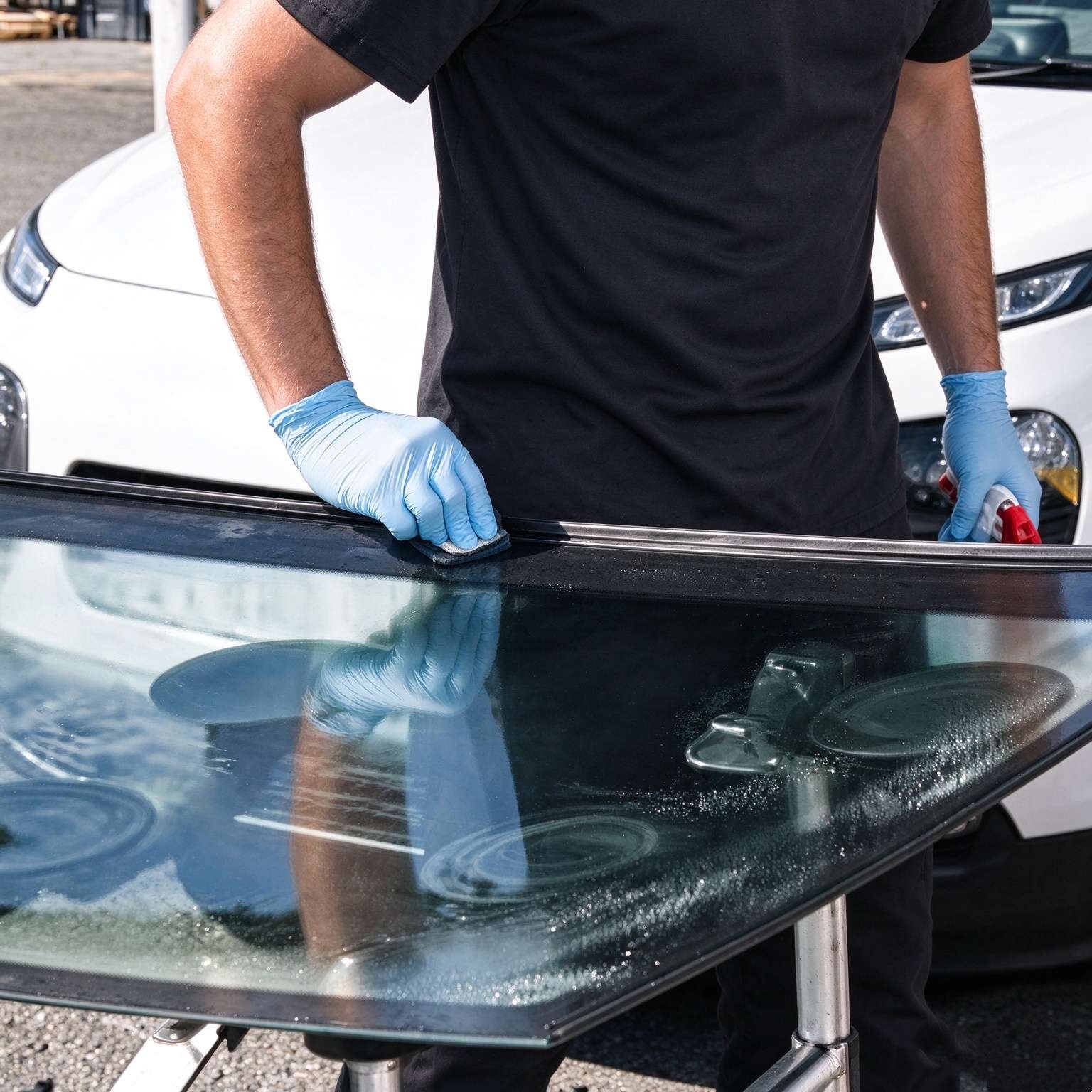
Environmental Variables: Temperature and Relative Humidity Matrix
Because 1K polyurethanes rely on environmental water vapor to trigger polymerization, cure speed varies drastically across seasonal climates. The table below illustrates empirical SDAT variances across standard workshop conditions.
| Environmental Condition | Ambient Temp / Humidity | Standard 2-Hour Formulation | Fast-Cure 1-Hour Formulation | Safety Recommendation |
|---|---|---|---|---|
| Warm & Humid (Summer) | 30°C / 75% RH | 1.5 Hours | 30 to 45 Minutes | Monitor short open working time |
| Standard Lab Reference | 23°C / 50% RH | 2.0 Hours | 1.0 Hour | Nominal baseline conditions |
| Arid / Desert Climate | 35°C / 20% RH | 3.5 Hours | 2.0 Hours | Extend release buffer period |
| Cold Winter Workshop | 5°C / 40% RH | 5.0 to 6.0 Hours | 3.0 Hours | Pre-heat vehicle cabin & tubes |
| Freezing Sub-Zero Exposure | -5°C / 30% RH | Reaction Stalls | Reaction Stalls | Indoor climate-control mandatory |
Managing Low-Humidity Retardation
In arid regions or during winter indoor heating cycles, absolute water content in ambient air drops significantly. Specifying a fast cure windshield adhesive formulated with latent chemical catalysts compensates for scarce moisture molecules, maintaining reliable curing rates without heat lamps.
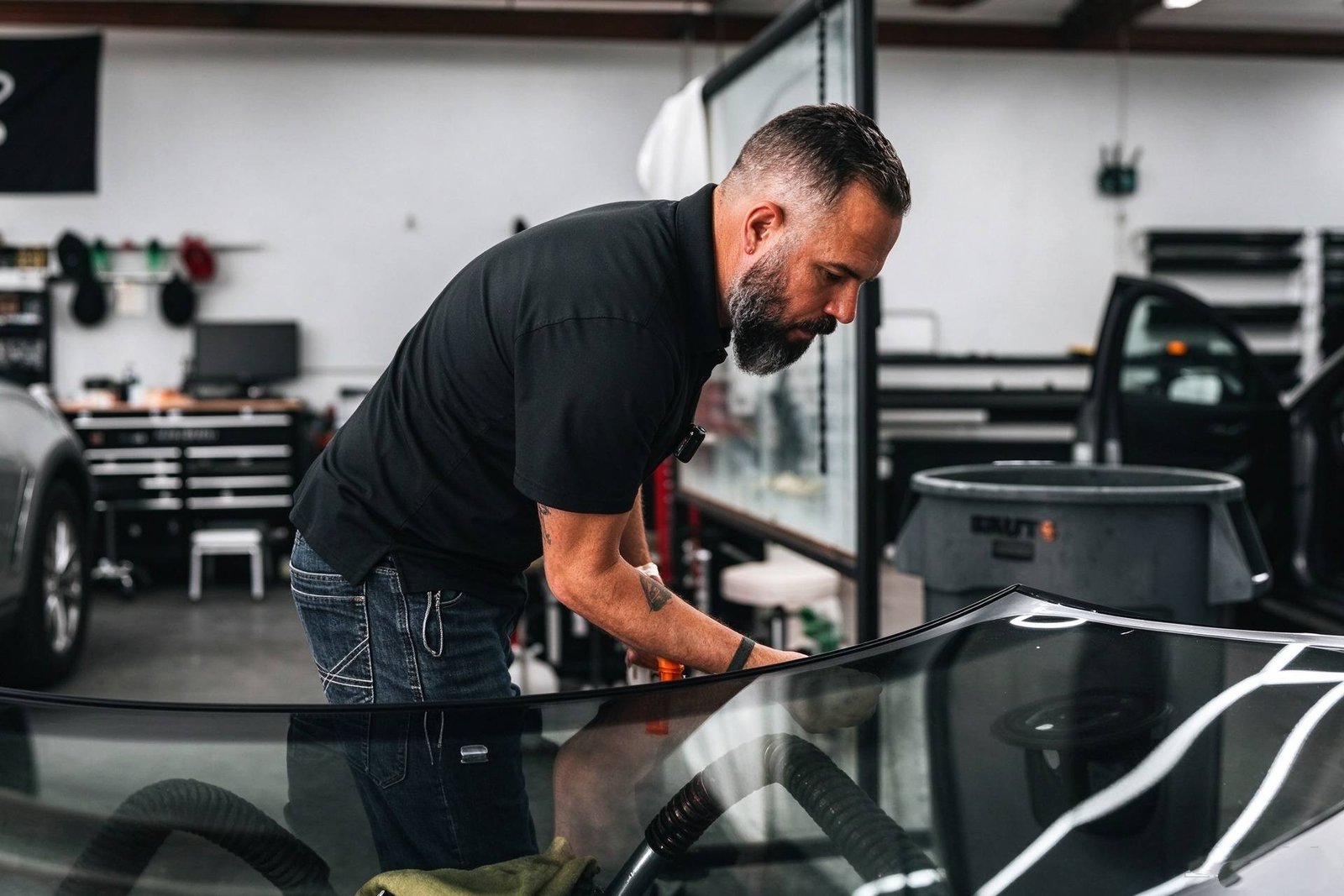
Typical Application Scenarios: Workshop Operations and Mobile Field Units
Real-world auto glass operations reveal distinct operational challenges when managing customer release expectations across varying service models.
Scenario A: Mobile Express Glass Replacement on Fleet Delivery Vans
An urban delivery fleet operator required same-day windshield replacements with maximum vehicle uptime. Operating mobile service vans across outdoor parking lots exposed installations to unpredictable ambient weather.
By switching to an advanced 1 hour drive away time windshield urethane, technicians guaranteed FMVSS 212 crash safety within 60 minutes. The fleet returned delivery vans to commercial delivery routes promptly without risking windshield blow-out or cabin water leaks.
Scenario B: Winter Collision Repair Center Throughput Bottlenecks
A regional body shop experienced workflow congestion during sub-zero winter months. Vehicles parked near drafty shop doors exhibited delayed windshield adhesive cure time, tying up calibration bays for over five hours per vehicle.
Engineers resolved the bottleneck by mandating pre-heated cartridge warming ovens and establishing a 20-minute cabin heating cycle post-installation. This protocol elevated local pinchweld steel temperatures to 22°C, restoring predictable 2-hour SDAT performance.
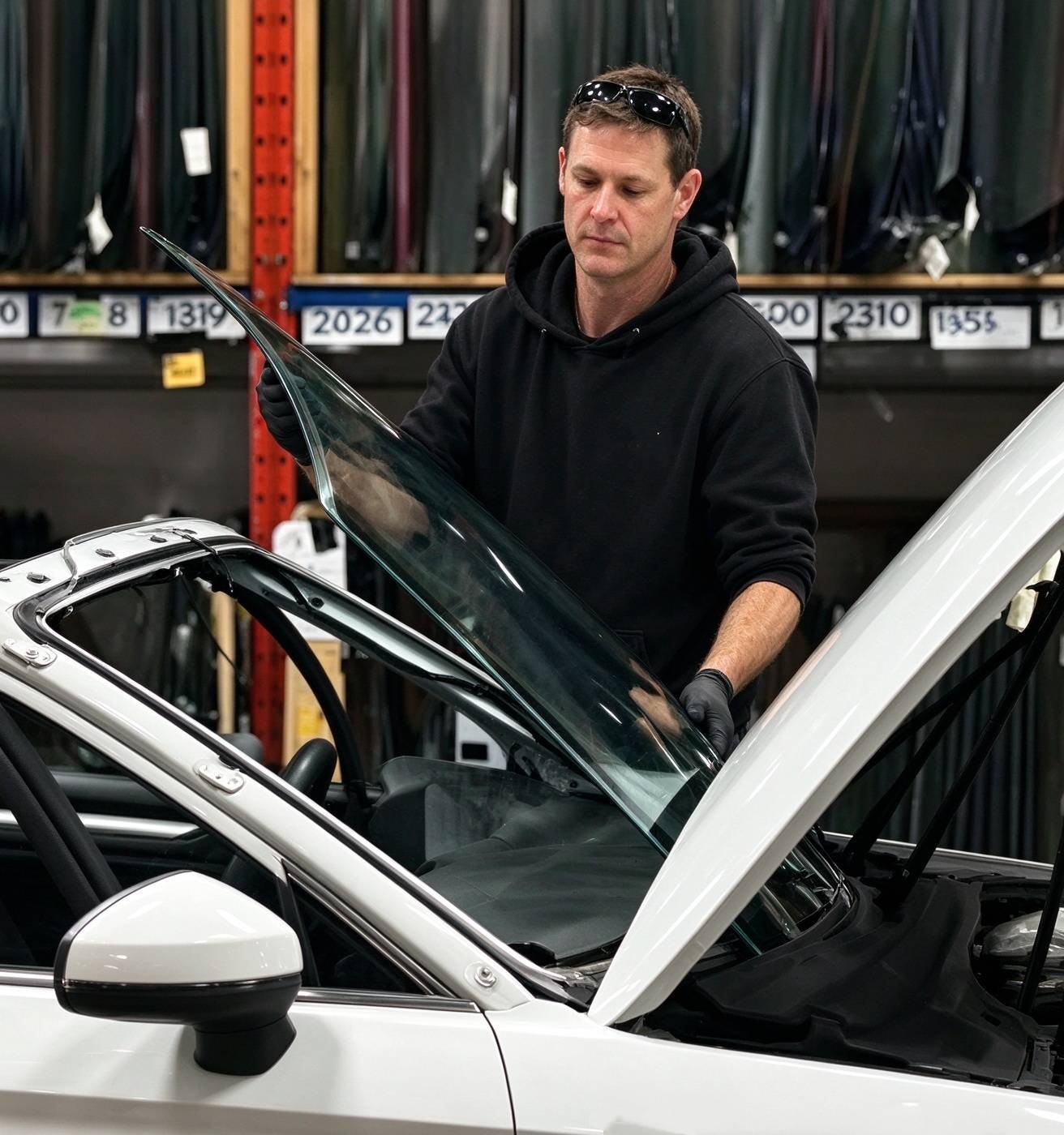
Standard Operating Procedure: Quality Control Protocols for Safe Release
Implementing standardized workshop procedures ensures that adhesive formulations achieve calculated drive-away thresholds consistently.
Step 1: Psychrometric Logging and Product Selection
Measure ambient temperature and relative humidity inside the installation bay using a digital hygrometer. Check the manufacturer curing chart to determine the exact SDAT for current psychrometric readings.
Step 2: Substrate Surface Preparation and Priming
Clean the glass ceramic frit using an isopropanol-based solvent and clean lint-free cloths. Apply black glass primer uniformly, allowing a full 10-minute flash-off time until the coating reaches a matte appearance.
Step 3: Bead Geometry Dispensing and Glass Decking
Extrude a continuous triangular V-notch bead perpendicular to the glass flange. Mount the windshield within the specified open time (typically 10 to 15 minutes) and apply uniform perimeter compression.
Step 4: Safe Release Documentation
Affix an SDAT release sticker to the steering wheel, indicating the precise release time. Instruct the vehicle owner to avoid high-pressure car washes, extreme door slamming, and uneven curb parking for 48 hours.
Engineer’s Technical Trade-Offs: Formulation Boundaries of Fast-Cure Adhesives
Accelerating polyurethane cure kinetics requires intentional chemical compromises. Technicians and distributors must understand these inherent formulation trade-offs.
- Open Time Contraction: Adhesives delivering 30-minute SDAT exhibit contracted open working windows of 8 to 10 minutes. Installing large commercial bus glass requires multiple technicians to avoid premature skinning.
- High Paste Viscosity: Fast-curing polyurethanes possess dense prepolymer networks, demanding heavy-duty electric or pneumatic dispensers with thrust ratings above 3,000 N.
- Packaging Sensitivity: High-reactivity formulations react aggressively to micro-leaks in packaging. Aluminum cartridges and foil sausages must maintain flawless hermetic seals to prevent premature gelling during transit.
- Storage Temperature Vulnerability: Storing accelerated polyurethanes above 30°C substantially degrades shelf life, causing isocyanate polymerization inside unopened cartridges.
Frequently Asked Questions: Windshield SDAT and Curing Physics
How long does windshield urethane take to cure before driving safely?
Safe Drive-Away Time ranges from 30 minutes to 4 hours depending on adhesive formulation, temperature, and relative humidity. Standard 1K moisture-curing polyurethanes require 2 hours under typical shop conditions (23°C, 50% RH), while fast-cure OEM formulations achieve crash-safe lap shear strength in 30 to 60 minutes.
Can a vehicle be washed immediately after windshield replacement?
Vehicle owners should avoid automated high-pressure car washes for at least 48 to 72 hours. Although the adhesive achieves safe drive-away capacity quickly, concentrated water jets can displace curing beads or force moisture past uncured core sections, creating internal water leak channels.
Why does polyurethane cure slower during cold winter weather?
Polyurethane curing is an exothermic chemical addition reaction governed by moisture diffusion and temperature kinetics. In temperatures below 5°C, atmospheric moisture content drops drastically and molecular mobility decreases, slowing chemical cross-linking rates by more than half.
Engineering Summary: Maximizing Passenger Safety Through Verified SDAT
Adhering to verified Safe Drive-Away Times is an absolute safety obligation for auto glass replacement professionals. By understanding the chemical divergence between surface drying and structural cross-linking, workshops eliminate premature release liabilities while maintaining rapid fleet turnaround.
Authored by ChemPU Automotive Application Engineering Team
Specializing in OEM direct-glazing polyurethane formulation, crash-retention validation per FMVSS 212 standards, and high-performance structural elastomeric bonding solutions for global automotive manufacturers.
Quality Certification: ISO 9001 / IATF 16949 Certified Adhesive Manufacturing
Source Fast-Curing OEM Windshield Polyurethane Adhesives
Partner with ChemPU, an ISO 9001 and IATF 16949 certified Chinese manufacturer. We provide private label 30-minute, 1-hour, and 2-hour SDAT direct glazing polyurethanes in 310ml aluminum cartridges and foil sausages for global auto glass distributors and fleet networks.
Direct WhatsApp Technical Inquiry: +86 15216655520

